.svg&w=384&q=75 "Naijagoal logo")

Martin Odegaard's Reassertion of Arsenal's Creative Heartbeat
Martin Odegaard did not so much score as stage a small piece of theatre.
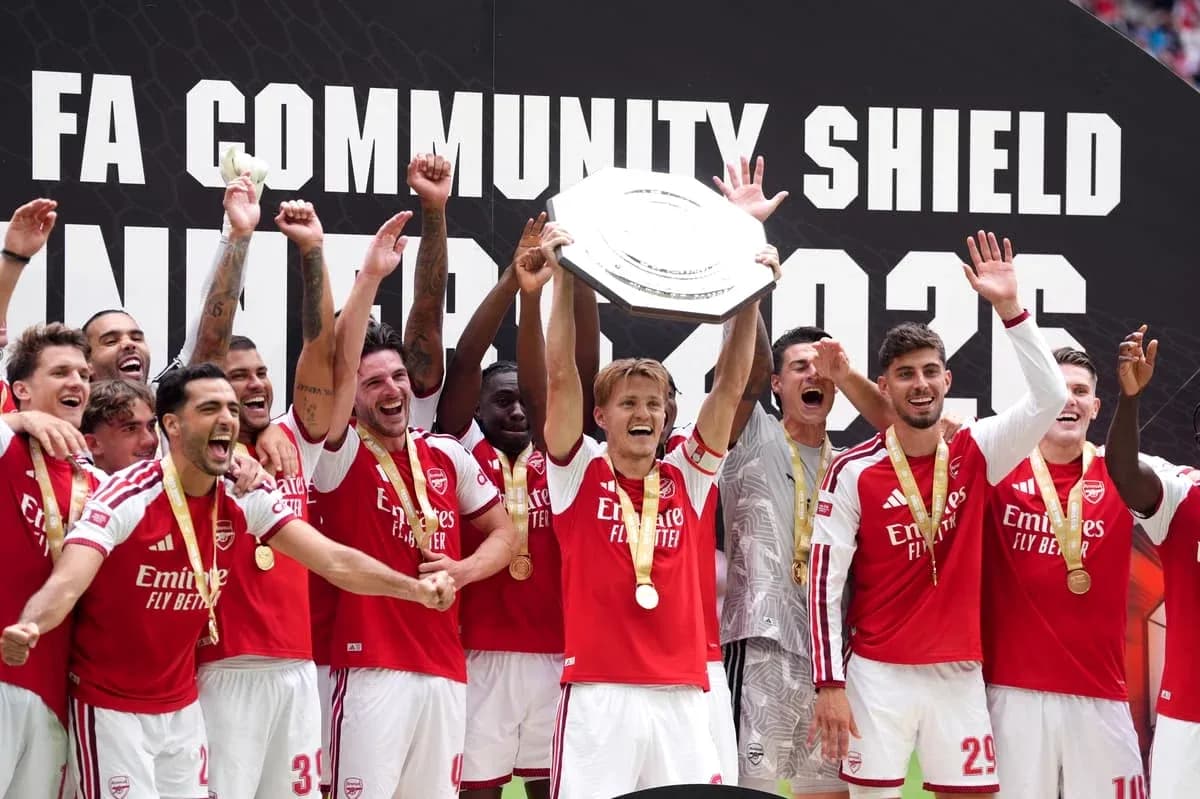
He drifted away from his marker, waited for Gianluigi Donnarumma to commit, then rolled the ball past him with the calm of a player who has seen this picture a thousand times in his head. Two minutes into the second half in Cardiff, the Community Shield was done. Arsenal were 3-0 up on Manchester City and their captain was once again walking up the steps to lift a trophy.
Yes, it is only the Community Shield. History warns that it rarely foreshadows a title – no team have won it and then gone on to claim the Premier League since 2018/19. But this felt like something more specific for Arsenal: a reminder that the most important attacking signing they can unveil this summer might already be in the building.
A champion with a point to prove
Odegaard, 27, has already written his name into Arsenal folklore. He is the captain who finally hoisted the Premier League trophy in May, ending a 22-year wait and reshaping the club’s modern identity in the process.
Yet his own season never quite matched the scale of the team’s success. Knee and shoulder problems stalked him. He started only 16 league games. Across 36 appearances in all competitions, he scored just once. For a player of his craft and influence, those numbers jarred.
The doubts crept in from outside. Eberechi Eze was touted as an upgrade. Declan Rice was tipped by some to take the armband. The narrative began to shift away from the Norwegian.
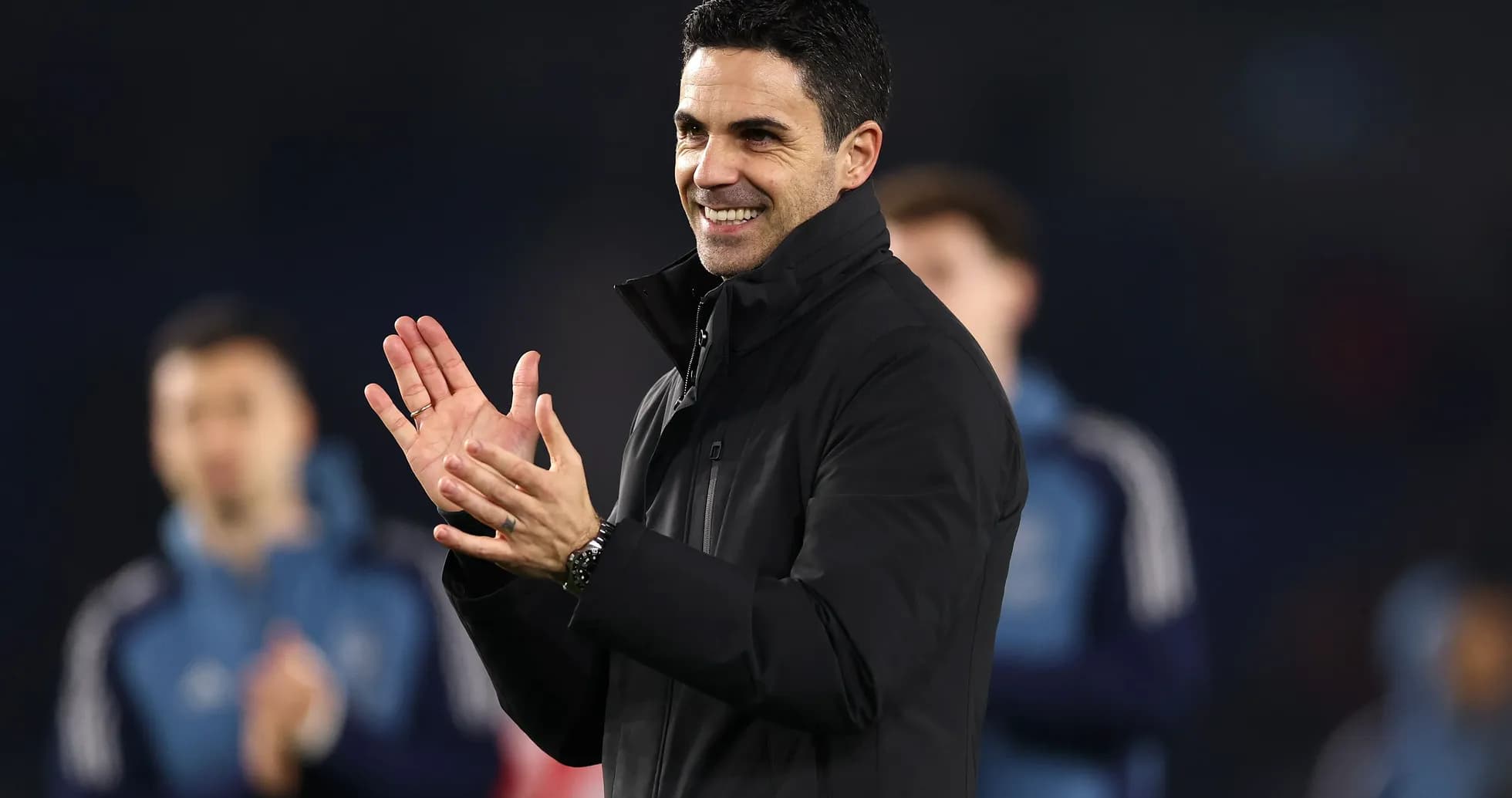
Mikel Arteta never bought into that.
“He missed five or six months for different things and it was extremely difficult for him to get any momentum,” the Arsenal manager said after the win over City. “I’m sure this year if we can maintain him fit, available with the players around him, we’re going to see a very different Martin.”
The evidence in Cardiff backed him up. This was not a captain clinging to his status. This was a captain reasserting it.
Transfer frustration, internal solution
Arsenal still want more firepower. They have chased an elite left winger for several windows and the search has not got any easier.
Morgan Rogers slipped away. Vinicius Jr was always a fantasy more than a realistic target. As the summer has dragged on, the pool of “statement” options has shrunk, and with it the likelihood of that headline-grabbing arrival.
So the club have turned inward. If the market will not give them the perfect forward, the next best thing is to restore their chief creator to his peak.
Right now, that looks like the most transformative upgrade available to Arteta’s attack.
Odegaard needs it as much as Arsenal do. He has entered the final two years of his contract, the period when a player of his standing usually secures the last major long-term deal of his career. To do that on his terms, he has to dominate again, week after week.
“Missing so many games was really frustrating, but I’ve used it as motivation to come back stronger,” the captain admitted. Last season, that frustration seeped into his game. He often looked a yard off the pace, cautious in duels, understandably wary after a string of “weird injuries and bad luck”, as he put it.
That version of Odegaard was nowhere to be seen against City.
Back to his old levels – and then some
The finish for Arsenal’s third was the clip that will be replayed, but his 90 minutes were defined by control and aggression. His clipped cross created the second goal. He knitted play in tight spaces, pressed with intent and seemed physically reborn.
The numbers underlined it. Odegaard won five of his seven duels. No player on the pitch made more recoveries. The hesitancy of last season had been replaced by conviction.
He has carried this form over from a strong World Cup, where only Michael Olise recorded more assists. After that tournament, he finally got what he had been denied for much of the year: time to breathe. Three weeks off with his wife and young son, then back into pre-season with a clear head and a repaired body.
“It was massive for me,” he said. “Last year was really a big struggle with a lot of difficult moments. That’s the worst thing for a footballer, to not be on the pitch… It was good to end it with the title here and then a good World Cup. Then I had my break. Now I feel good.
“After last season, to miss so many games is really frustrating. What I’ve done is use that as motivation for this year and come back stronger.”
Arteta noticed the change the moment his captain walked back through the door.
“I sense from the first day that he joined that he has something else in the belly that he wants to prove and show because the team needs it as well,” the manager said.
Odegaard’s pre-season minutes have been limited – his first appearance came just over a week ago, 30 sharp minutes against Borussia Dortmund, when he twice sliced them open with through balls. But each outing has carried the same message: the rhythm is returning.
New tools around the conductor
Arsenal’s title win last season was built from the back. They did not have an elite No9. Their wide players blew hot and cold. The structure, resilience and defensive excellence carried them across the line.
That platform is still there. What changes now is the technical quality around their playmaker.
Bruno Guimaraes has been added to the squad, a signing that should raise the level of Arsenal’s passing through the thirds. With a midfielder of that range and precision feeding him, Odegaard can expect more of the ball in dangerous pockets, more chances to slide passes between centre-backs and full-backs, more opportunities to dictate the tempo high up the pitch.
Ahead of him, the cast is familiar but with scope for growth. Bukayo Saka is expected to shake off the Achilles problem that nagged him last season. Arteta insists the winger is now over that issue, and a fully free Saka is a different kind of weapon entirely.
On the opposite flank, Christos Tzolis already looks like an upgrade on the left, offering a more direct threat and cleaner end product. If he settles quickly, the geometry of Arsenal’s attack changes: more width, more depth, more space for Odegaard between the lines.
In that context, the Norwegian’s ceiling becomes critical. At his best, he is not just a cog in the machine. He is the one who speeds it up.
The standard he must hit again
We have seen those levels before. In 2022/23, Odegaard scored 15 Premier League goals and supplied seven assists. A year later, he posted eight goals and 11 assists in the league. Those are elite numbers for a midfielder who also leads the press and sets the tone out of possession.
Then came the ankle issue and the cascade of other problems that followed. His momentum stalled. The rhythm that defines his game – the quick touches, the early passes, the constant scanning – was interrupted too often. Every time he seemed to find a groove, his body betrayed him.
The Community Shield suggested that period is over. This was not a one-off flash from a player still feeling his way back. It looked like the re-emergence of the version of Odegaard who bends games to his will.
Arsenal’s recruitment team will keep working until the window closes. The club still want that big attacking signing, the elite winger to complete the front line. But even if that player never walks through the door, there is a clear path to improvement.
Get more from Saka. Bed in Tzolis. Let Guimaraes feed the final third. And, above all, keep Martin Odegaard fit and firing.
He has already captained Arsenal to one league title. If this is the standard he intends to set again, how many more can he drag them towards as the creative heartbeat of a side still hungry for more?