.svg&w=384&q=75 "Naijagoal logo")
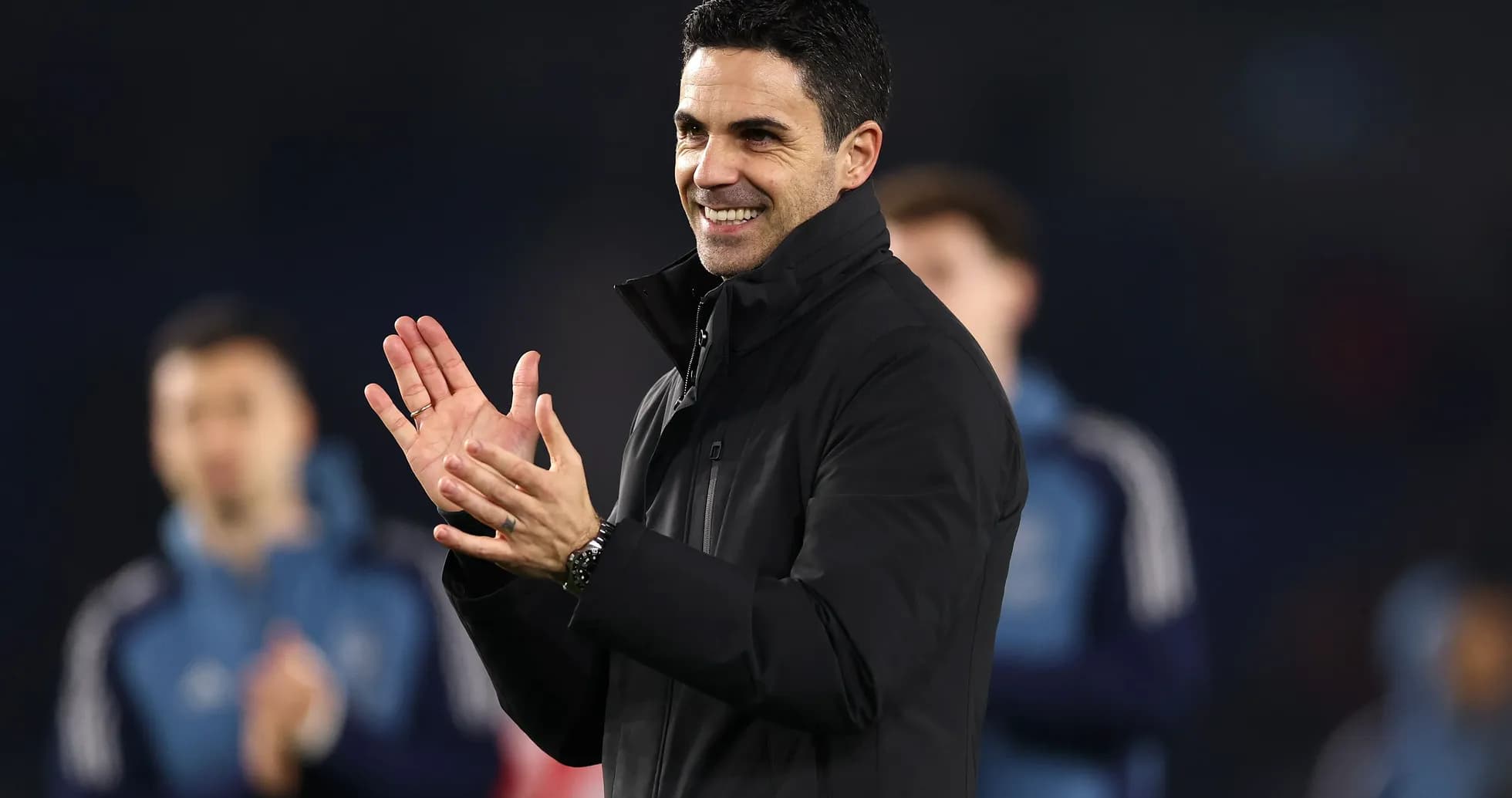

Mikel Arteta Reacts to Premier League Towel Ban
Mikel Arteta has bristled at a new Premier League clampdown that will stop his Arsenal side from using towels to dry the ball before throw-ins – a small detail on paper, but a big one for a team that turned long throws into a serious weapon last season.
Arsenal leaned heavily on the sling-shot arms of Ben White and Declan Rice in the final third, using every marginal gain they could find around restarts. Now, one of those edges has been stripped away.
Arteta irked – and joking
“Not being able to use the towels is already a big one,” Arteta said in his press conference, making no attempt to hide his irritation at the directive.
He quickly switched to humour, hinting at the kind of improvisation coaches are already pondering as they digest the new rulebook. “Let’s see what we do. Maybe we will play with hats on!”
Behind the joke sits a clear message: Arsenal have invested time and detail into these routines, and the Premier League has just moved the goalposts.
Time-wasting in the crosshairs
The towel ban forms part of a sweeping effort by English football’s authorities to squeeze more live action out of the 90 minutes and cut down on the dark arts around dead balls.
Previously, towels sat in a grey area. Their use depended on both clubs agreeing before kick-off. That uneasy compromise exploded into view last season when Riccardo Calafiori tried to dry the ball near the Newcastle United goal, only for referee Jarred Gillett to step in, confiscate the towel and spark a touchline row because no pre-match agreement had been reached.
That kind of scene has helped drive the new stance. From now on, players will not be allowed to carefully dry the ball before hurling it into the box, a routine that slowed games and drew heavy criticism as teams milked every second.
The Premier League wants that gone. Quickly.
New countdown culture
The towel issue is only one strand. Matchdays are about to feel very different.
Referees will work with visible countdowns for goal-kicks and throw-ins, forcing teams to restart more quickly. Substitutions will be tightly marshalled into specific windows to stop the slow walk and the theatrical handshake that eats into the clock.
Medical stoppages are being rewired too. Injured outfield players must now remain off the pitch for at least a minute after receiving treatment. And there is a sting in the tail for goalkeepers: if a keeper needs attention, one outfield player from that team must also leave the pitch for a minute.
That rule directly targets one of the game’s favourite time-wasting ploys – the keeper going down late in matches, surrounded by team-mates, with everyone catching their breath while the clock ticks.
Arsenal have not been immune from those accusations. Brighton manager Fabian Hurzeler publicly called out David Raya last season, angry that the goalkeeper received treatment three times during a tight 1-0 Arsenal win. Episodes like that are exactly what the league wants to stamp out.
Adapting to a faster game
Arteta, though, is not treating this as a battle with the officials. He insists Arsenal have been fully briefed and are ready to adjust.
“We have had the Premier League and the referees there with us to explain and go through everything,” he said. “We will have to see when the season starts and how this unfolds and what is more doable and what is less doable and what we need to adapt.”
The margins at the top are tiny. Every restart, every countdown, every enforced minute on the touchline will shape momentum. Arteta knows it.
“We know that everybody is paying so much to the details, all the restarts and the countdowns, that will bring something else, a different dynamic, different momentum,” he added. “So I am very curious to see.”
He is not against the principle. Strip away the towel gripe, and he backs the broader vision.
“They are really good rules because what we are doing is trying to promote more game time and the fluidity of the games which is better and hopefully that will work.”
So Arsenal lose their towels. They keep their long-throw threats, their set-piece routines, their obsession with detail. The question now is simple: in a Premier League that is speeding everything up, who will adapt fastest to a world where every second – and every throw-in – is under the clock?