.svg&w=384&q=75 "Naijagoal logo")

Manchester United's Defensive Struggles: Maguire Under Fire
Manchester United’s season began with a jolt, not a statement.
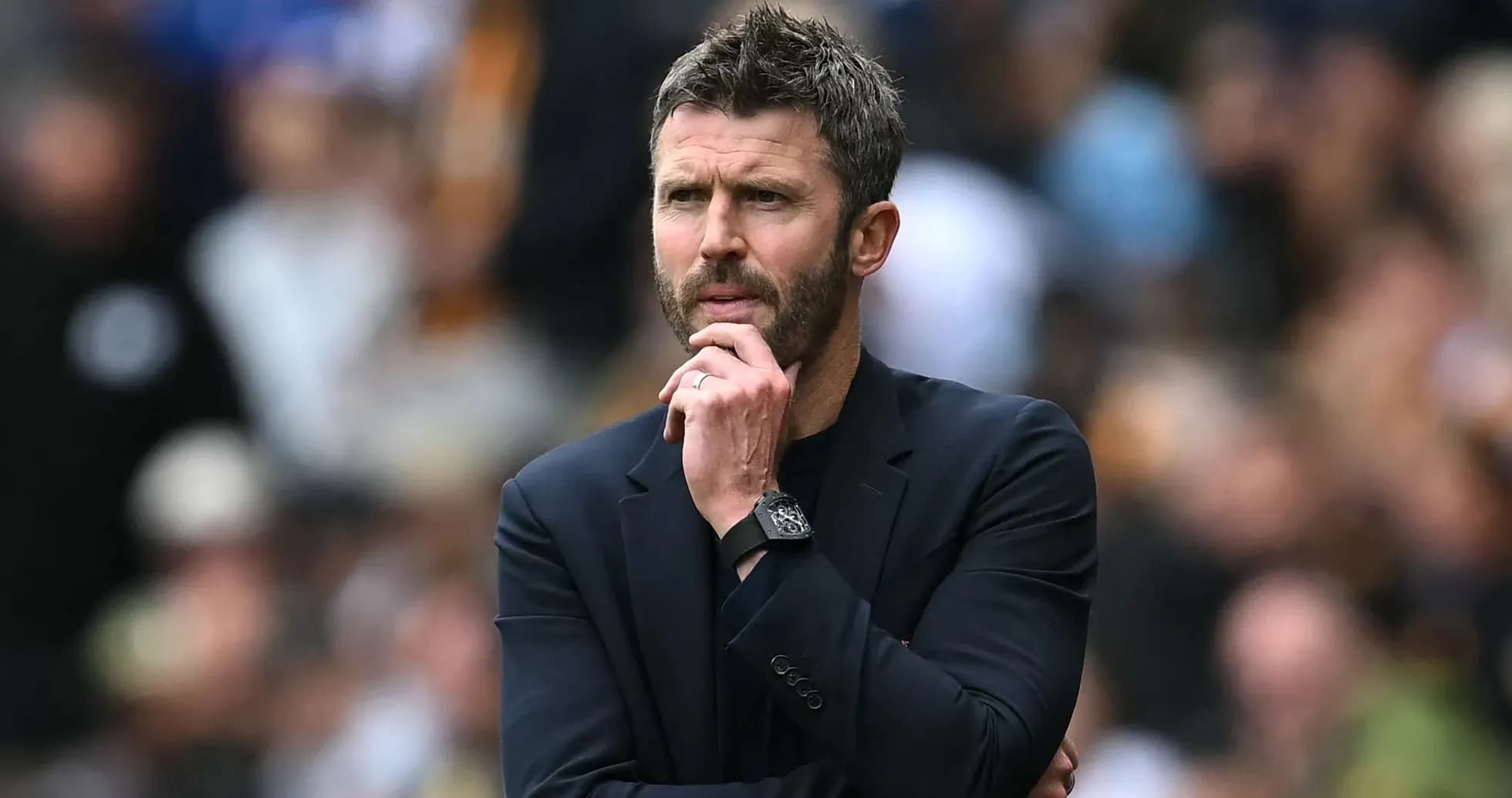
Beaten 2-0 by newly-promoted Hull City on the opening weekend, Michael Carrick’s side looked brittle at the back, short of rhythm and short of answers. With Lisandro Martinez and Matthijs de Ligt still short of full fitness, the United manager had to improvise – and the spotlight landed straight back on Harry Maguire.
Makeshift pairing, familiar problems
Carrick turned to experience, restoring the 33-year-old Maguire to the starting XI alongside Ayden Heaven. It looked like a pragmatic call on paper. On the pitch, it quickly became a liability.
Hull didn’t slice United open with sweeping moves. They didn’t need to. They simply targeted set-pieces, and United buckled. Twice.
Both goals came from dead-ball situations, the kind of moments United had quietly improved in under Carrick. At the KCOM, that progress vanished. The new partnership never settled, never imposed itself, and Hull walked away with three points that owed as much to United’s disarray as their own ambition.
Mikel Obi tears into Maguire
The fallout was swift.
Speaking on The Obi One Podcast, former Premier League winner John Obi Mikel did not bother with diplomacy when it came to Maguire’s role at Old Trafford.
“When your top centre-back is Harry Maguire, you have a problem,” he said. “Harry Maguire was never a Manchester United player, never suited the system or the football club.
“The fact that he has managed to stay there for seven, eight seasons is incredible. How has that happened? I don’t understand that, and he’s still there, and he’s the number one defender. That’s a problem.”
The criticism went beyond broad labels. Mikel zeroed in on one moment that summed up his frustration – Hull’s opening goal.
“The first goal, he was grabbing his own player and stopping him from going to defend the guy who was scoring. What was he doing? I have no idea.”
It was the kind of lapse that lives on in clips and compilations, and it fed a narrative that Maguire had worked hard to quieten over the past year.
“Squad player, not your number one”
Mikel’s assessment didn’t stop at one mistake. He questioned the very logic of Maguire’s continued status as a starter in a squad now stacked with centre-backs.
“They have Lisandro Martinez, Matthijs de Ligt, Leny Yoro; they have players there. But I don’t know why he is still starting. Is he good to be a squad player because of his experience? Yes. But not to start games, not to be your number one centre-back.”
Then came the technical critique – harsh, but specific.
“He’s slow on the ball; he touches it three or four times before releasing it. He doesn’t know what to do with the ball, he’s confused when he has the ball. A centre-back needs to move the ball quicker, but Maguire doesn’t know how to do that quickly enough and get the team to play at the right tempo.”
For a defender already under permanent scrutiny, it was a brutal public verdict from a former top-level peer.
From resurgence to renewed doubt
What made this setback sting even more was the timing.
Maguire had pieced together a genuine resurgence in the second half of last season. Under Carrick, his form stabilised, his confidence returned, and his name edged back into serious international contention. He came close to forcing his way into Thomas Tuchel’s England squad for the World Cup, a scenario that would have seemed far-fetched not long before.
All that work, all that rehabilitation of reputation, now finds itself questioned again after one chaotic afternoon against his former club.
Carrick defends the dressing room
Carrick, though, refused to join the pile-on.
He cut a frustrated figure when he faced the media, but his frustration was directed at the collective rather than individuals. The goals, he stressed, were avoidable – and decisive.
“Two goals conceded any way is frustrating,” he said. “We’ve been pretty good at defending set-pieces over a period of time but they decided the game today. One game doesn’t change the direction of everything, but we need to be aware of what we need to get better at.”
It was a manager’s response: protective, controlled, and laced with a reminder that this is a marathon, not a sprint.
Yet the question now lingers over Carrick’s team sheet as much as his tactics. With Martinez, de Ligt and Leny Yoro all in the building and edging back towards full sharpness, how long can Maguire realistically remain “number one” at the heart of this defence?
The next lineup will say plenty about where Carrick believes this United project is truly heading.