.svg&w=384&q=75 "Naijagoal logo")
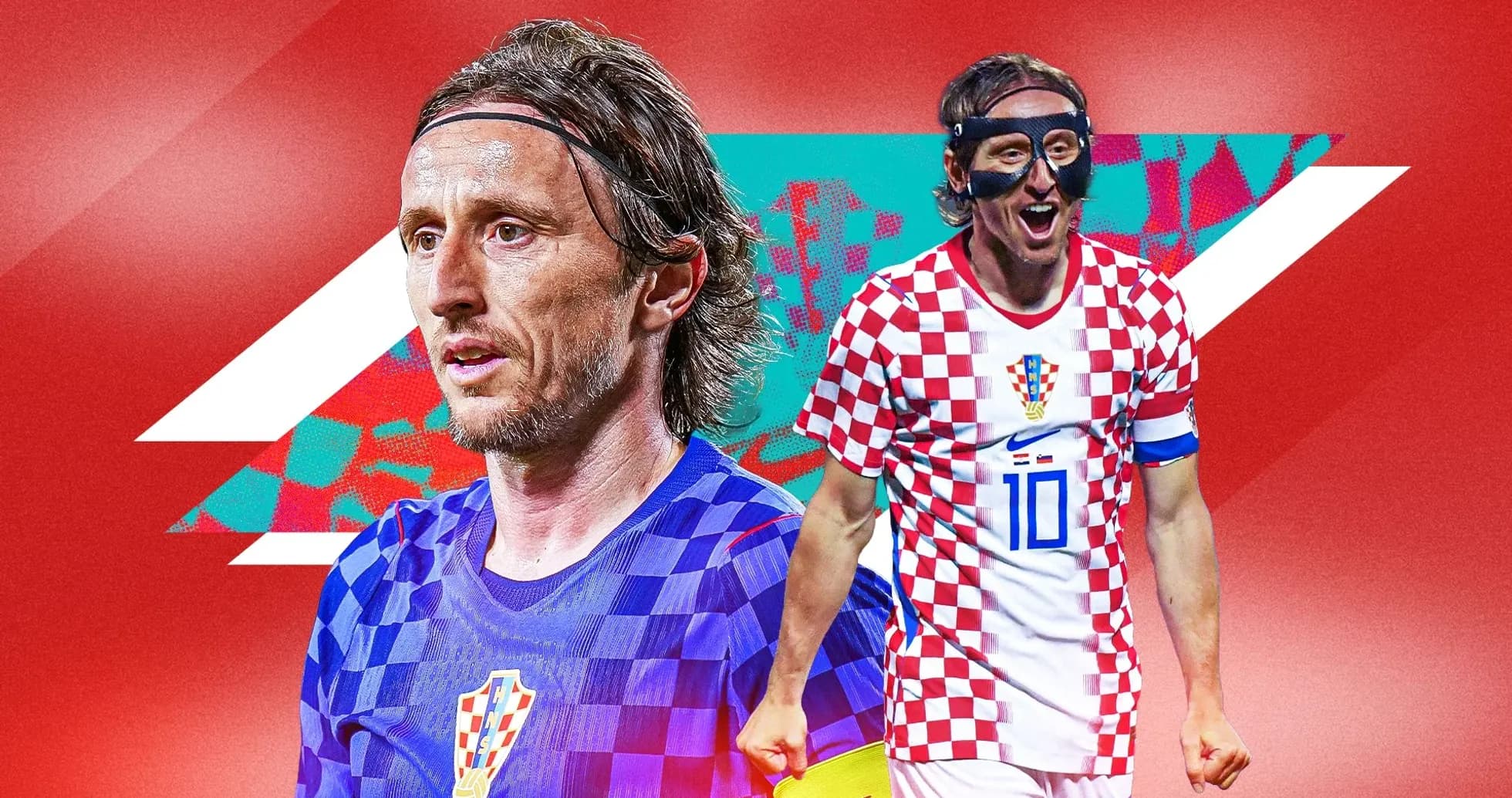

Luka Modric: A Legend's Last Stand at 40
Luka Modric stood under the Leipzig floodlights last summer looking like a man who had just watched the curtain fall on his own legend.
He had dragged Croatia to the brink again. He had scored again. He had been named Player of the Match again. And yet, as he posed with the award after that Euro 2024 heartbreaker against Italy, his eyes told the real story: a 98th-minute Mattia Zaccagni goal had knocked Croatia out and pushed Italy through. It felt like the end.
It wasn’t supposed to finish like that. Not for him.
In the press room afterwards, the emotion in the air was almost heavier than the result. Italian journalist Francesco Repice broke the usual professional distance and simply spoke as a fan, thanking Modric for “everything you have shown, not just tonight but in your career” and begging him to “never retire”. The room understood. So did millions watching.
Modric, then 38, gave a half-smile and a half-truth. He admitted he wanted to play forever, but accepted there would come a day when he would have to stop. He just didn’t know when.
Remarkably, he still doesn’t.
Milan’s gamble on a legend
When Modric walked away from Real Madrid after 13 years and a mountain of trophies, the move to AC Milan carried a hint of nostalgia. This was the club he had supported as a boy, seduced by the elegance of Zvonimir Boban. It would have been easy to assume this was a farewell tour in red and black, a romantic final chapter.
He insisted it wasn’t. He arrived in Milan talking about responsibility, not sentiment. He believed he could help revive the Rossoneri. He believed he could still shape games, shape seasons.
He was right.
The signing created noise across Italy. A 39-year-old midfielder, no matter how decorated, heading into the grind of Serie A raised obvious questions. How much was left in his legs? Did Milan even need him after bringing in Samuele Ricci, the 24-year-old billed as part of the club’s future?
Those questions evaporated once the ball rolled.
Ricci found himself watching from the bench more often than not as Massimiliano Allegri repeatedly turned to Modric. There was no resentment. Just awe. Ricci called him “the strongest player I’ve ever played with” and spoke about the Croat’s humility and intensity as if he were describing a teammate in his prime, not a veteran nearing 40.
The Italian media reacted the same way. “If he really is 40,” journalist Alberto Polverosi joked, “let’s clone him.” It didn’t feel entirely like a joke.
A force of nature at 40
On the pitch, Modric didn’t so much defy time as ignore it. He pressed, he dictated, he snapped into tackles, he threaded passes through gaps that others didn’t even see. The numbers on his passport said one thing; the rhythm of Milan’s midfield said something else entirely.
Kaka, who knew him from their days at Real Madrid, offered the most accurate description. Modric, he said, was a “force of nature”. The Brazilian talked about mentality, about how easy it is to lose hunger after winning everything, and how Modric simply refused to do so. “Lukita is crazy,” he said, in admiration. Still calling teammates. Still driving standards. Still desperate to pass on knowledge.
That energy bled into everything at Milanello. Training, matchdays, the dressing room. His technique was expected; his relentless enthusiasm at 40 was not. His presence, Kaka argued, wasn’t just good for Milan. It was good for all of Italian football.
Allegri quickly fell under the same spell. Coach and playmaker formed a close bond, so strong that whispers emerged about Modric potentially sliding straight into an assistant coach role when he finally decided to stop playing. It sounded plausible because, for long stretches of the season, he looked like Milan’s on-field coach already.
There was a downside to that, though. Milan began to lean on him too heavily.
When the mask became a necessity
The turning point came late in the campaign. In a tight, tense 0-0 draw with Juventus on April 26, Modric suffered a fractured cheekbone. It was the kind of injury that usually earns sympathy and a sensible rest. For Milan, it felt like the floor giving way.
He couldn’t start any of the final four league games. Milan lost three of them. The slide was brutal and costly: from third to fifth, from Champions League certainty to a Europa League reality. A season built on control suddenly looked fragile without the man who provided it.
The dependence on a 40-year-old was laid bare.
Allegri paid with his job after failing to secure a top-four finish. His dismissal threw Modric’s future into doubt as well. Would he stay for another season under a new coach? Would he walk away from a city and a club he has praised at every turn? Or would he accept Real Madrid’s open invitation to return to the Bernabeu in a different role, the boots finally parked for good?
For now, he isn’t saying.
What is clear is that this World Cup is widely seen as his last major tournament with Croatia. He will go into it behind a protective mask, that fractured cheekbone dictating his appearance if not his influence. The conditions are likely to be punishing, the schedule unforgiving. A masked Modric at 40 sounds like a symbol of defiance, but it will also be a physical test like no other.
He has heard the doubts before. He has built a career on ignoring them. “I never really cared what anyone else said, it only further motivated me,” he said recently. It’s not a slogan. It’s a working method.
So who dares write him off now, wrapped in carbon fibre and still orchestrating games at 40? Not in England. They’ve seen him rip up their scripts too many times to make that mistake again.