.svg&w=384&q=75 "Naijagoal logo")

Eva Carneiro Responds to Mourinho and Terry's Comments in Netflix Documentary
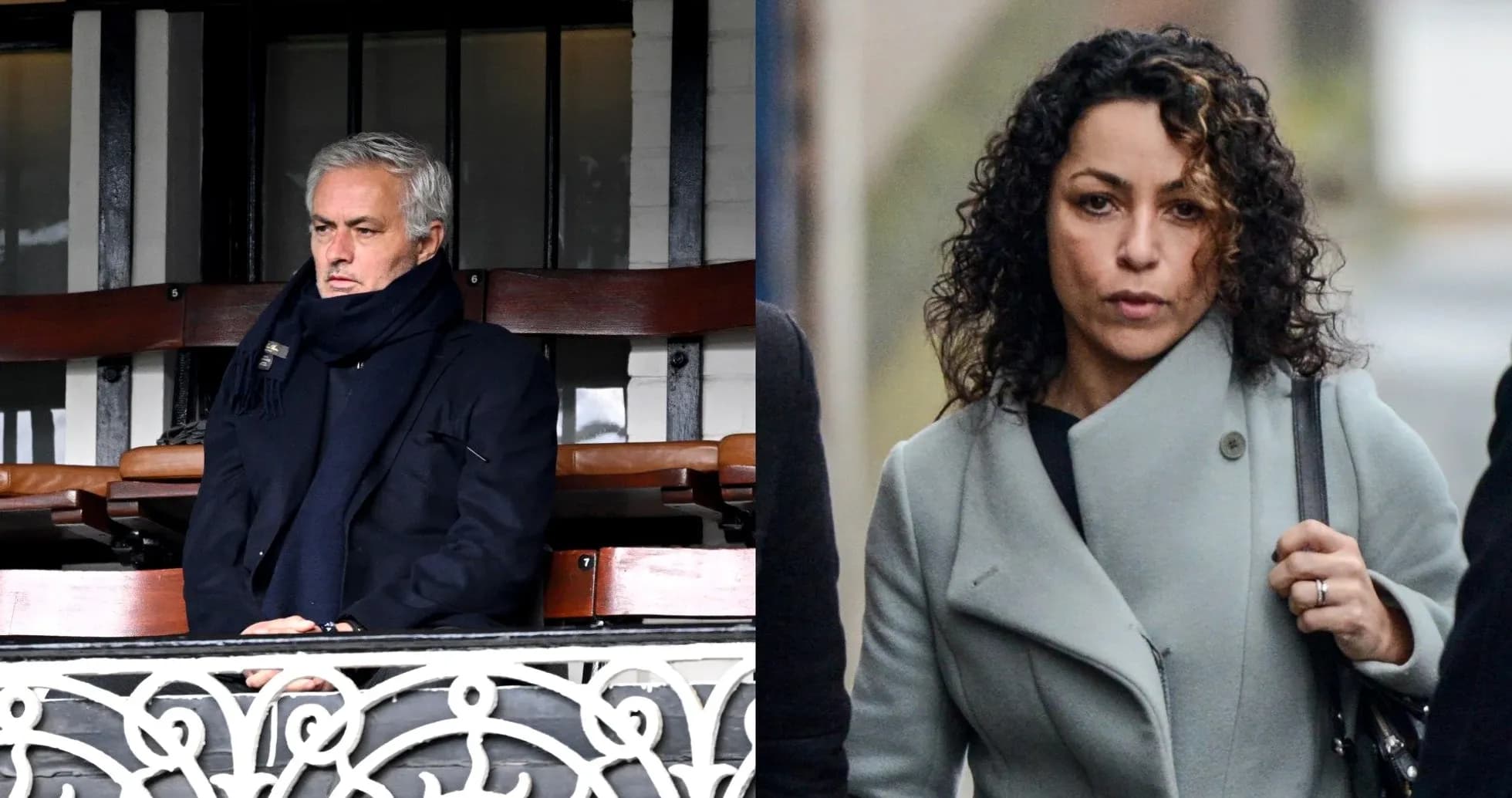
Eva Carneiro has reignited her feud with José Mourinho and John Terry after their version of her Chelsea exit resurfaced in Netflix’s new documentary, *Mourinho*.
The former Chelsea first-team doctor, whose departure from Stamford Bridge in 2015 became a landmark case for medical staff in football, has hit back publicly at how the infamous incident against Swansea City has been retold.
Old wound reopened
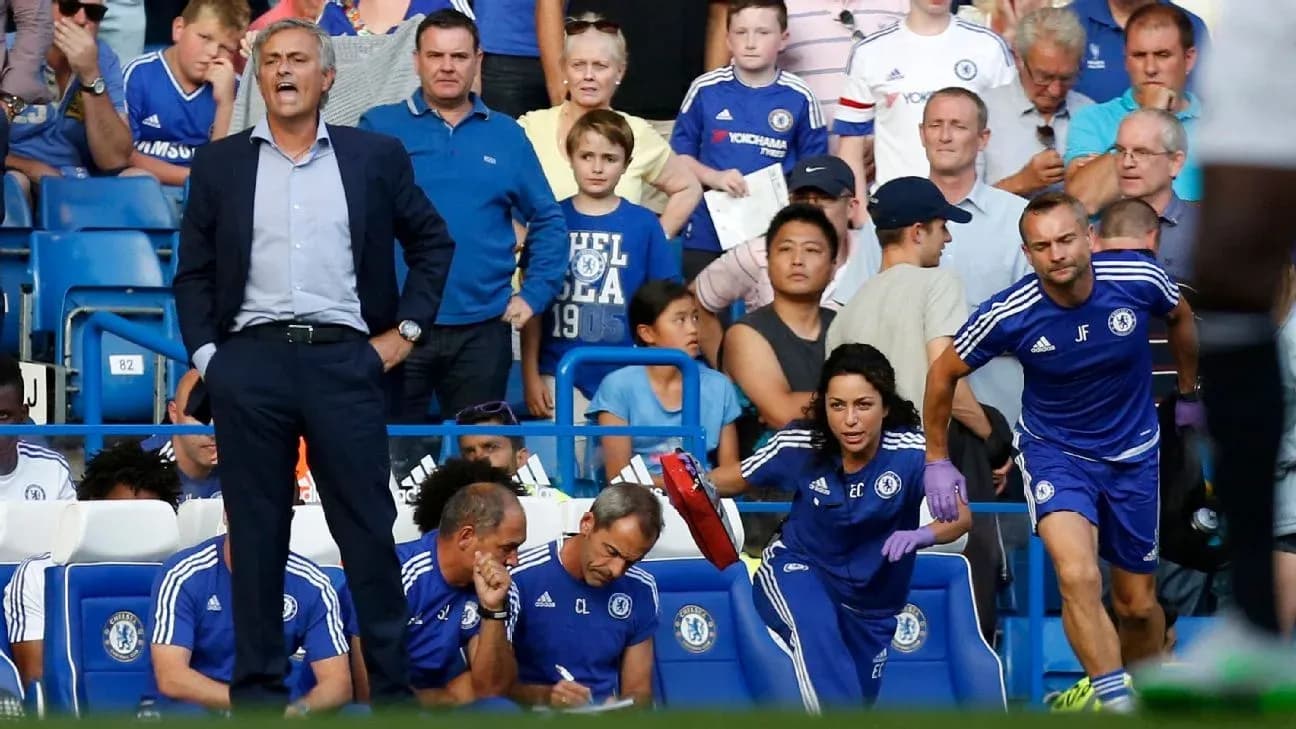
The flashpoint came in August 2015, deep into stoppage time of a 2-2 draw at Stamford Bridge. Thibaut Courtois had already been sent off. Chelsea were clinging on.
When Eden Hazard went down, Carneiro and then-head physio Jon Fearn sprinted onto the pitch to treat him. By the letter of the law, they had to. By doing so, they temporarily left Mourinho’s side with only nine men.
Mourinho exploded on the touchline. The cameras caught it. The fallout rolled on for months and ultimately ended with Carneiro leaving the club and later settling a legal claim for constructive dismissal at an employment tribunal.
Now, 11 years later, the episode is back in the spotlight.
“11 years on and here we are reliving the worst. Hope they made some money,” Carneiro wrote on X, making clear exactly how she feels about the documentary’s return to that night.
Carneiro: ‘Learn the rules of the game’
Her anger was not just aimed at Mourinho. Terry’s contribution in the film, describing what he called a dressing-room “understanding” over when medical staff should come onto the pitch, drew a sharp response.
“We are bound by a medico-legal code of conduct. Genuinely it would be healthy for John Terry to learn the rules of the game. It’s been long enough mate,” she posted.
For Carneiro, the idea that an “understanding” between players and staff could override medical duty or refereeing protocol is simply irrelevant. She stressed that the only voices that mattered in that moment were the referee’s and the player’s.
“So IT IS really simple,” she wrote. “Referee Michael Oliver called us on TWICE, player Eden Hazard requested medical assistance we then made eye contact from side line and he confirmed he needed medical assistance, TWICE. At that point my hands are bound as a medical professional.”
Her stance is backed by formal guidance. Carneiro highlighted a statement from the British Association of Sport and Exercise Medicine, which states that when a referee summons the medical team, it is their “absolute duty of care to attend and assess the player.”
Mourinho stands firm in Netflix film
Mourinho, though, has not softened his view with time.
In the documentary, he defends his reaction and doubles down on the idea that his staff should have stayed off the pitch with the game in the balance.
“I’m not a doctor, but my eyes know when a player is injured, and they know when a player is not injured,” he says. “I knew that he was not injured, but the doctors went to the pitch, and in that moment we were left with nine players.”
He also addresses the language he used towards Carneiro on the touchline, which drew widespread criticism at the time.
“For me, a lady doctor is the same as a man’s doctor. So, as always, I use my vocabulary when I’m not happy. There are words in moments where the tension is very, very high. Normally, people with football culture, with football DNA, with football background, they go over it in one second. In that case, it was different.”
The implication is clear: in his world, this should have been brushed aside as part of the game’s emotional chaos. It wasn’t.
Terry backs Mourinho’s ‘understanding’
Terry, the captain and standard-bearer of that Chelsea side, backs Mourinho’s interpretation in the film and offers a glimpse into the dressing-room mindset.
“Medically, he would say unless it’s really, really bad, then they’re not coming on,” Terry explains. “That was the understanding for us as players, the medical staff, everyone bought into that.”
Whether “everyone” truly did is precisely what Carneiro disputes.
Terry also concedes that the saga became far bigger than a single decision in stoppage time. He describes the aftermath as a major distraction during a season that quickly unravelled.
“It was a big moment, obviously, and he took a lot of backlash for that. There was a lot of heat on the football club,” he says.
Chelsea’s title defence collapsed. They finished 10th in 2015-16, the worst league campaign of the Roman Abramovich era.
Duty of care vs dressing-room code
Strip away the emotion and the story still hinges on one clash of principles: medical duty and refereeing authority on one side, football culture and dressing-room codes on the other.
Carneiro’s position is blunt. The referee called twice. The player asked for help twice. She made eye contact with Hazard, confirmed his need, and went on. At that point, she says, she had no professional choice.
Mourinho and Terry, even now, frame it as a misjudgment in game management, a failure to read the moment when the result was on the line.
The documentary has dragged that divide back into the open. The legal battle is long over, the medals and trophies are already on the shelf, but the question sits there again: in the modern game, who truly gets to decide when a player stays down and when a doctor runs on?