.svg&w=384&q=75 "Naijagoal logo")

Liverpool vs Brentford: A Season Finale Draw Analysis
On the final afternoon of the Premier League season, Anfield staged a meeting between two sides whose campaigns told very different stories. Liverpool, under Arne Slot, arrived as a high-variance contender: fifth in the table on 60 points, with a goal difference of +10 built from 63 goals scored and 53 conceded overall. Brentford, guided by Keith Andrews, had pieced together a quietly efficient year, finishing ninth with 53 points and a goal difference of +3 (55 for, 52 against overall).
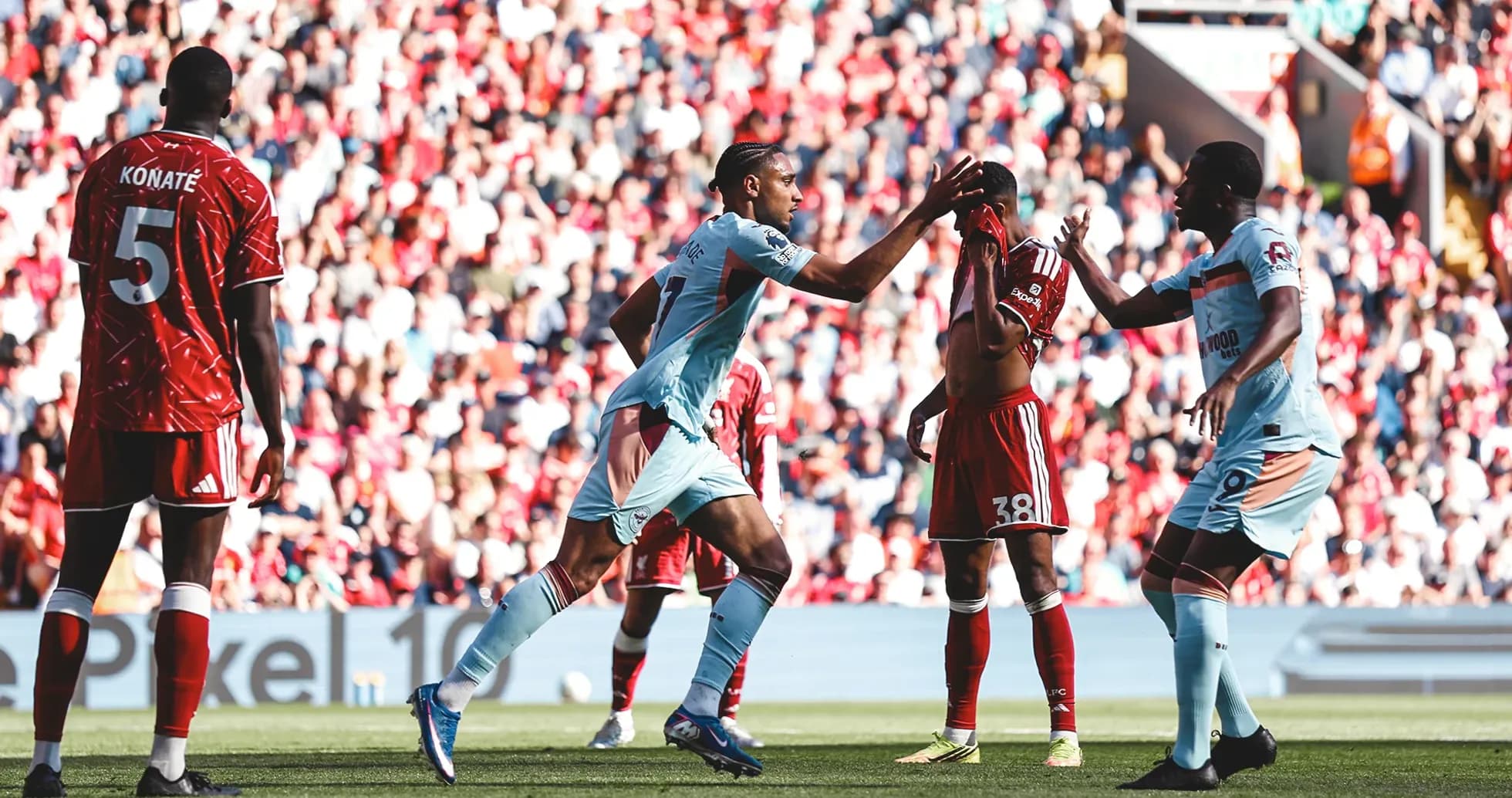
The 1-1 draw that unfolded felt like a microcosm of both seasons. Liverpool, so often expansive and occasionally exposed, were held by a Brentford side that has learned to live in the margins, to bend but rarely break. The fixture was played in the familiar theatre of Anfield, but the narrative was shaped as much by structure and absences as by atmosphere.
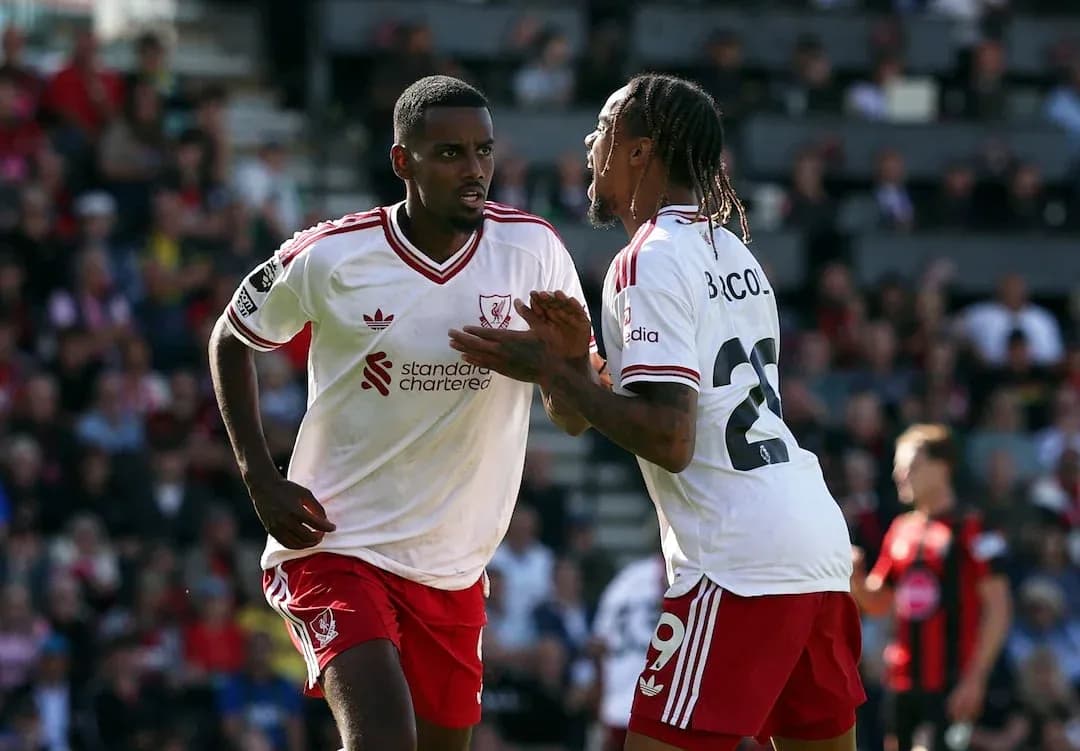
Slot went with his trusted 4-2-3-1, a system Liverpool had used in 34 league matches this season. Alisson anchored the side behind a back four of C. Jones, I. Konate, V. van Dijk and A. Robertson. The double pivot of R. Gravenberch and A. Mac Allister provided the platform for an attacking trio of M. Salah, D. Szoboszlai and the young R. Ngumoha, with C. Gakpo leading the line.
Brentford mirrored the shape: a 4-2-3-1 of their own. C. Kelleher started in goal, shielded by M. Kayode, S. van den Berg, N. Collins and K. Lewis-Potter. In midfield, J. Henderson and V. Janelt formed the engine room behind D. Ouattara, M. Jensen and K. Schade, all servicing the league’s second-leading scorer, I. Thiago, at centre-forward.
Tactical Voids and Disciplinary Undercurrents
Both managers had to negotiate notable absences. For Liverpool, the missing list was long and influential in terms of rotation and in-game options. S. Bajcetic (hamstring), C. Bradley (knee), H. Ekitike (Achilles tendon) and G. Leoni (knee) were all ruled out. The absence of Ekitike, with 11 goals and 4 assists in the league, was particularly significant; it removed a direct, vertical threat from the bench and forced Slot to lean even more heavily on Gakpo and Salah as his primary finishers.
Brentford’s own selection puzzle centred around F. Carvalho (knee), R. Henry (hamstring) and A. Milambo (knee). Carvalho’s creativity between the lines and Henry’s athleticism at full-back would have offered Andrews extra ways to relieve pressure and stretch Liverpool’s shape, especially away from home where Brentford have averaged 1.2 goals on their travels.
Across the season, discipline has quietly shaped both teams’ tactical profiles. Liverpool’s yellow-card timing shows a pronounced late-game surge: 31.58% of their yellows have arrived between 76-90 minutes, with another 17.54% coming from 91-105. It is the profile of a side that continues to press and chase games deep into added time, often at the cost of cautions. Their single red card in the league belongs to D. Szoboszlai, underlining how central he is to both intensity and risk.
Brentford’s card distribution is similarly back-loaded. A combined 47.83% of their yellows fall between 61-90 minutes, with 26.09% specifically in the 76-90 window. K. Schade embodies that edge: 6 yellows and 1 red across the campaign, often walking the line between aggression and overstepping. Their lone red card in the 31-45 range hints at the danger of emotional spikes just before half-time.
Key Matchups – Hunter vs Shield, Engine Room vs Engine Room
The headline duel was always going to be I. Thiago against Liverpool’s defensive axis. Thiago’s 22 league goals and 8 penalties scored (from 9 attempts, with 1 missed) made him the hunter in this contest. He arrived having taken 67 shots with 43 on target, a striker who does not need many touches to tilt a game.
Liverpool’s shield against him was a unit rather than an individual. At home, they have conceded 20 goals in 19 matches, an average of 1.1 per game at Anfield. The pairing of V. van Dijk and I. Konate, flanked by Robertson and the repurposed C. Jones, was tasked with managing Thiago’s physical presence and aerial threat. Van Dijk’s leadership was crucial in controlling the box, especially against a forward who has won 202 of 524 duels this season.
On the other side, Liverpool’s own attacking fulcrum was diffuse but dangerous. M. Salah, with 7 goals and 7 assists in the league, remains their most consistent creative finisher. His 49 key passes and 72 dribble attempts speak to a player who still carries the ball into decisive zones and can slide passes into runners. D. Szoboszlai, with 6 goals, 7 assists and 78 key passes, is the metronome and line-breaker, dictating tempo from the right half-space and deeper pockets.
Brentford’s answer lay in the double pivot of J. Henderson and V. Janelt. Henderson’s role was to screen Salah’s inside runs and cut off the passing lanes into Gakpo’s feet, while Janelt had to track Szoboszlai’s drifting, particularly when he dropped to help Gravenberch and Mac Allister progress the ball. Behind them, N. Collins and S. van den Berg formed a centre-back pairing that has underpinned Brentford’s relatively solid away record, conceding 31 goals in 19 away games (an average of 1.6 on their travels).
Out wide, the matchup between Salah and K. Lewis-Potter at left-back was a study in risk management. Lewis-Potter, a natural wide player asked to defend, had to decide when to step tight and when to delay, knowing that any mistimed challenge could invite danger in the box.
Statistical Prognosis and What the Draw Tells Us
Following this result, the numbers frame the 1-1 as almost inevitable. Liverpool at home have averaged 1.8 goals scored and 1.1 conceded; Brentford away have averaged 1.2 scored and 1.6 conceded. A single-goal return for each side sits neatly within those seasonal patterns.
Liverpool’s overall profile – 1.7 goals for and 1.4 against per game – paints them as a high-event team whose xG figures would likely be healthy but whose defensive looseness keeps opponents interested. Brentford’s 1.4 goals for and 1.4 against overall suggest a more balanced, almost symmetrical side, capable of grinding out points even when they are second-best territorially.
In xG terms, Liverpool’s structure with a front four of Salah, Szoboszlai, Ngumoha and Gakpo would be expected to generate a steady stream of chances, particularly through cut-backs and half-space combinations. Brentford, by contrast, funnel much of their expected threat through Thiago, set-pieces and transitional moments, trusting his efficiency in the box.
The draw, then, feels like the meeting point of two statistical truths. Liverpool’s attacking volume was checked just enough by Brentford’s organisation and Kelleher’s presence. Brentford’s reliance on Thiago’s finishing found its mark once, but not often enough to steal all three points.
In narrative terms, it was a season-ending snapshot: Liverpool, still searching for the defensive control that would turn them from contenders into champions; Brentford, quietly proving once more that with a clear structure, a ruthless number nine and disciplined late-game resilience, they can stand toe-to-toe with the league’s elite, even at Anfield.