.svg&w=384&q=75 "Naijagoal logo")
Liverpool and Chelsea Share Points in Stalemate at Anfield
Liverpool 1–1 Chelsea at Anfield, a result that keeps the hosts in the Champions League positions but stalls their late push up the Premier League table. Liverpool move to 60 points and remain fourth, while Chelsea’s point edges them to 50 and stabilises a slide that had seen them lose four straight coming into this fixture.
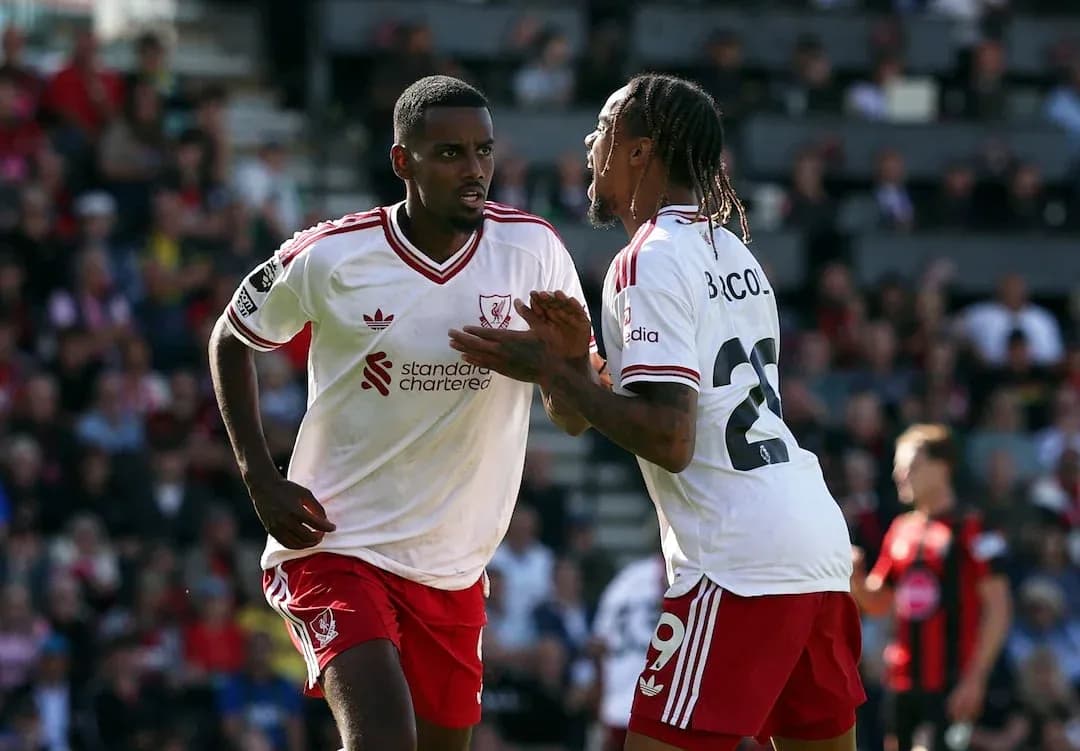
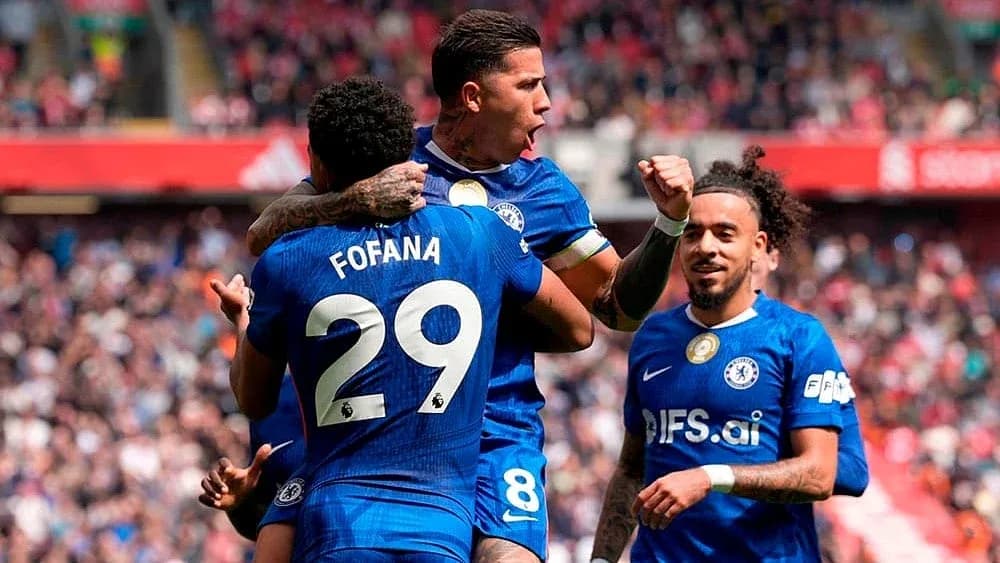
Liverpool started sharply and were rewarded inside six minutes. Ryan Gravenberch arrived from midfield to finish after Rio Ngumoha created the chance with a neat piece of play from the left, the teenager’s composure in the final third allowing Gravenberch to sweep Liverpool into a 1–0 lead. Chelsea gradually settled, and on 35 minutes Enzo Fernández levelled with an unassisted strike, arriving from deep to punish Liverpool from the edge of the area with a solo effort that brought the visitors back into the contest.
Early in the second half Chelsea thought they had turned the game around. In the 49th minute Cole Palmer found the net, only for VAR to intervene and rule the goal out for offside, cutting short the celebrations and preserving parity. The first change came on 63 minutes, when Reece James replaced Andrey Santos for Chelsea, adding more thrust and crossing quality from the right.
Liverpool responded with a double change on 67 minutes as Alexander Isak replaced Rio Ngumoha, giving more presence up front after the youngster’s bright but brief outing. In the same minute, Jorrel Hato was booked for holding as Chelsea tried to stop a Liverpool transition down their left. The disciplinary pressure on the visitors increased on 71 minutes when manager Calum McFarlane was shown a yellow card on the touchline, reflecting growing frustration with some of the decisions and his side’s inability to take control.
On 73 minutes Enzo Fernández went into the book for tripping, a late challenge in midfield that halted a Liverpool break. Liverpool then reshaped their back line on 77 minutes, with Joe Gomez replacing Ibrahima Konaté to add fresh legs in central defence, while Federico Chiesa came on for Cody Gakpo in attack, offering more direct running from the front.
The pattern of niggly fouls continued as Chelsea’s Marc Cucurella was shown a yellow card for holding on 83 minutes, again for stopping a Liverpool counter down the flank. As the hosts tried to increase the tempo late on, Joe Gomez was cautioned in the 88th minute for delay of game, taking too long over a restart as Liverpool sought to manage the closing stages. One minute later, in the 89th minute, Moisés Caicedo received a yellow card for handling, adding to Chelsea’s growing card count in a stop-start finale. Deep into added time, at 90+4 minutes, Alexis Mac Allister was booked for tripping, the final notable act of a tense but ultimately even contest.
Fixture Statistics & Tactical Audit
- xG (Expected Goals): Liverpool 0.51 vs Chelsea 0.47
- Possession: Liverpool 49% vs Chelsea 51%
- Shots on Target: Liverpool 3 vs Chelsea 3
- Goalkeeper Saves: Liverpool 2 vs Chelsea 2
- Blocked Shots: Liverpool 1 vs Chelsea 1
The underlying numbers support the draw as a fair outcome. Both sides produced almost identical xG (Liverpool 0.51 vs Chelsea 0.47), underlining how few clear chances were created by either attack and suggesting that the 1–1 scoreline was in line with the quality of opportunities rather than wasteful finishing. Possession was evenly split, with Chelsea holding a slight edge (51% to 49%), but that control did not translate into a significant volume of shots, as both teams finished with three efforts on target apiece (Liverpool 3, Chelsea 3), reflected exactly in the goalkeepers’ saves (Liverpool 2, Chelsea 2). With blocked shots also level (1–1), the game became a tactical stalemate: Liverpool’s 4-2-3-1 looked to create overloads between the lines, while Chelsea mirrored the shape and focused on compactness in midfield, limiting space for Cody Gakpo and later Alexander Isak. The near-identical metrics indicate neither side did enough to truly dominate, and the single goal each was a reasonable return for the level of attacking threat generated (xG 0.51 vs 0.47).
Standings Update & Seasonal Impact
For Liverpool, the draw adds one point to their pre-match total of 59, moving them to 60 points from 37 games. Their goals for tally rises from 60 to 61, while goals against move from 48 to 49, leaving them with a goal difference of +12. They remain in fourth place, still in position for Champions League qualification but missing an opportunity to close the gap on the sides above them in the late-season race for the top three.
Chelsea’s point lifts them from 49 to 50 points after 37 matches. Their goals for increase from 55 to 56, with goals against moving from 49 to 50, keeping their goal difference at +6. They stay ninth, still on the fringes of the European places but with a noticeable gap to the teams in the top six, meaning their hopes of late entry into the continental spots remain slim without a strong finish and help from rivals above.
Lineups & Personnel
Liverpool Actual XI
- GK: Giorgi Mamardashvili
- DF: Curtis Jones, Ibrahima Konaté, Virgil van Dijk, Miloš Kerkez
- MF: Ryan Gravenberch, Alexis Mac Allister, Jeremie Frimpong, Dominik Szoboszlai, Rio Ngumoha
- FW: Cody Gakpo
Chelsea Actual XI
- GK: Filip Jørgensen
- DF: Malo Gusto, Wesley Fofana, Levi Colwill, Jorrel Hato
- MF: Andrey Santos, Moisés Caicedo, Cole Palmer, Enzo Fernández, Marc Cucurella
- FW: João Pedro
Expert's Post-Match Verdict
This was a controlled but ultimately conservative performance from both managers, with neither side able to tilt the game decisively despite mirroring 4-2-3-1 systems and similar levels of possession (49% vs 51%). Arne Slot’s Liverpool started with intensity and used Gravenberch’s late runs, supported by Ngumoha’s width, to good effect early on, but once ahead they struggled to create high-quality chances, reflected in a modest xG of 0.51 and only three shots on target. That points to a lack of sustained penetration rather than poor finishing (3 shots on target, 1 goal).
Calum McFarlane’s Chelsea prioritised structure and compactness, keeping Liverpool largely to low-probability efforts while relying on Enzo Fernández’s individual quality to restore parity. Their own attacking output was similarly limited (xG 0.47, 3 shots on target), underlining that this was not a creative breakthrough but a solid away point built on discipline and aggressive midfield work, albeit at the cost of four yellow cards. The disallowed Palmer goal via VAR highlighted how fine the margins were; without that offside, Chelsea might have claimed all three points. In the end, the draw accurately reflected a match where both sides cancelled each other out in key zones and the data shows neither did enough to legitimately claim superiority (xG 0.51 vs 0.47, shots on target 3–3, blocked shots 1–1).