.svg&w=384&q=75 "Naijagoal logo")

Liverpool vs Brentford: Tactical Analysis of 1-1 Draw
Liverpool’s 1-1 draw with Brentford at Anfield was defined by territorial dominance versus ruthless efficiency. Arne Slot’s side, in a 4-2-3-1, controlled 60% of the ball, generated 24 shots and 2.9 xG, yet needed a second-half surge to even secure the point. Brentford, mirroring the 4-2-3-1 shape under Keith Andrews, accepted a low-possession, counter-punching role, finishing with 11 shots and 1.22 xG and leaving with a result that reflected their resilience more than their attacking volume.
Structurally, Liverpool’s shape was clear: Alisson (Liverpool) behind a back four of C. Jones, I. Konate, V. van Dijk and A. Robertson, with R. Gravenberch and A. Mac Allister as the double pivot. Ahead, M. Salah, D. Szoboszlai and R. Ngumoha supported central forward C. Gakpo. The key tactical twist was C. Jones deployed as a nominal right-back but functioning as an underlapping defender-midfielder hybrid, stepping into midfield to help overload central zones and facilitate Liverpool’s high-possession plan.
Brentford’s 4-2-3-1 was more orthodox: C. Kelleher (Brentford) in goal, a back four of M. Kayode, S. van den Berg, N. Collins and K. Lewis-Potter, shielded by J. Henderson and V. Janelt. Ahead of them, D. Ouattara, M. Jensen and K. Schade supported I. Thiago as the lone striker. Their intention was clear: compact mid-to-low block, quick transitions into the wide channels, and a heavy reliance on Schade and Ouattara to stretch Liverpool’s full-backs.
First Half
The first half, reflected in a 0-0 interval score, was a story of Liverpool’s control without incision. With 503 total passes to Brentford’s 331, and 434 accurate passes at 86%, Liverpool circulated the ball with patience. The double pivot helped lock Brentford in, while the full-backs, especially Robertson, pushed high to create 14 corner kicks overall. Yet Brentford’s compactness inside the box limited clear looks: Liverpool needed 17 shots inside the box to finally break through, a sign of volume but also of Brentford’s last-ditch defending.
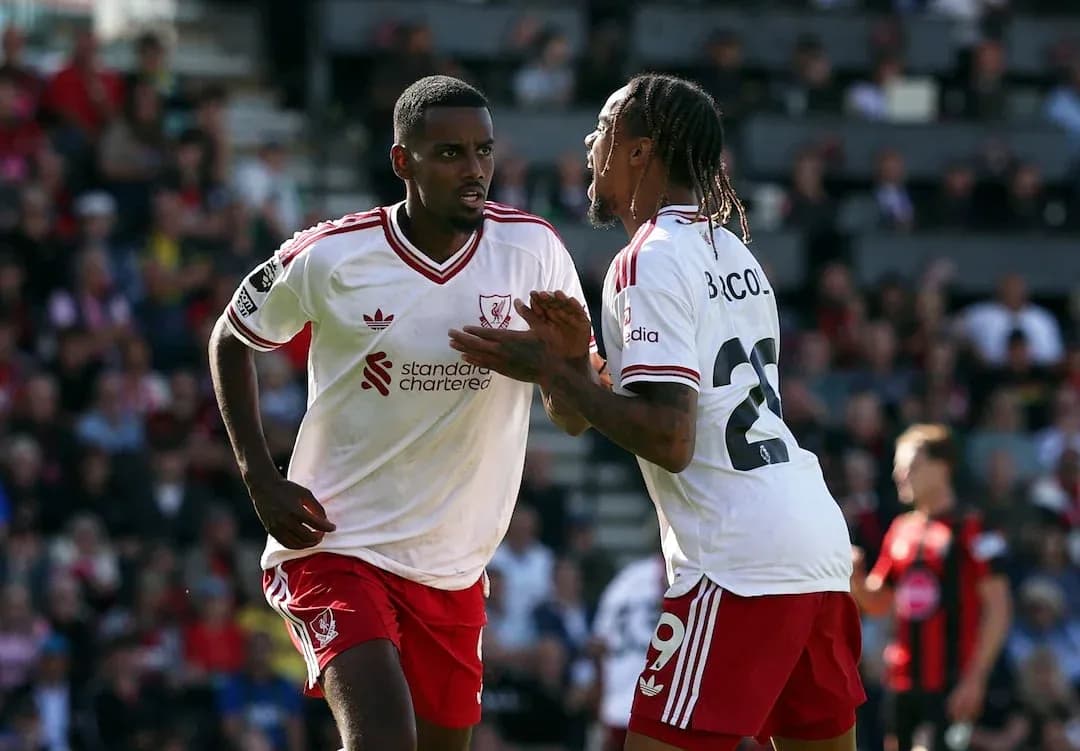
The breakthrough came on 58': C. Jones surged from his advanced right-sided role to score for Liverpool, assisted by M. Salah. Tactically, this encapsulated Slot’s idea: full-backs in name, interior midfielders in practice, arriving late in the box. It was the reward for sustained pressure and wide circulation that repeatedly pinned Brentford’s back line deep.
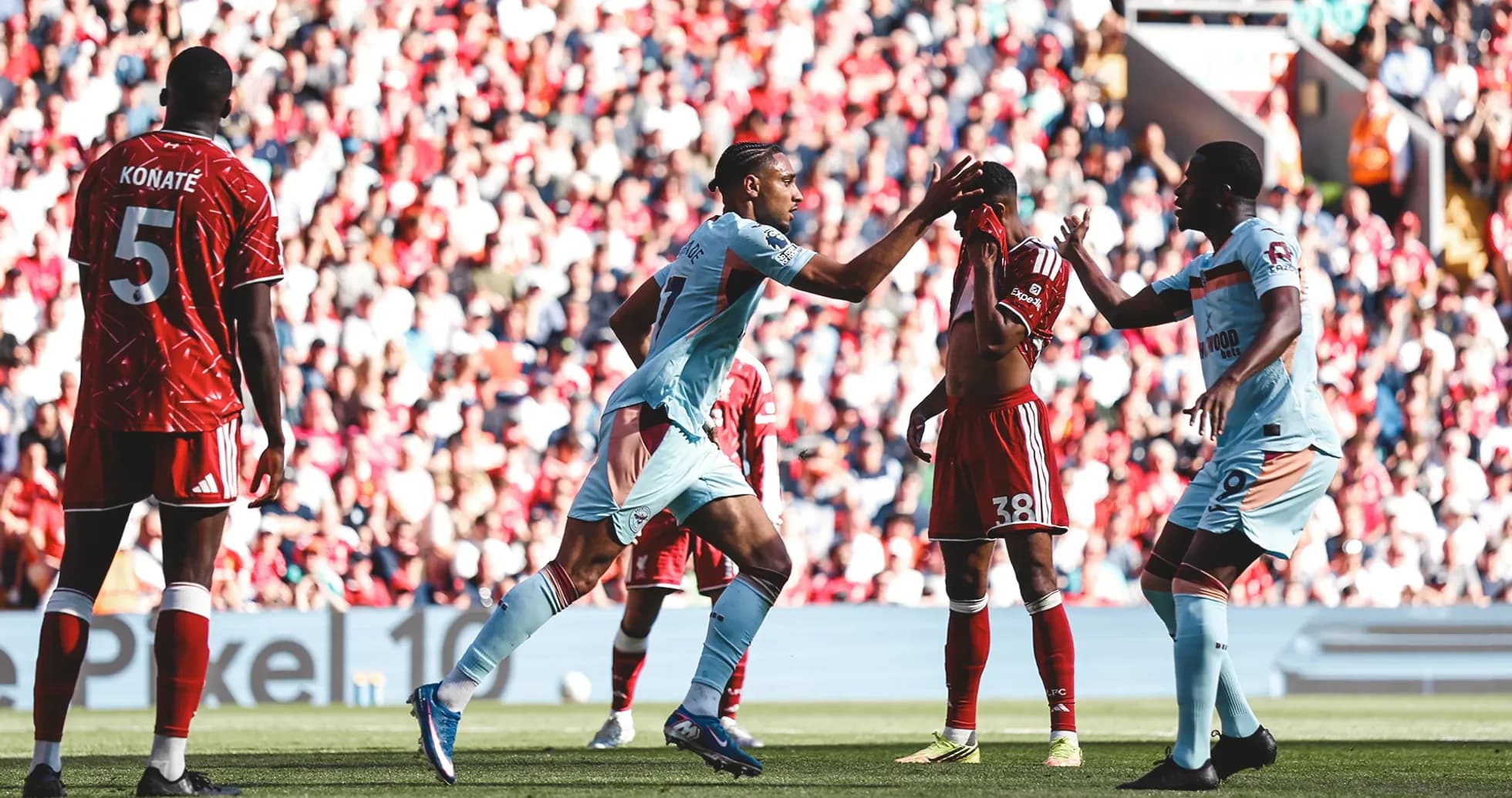
Brentford’s response, however, underlined their threat in transition. On 64', K. Schade equalised for Brentford with an unassisted goal, capitalising on a rare moment when Liverpool’s rest defence was exposed. With Liverpool’s full-backs high and both pivots engaged in build-up, space opened for Schade to attack behind, turning one of Brentford’s 9 shots inside the box into a decisive action. The 1.22 xG total suggests their chances were fewer but of reasonable quality when they did break Liverpool’s lines.
Substitutions and Tactical Changes
The substitutions then reshaped the tactical battle. At 60', A. Hickey (IN) came on for J. Henderson (OUT), signalling Brentford’s desire for fresh legs and more defensive stability on the flank as Liverpool’s wide pressure grew. Slot responded aggressively: at 73', F. Wirtz (IN) came on for R. Ngumoha (OUT), adding creativity between the lines; at 74', J. Frimpong (IN) replaced M. Salah (OUT), injecting verticality and one-versus-one threat on the right. These moves tilted Liverpool even more towards an aggressive, front-foot posture, with Frimpong’s width and Wirtz’s central craft aimed at breaking Brentford’s compact block.
Further double changes at 83' reinforced that intent. M. Kerkez (IN) for A. Robertson (OUT) and T. Nyoni (IN) for R. Gravenberch (OUT) kept the full-back energy high and freshened the midfield legs to sustain pressure. On the opposite side, Brentford introduced M. Damsgaard (IN) for M. Jensen (OUT) at 83', seeking more ball retention and counter quality, then R. Nelson (IN) for K. Lewis-Potter (OUT) at 89' to maintain an outlet on the left as they defended deeper.
Defensive Performance
Defensively, Liverpool’s structure was mostly sound in settled phases. Konate and van Dijk handled I. Thiago’s presence well, and the team conceded only 11 shots, with just 2 on target. Alisson (Liverpool) made 1 save, a reflection of how rarely Brentford managed to test him despite their equaliser. Brentford, by contrast, were under siege for long stretches: C. Kelleher (Brentford) produced 7 saves, and with 3 blocked shots in front of him plus 1.4 goals prevented, the away side’s defensive unit and goalkeeper were central to preserving the draw.
Discipline and Emotional Tone
Discipline also shaped the game’s emotional tone. An early flashpoint came even before kick-off time on the clock, with Jordan Henderson (Brentford) booked for “Argument”. Later, Liverpool’s increasing urgency brought risk: at 79', Ibrahima Konaté (Liverpool) was shown a yellow card — “Foul” — as he stepped aggressively into a challenge to halt a transition. In stoppage time, Alexis Mac Allister (Liverpool) was cautioned at 90+2' — “Foul” — again reflecting Liverpool’s high defensive line and counter-pressing aggression when counters threatened. Brentford’s late-game time management and disputes with the referee led to two more cautions: at 90+4', Vitaly Janelt (Brentford) received a yellow for “Argument”, followed by Nathan Collins (Brentford) at 90+5' also for “Argument”. The card ledger closed at Liverpool 2, Brentford 3 (total 5), consistent with the combative, tension-filled finale.
Statistical Summary
Statistically, Liverpool’s attacking profile aligned with their season-long identity as a high-volume, high-pressure side: 24 total shots, 8 on goal, 17 inside the box, and 14 corners underline their territorial siege. The 2.9 xG against just 1 actual goal points to underperformance in finishing and some standout work from C. Kelleher (Brentford), whose 1.4 goals prevented matched Liverpool’s xG wastefulness. Brentford’s 11 shots and 1.22 xG, with only 2 on target, show a side that picked its moments but lacked consistent penetration, relying on efficiency rather than sustained pressure.
In tactical terms, Liverpool did almost everything but finish the game off: structure, control, and chance creation were all present. Brentford, though, executed their game plan with clarity — compact block, selective pressing, and sharp counters — and, backed by their goalkeeper’s performance and disciplined (if argumentative) edge, left Anfield with a point that the underlying numbers suggest was hard-earned but defensively justified.