.svg&w=384&q=75 "Naijagoal logo")
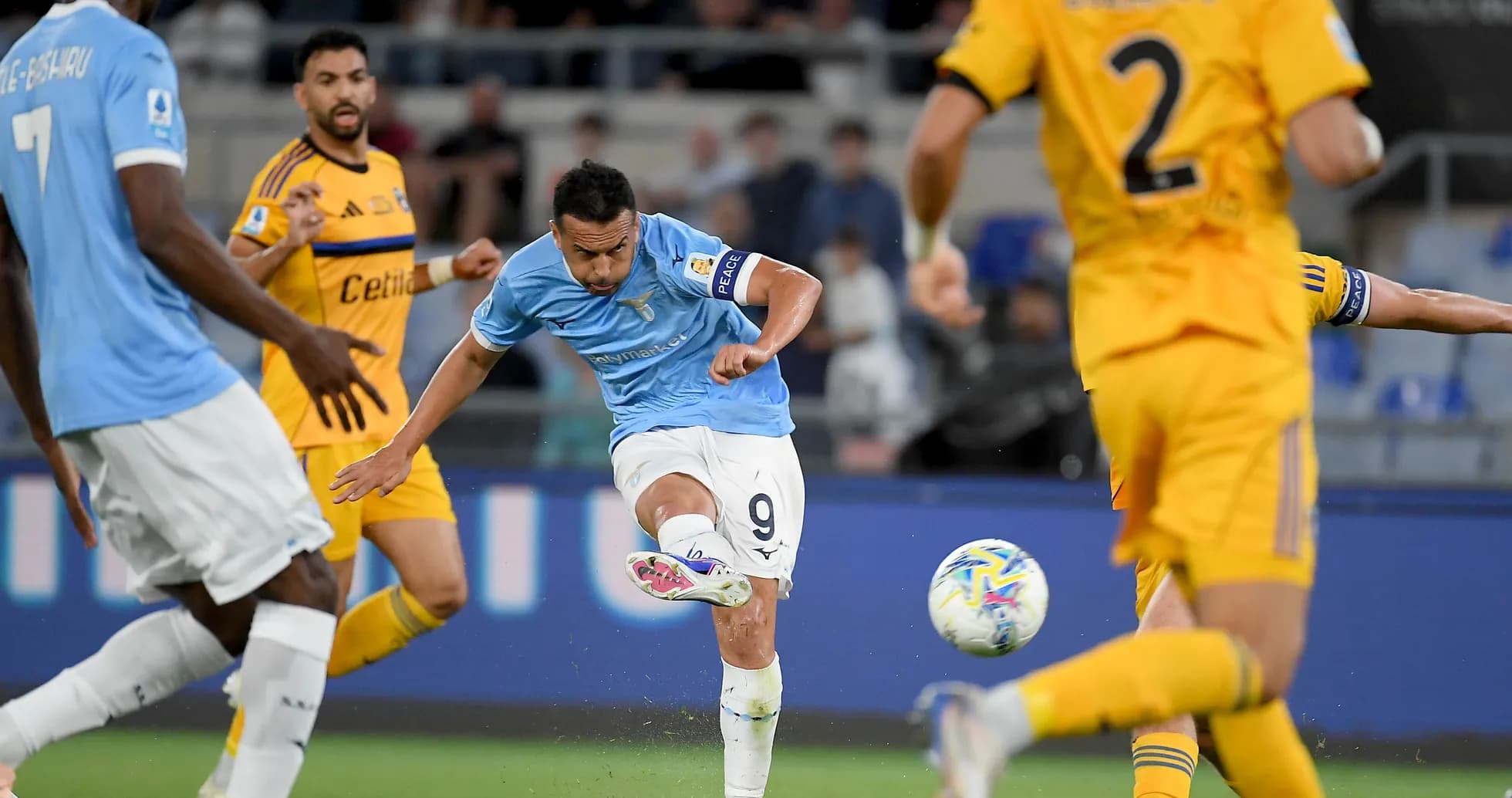

Lazio Secures 2–1 Victory Over Pisa in Serie A Finale
Under the Roman evening sky at Stadio Olimpico, Lazio closed their Serie A season with a 2–1 win over Pisa, a result that neatly distilled the campaign’s hierarchy. Following this result, Maurizio Sarri’s side locked in 9th place on 54 points, with a narrow overall goal difference of +1 (41 scored, 40 conceded). Pisa, already condemned to relegation, finished 20th on 18 points, their overall goal difference a brutal -45 (26 for, 71 against).
I. The Big Picture – Structures and Seasonal DNA
Sarri stayed loyal to his seasonal blueprint: a 4-3-3 that has been the club’s structural backbone, used in 36 league matches. Against Pisa’s 3-5-2, Lazio’s shape looked almost classical: A. Furlanetto in goal behind a back four of A. Marusic, Mario Gila, A. Romagnoli and L. Pellegrini. The midfield trio of F. Dele-Bashiru, T. Basic and R. Belahyane acted as the hinge between a rotated but still technical front three: M. Cancellieri wide, Pedro drifting inside, and T. Noslin as the central reference.
Lazio’s campaign numbers explain why this structure still inspires trust. In total this season they averaged 1.1 goals for and 1.1 goals against per game, but at home they nudged those attacking figures up to 1.4 goals scored, conceding 1.3. Six home clean sheets and 15 overall underline a defensive phase that, when focused, is robust enough to support Sarri’s positional play.
Pisa arrived with the scars of a brutal year. Their 3-5-2 under Oscar Hiljemark has been the default (21 matches in that shape), but the tactical restlessness is visible in the data: seven different formations used across the campaign. On their travels they averaged 0.9 goals scored but a punishing 2.4 conceded, with just one away clean sheet. Overall, 26 goals for and 71 against tell the story of a side constantly outgunned.
The XI here mirrored that imbalance: A. Semper behind a back three of A. Calabresi, S. Canestrelli and R. Bozhinov; a five-man midfield of S. Angori, I. Vural, E. Akinsanmiro, M. Aebischer and M. Leris; and a front pairing of S. Moreo and F. Stojilkovic tasked with punishing any Lazio complacency.
II. Tactical Voids – Absences and Discipline
Both squads came into this finale carrying visible scars. Lazio were without I. Provedel (shoulder injury), removing their established first-choice goalkeeper and thrusting Furlanetto into the spotlight. Higher up the pitch, M. Zaccagni’s knee injury stripped Sarri of one of his most direct wide threats and a player whose aggression is mirrored in his disciplinary record: 6 yellow cards and 1 red in the league, plus a missed penalty that underlines Lazio’s otherwise perfect 4-from-4 record from the spot this season.
Suspensions further reshaped the home side. N. Rovella was absent through a red card, while N. Tavares and K. Taylor missed out due to yellow card accumulation. The result was a midfield reconfiguration: Basic and Belahyane had to handle more of the build-up and screening load, with Dele-Bashiru offering vertical surges rather than a classic regista’s control.
Pisa’s list of absentees was just as telling. A. Caracciolo, their yellow-card magnet with 10 bookings, missed out through suspension. His season numbers are those of a defender under siege: 71 tackles, 24 successful blocks, 50 interceptions. Removing that level of last-ditch defending from a team that concedes 2.4 goals per game away is a structural wound. Further injuries to F. Coppola, D. Denoon, M. Marin and M. Tramoni, plus Lorran left out by coach’s decision, thinned the spine and the bench.
Disciplinary patterns over the season framed the match’s psychological edge. Lazio’s yellow cards peak late: 25.64% between 76–90 minutes, with red cards even more concentrated in that window at 55.56%. Pisa mirror that late-game tension with 25.64% of their yellows also arriving from 76–90. Even in a season closer, both sides carried the risk of a chaotic final quarter.
III. Key Matchups – Hunter vs Shield, Engine Room Battles
Without explicit top-scorer data, the “Hunter vs Shield” dynamic here is more collective than individual. Lazio’s home attack, averaging 1.4 goals per game, faced a Pisa away defence shipping 2.4. The front three of Noslin, Cancellieri and Pedro were always likely to find space between Pisa’s back three and wing-backs, especially with Caracciolo missing from the visitors’ last line.
On the flip side, Pisa’s modest but not negligible away scoring rate of 0.9 goals per game met a Lazio defence that, at home, concedes 1.3. The central duel of Mario Gila and Romagnoli against Moreo and Stojilkovic was decisive. Gila’s season has been quietly authoritative: 46 tackles, 17 successful blocks and 25 interceptions in Serie A, plus a red card that hints at a defender willing to defend on the edge. Romagnoli, with 20 blocks and 32 interceptions, brought anticipation and calm distribution (2,001 passes at 93% accuracy) from the back.
The “Engine Room” contest revolved around Basic and Belahyane against Pisa’s inner trio of Akinsanmiro, Vural and Aebischer. Aebischer, in particular, has been Pisa’s metronome and needle: 1,530 passes with 34 key passes at 85% accuracy, plus 65 tackles and 37 interceptions. His duel with Lazio’s press was the visitors’ best route to progression. Yet with Pisa often pinned back, his passing lanes were narrowed, forcing more hopeful balls into the channels for the forwards.
IV. Statistical Prognosis – Why 2–1 Felt Inevitable
Following this result, the numbers fall into place. Lazio’s overall goal difference of +1 is modest, but at home they scored 27 and conceded 25, a profile consistent with a narrow victory in front of their own fans. Pisa’s away record — 0 wins, 8 draws, 11 defeats, 17 scored and 45 conceded — almost predicts a game where they might nick a goal but are unlikely to survive sustained pressure.
In an xG frame, Lazio’s territorial dominance, structural coherence in a familiar 4-3-3 and Pisa’s undermanned, porous away defence all point towards a home xG edge and a multi-goal output. Pisa’s ability to score in total 26 times, with a slightly better attack on their travels than at home, aligns with them finding a single breakthrough rather than mounting a comeback.
The late-card profiles for both teams suggest that the final 15 minutes were always likely to be tense, scrappy and whistle-heavy, but the structural realities never changed: Lazio, even rotated and depleted, retained a clear tactical identity and enough individual quality in every line. Pisa, stripped of Caracciolo’s blocking presence and short on confidence after a season of defensive trauma, were always trying to hold back a tide.
In the end, 2–1 feels less like a twist and more like the season’s logic made visible: Lazio, flawed but organised, closing out mid-table respectability; Pisa, brave in moments, undone across 38 games by a defence that simply could not hold.