.svg&w=384&q=75 "Naijagoal logo")

AC Milan's Unexpected Defeat to Cagliari: A Season Finale Analysis
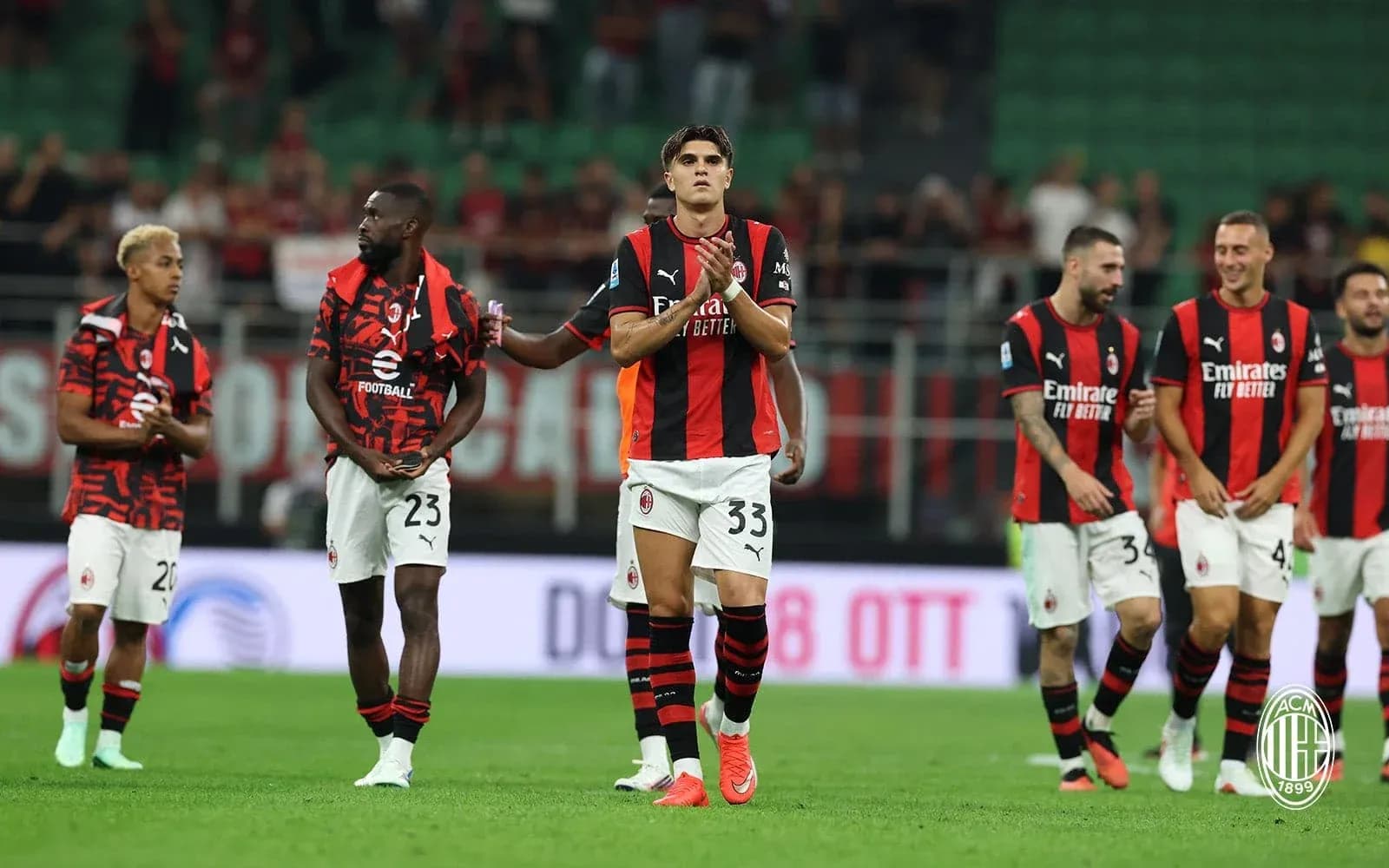
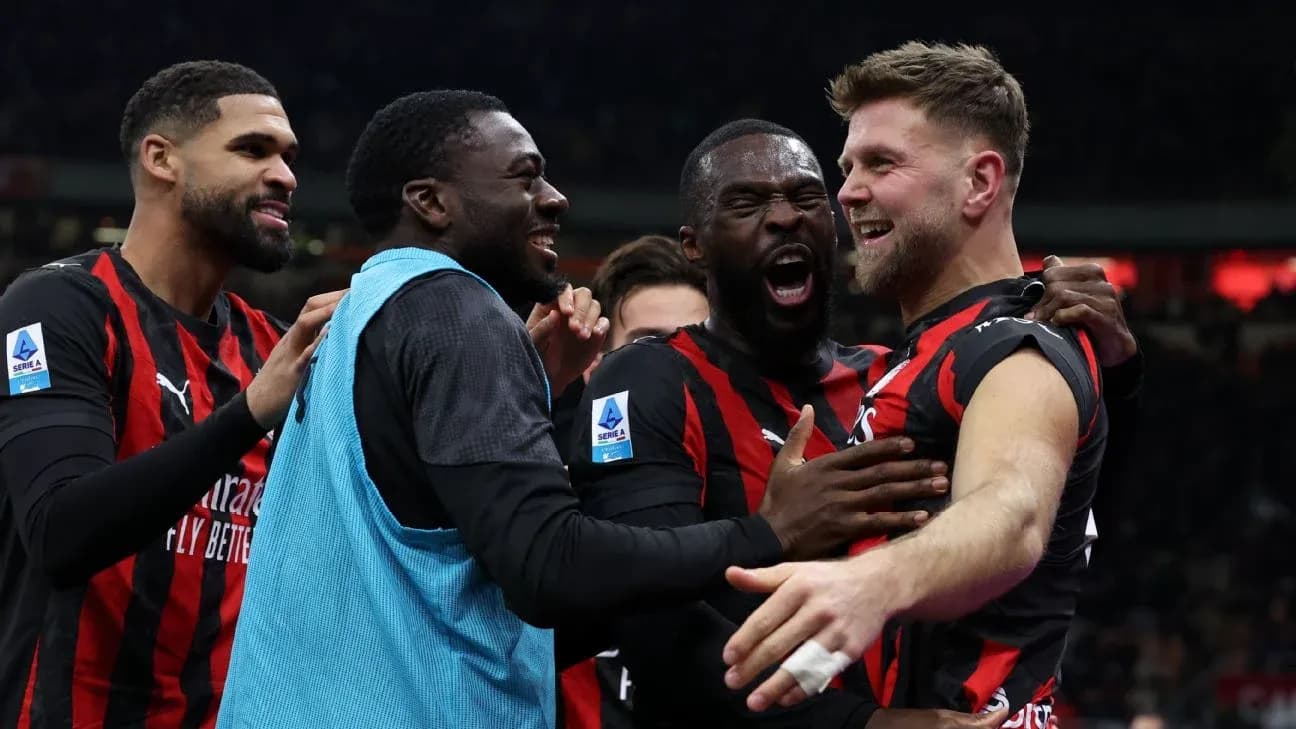
Stadio Giuseppe Meazza closed its Serie A season with a twist of narrative irony. AC Milan, the side that had spent the campaign sculpting a solid fifth-place finish and Europa League qualification, fell 2-1 at home to a Cagliari team that arrived as 14th in the table but left Milan with a statement win. Following this result, Milan’s overall record of 20 wins, 10 draws and 8 defeats (goal difference +18, from 53 scored and 35 conceded) tells of a consistent side; Cagliari’s 11 wins, 10 draws and 17 losses (goal difference -13, 40 for and 53 against) underlines a season of survival rather than flourish. Yet on this final day, the visitors bent the script.
Both coaches mirrored each other in a 3-5-2, but the shared formation concealed very different intentions. Massimiliano Allegri’s Milan used the shape as a platform for controlled dominance, while Fabio Pisacane’s Cagliari turned it into a compact, counter-punching shell.
For Milan, the back three of F. Tomori, M. Gabbia and S. Pavlovic was tasked with building from deep and defending large spaces. Ahead of them, the five-man midfield was a carefully calibrated blend: A. Saelemaekers and D. Bartesaghi as wing-backs, with Y. Fofana, A. Jashari and A. Rabiot forming the central triangle. Up front, S. Gimenez and C. Nkunku offered a dual threat: one more penalty-box oriented, the other dropping into pockets to connect play.
This structure reflected Milan’s seasonal DNA. Heading into this game, they had averaged 1.3 goals at home and 1.5 on their travels, with 1.4 overall. Defensively, they conceded 1.1 at home and just 0.7 away, for an overall average of 0.9. The Meazza had not been a fortress, but it had been controlled: 9 home wins, 5 draws, 5 defeats, 25 scored and 21 conceded. Fifteen clean sheets overall and only 7 matches failed to score pointed to a side that usually found solutions at both ends.
Cagliari arrived with a more fragile profile. On their travels they had won 4, drawn 6 and lost 9, scoring 18 and conceding 30, for an away scoring average of 0.9 and an away concessions average of 1.6. Overall, they had scored 1.1 per match and conceded 1.4. Eight clean sheets and 14 matches failed to score highlighted their volatility: capable of shutting up shop, equally capable of disappearing in the final third.
Pisacane’s selection and the absences list made his intentions clear. Cagliari were without M. Folorunsho (muscle injury), R. Idrissi (knee), S. Kilicsoy (personal reasons), J. Liteta (thigh) and L. Pavoletti (knee) – a cluster of missing attacking and rotational options that narrowed the coach’s margin for in-game adjustment. The XI he chose – E. Caprile in goal behind a back three of J. Pedro, Y. Mina and J. Rodriguez, with G. Zappa and A. Obert as wing-backs, and M. Adopo, G. Gaetano, A. Deiola in central roles – was built to suffer without breaking. Up front, G. Borrelli and S. Esposito formed a hard-working, tactically disciplined pair.
Esposito was the creative and emotional reference point. Heading into this game, he had 7 goals and 5 assists in Serie A, with 71 key passes and 1003 total passes at 75% accuracy. Those numbers, combined with 56 tackles, 4 successful blocks and 20 interceptions, painted the picture of a complete engine: creator, presser, and auxiliary defender. In a side that averaged only 1.1 goals overall, his 5 assists were a lifeline.
On the Milan side, the offensive ceiling was defined by Rafael Leão and Christian Pulisic, even though both started on the bench. Leão’s 9 goals and 3 assists, underpinned by 45 shots (24 on target) and 23 key passes, made him the symbolic “hunter” of this squad. Pulisic, with 8 goals and 4 assists, 41 shots (25 on target) and 38 key passes, had been the season’s most balanced attacking contributor. Yet Allegri chose to begin with S. Gimenez and C. Nkunku, keeping those two as high-impact options to change the rhythm later.
Behind them, Milan’s disciplinary profile hinted at a team that often had to manage emotional peaks. Their yellow-card distribution showed a late-game surge: 25.00% of yellows arriving between 76-90 minutes, and another 14.06% between 91-105. Red cards were spread thinly but tellingly – one each in the 16-30, 46-60 and 91-105 windows. Cagliari were even more combustible late on: 27.16% of their yellows came from 76-90, and both of their red cards this season were shown in that same 76-90 band. A. Obert embodied that edge, with 9 yellows and 1 yellow-red across 35 appearances, despite his impressive 68 tackles, 18 successful blocks and 42 interceptions.
This disciplinary pattern intersected sharply with the tactical narrative of the match. As legs tired and spaces opened, Milan’s need to chase the game clashed with Cagliari’s willingness to foul, break rhythm and defend their box in numbers. Obert’s role on the left, often facing Milan’s right-sided rotations and later the incursions of substitutes like Pulisic or R. Leao, became a duel of attrition: his aggression and timing against their dribbling and combination play.
In the “Hunter vs Shield” lens, Milan’s season-long attack – 53 goals in total at 1.4 per match – ran into a Cagliari defence that, while porous overall, could be obdurate in specific game states. The visitors had kept 2 away clean sheets and 8 overall, and their best away win was a tight 2-1, mirroring the final scoreline here. Milan’s “shield” had been stronger than their visitors’ on paper, with only 35 conceded overall and an away defensive average of 0.7, but on this day the structure cracked at key moments.
In the engine room, the contrast was equally sharp. Milan’s trio of Fofana, Jashari and Rabiot sought to control tempo, recycle possession and create stable platforms for wing-backs and forwards. Cagliari’s midfield, anchored by Deiola and Adopo, with Gaetano and Esposito as the more progressive elements, had a different brief: compress central spaces, track runners, and launch quick, vertical breaks. Esposito’s 312 duels and 149 wins underlined his willingness to engage physically; his 56 fouls drawn and 45 committed suggested a player who lives on the edge of control, a trait that suited Cagliari’s game plan at San Siro.
From a statistical prognosis standpoint, this result sits slightly against the grain of season-long expectation. Milan’s xG profile (implied by their 1.4 scoring and 0.9 conceding averages) would normally tilt a home fixture like this in their favour, especially against an away side conceding 1.6 on their travels. Their perfect penalty record – 7 scored from 7 overall, 100.00% conversion with no misses – further underlines their usual efficiency in key moments. Cagliari, by contrast, had only 2 penalties all season, both scored, and relied more on open-play craft from Esposito and set-piece presence from Mina and Obert.
Yet football is played in ninety minutes, not in spreadsheets. Milan’s late-season form line of “LWLLD” hinted at a side losing some edge, while Cagliari’s “WWLDW” suggested a team finishing with a surge of belief. At the Meazza, that momentum inversion materialised: Milan’s structural superiority and deeper bench, featuring names like Leao, Pulisic, L. Modric and P. Estupiñán, could not override Cagliari’s clarity of plan, resilience under pressure and ruthlessness in the decisive zones.
Following this result, the league table confirms what the eye test suggested over 38 rounds: Milan are a nearly-complete side, with a strong defensive platform, reliable penalty-taking, and high-end individual talent in attack, but still prone to occasional home lapses. Cagliari remain statistically fragile, with a negative goal difference of -13 and away averages that speak of vulnerability, yet they carry a hardened competitive edge, personified by Esposito’s all-action creativity and Obert’s combative defending.
On this final evening at San Siro, the numbers bowed, briefly, to narrative. The Europa-bound giant stumbled; the mid-table survivor roared. The tactical blueprint for both, heading into the next campaign, is clear: Milan must turn territorial control into more ruthless home efficiency, while Cagliari must find a way to graft this kind of disciplined, opportunistic performance onto a season that still concedes too many and scores too few.