.svg&w=384&q=75 "Naijagoal logo")
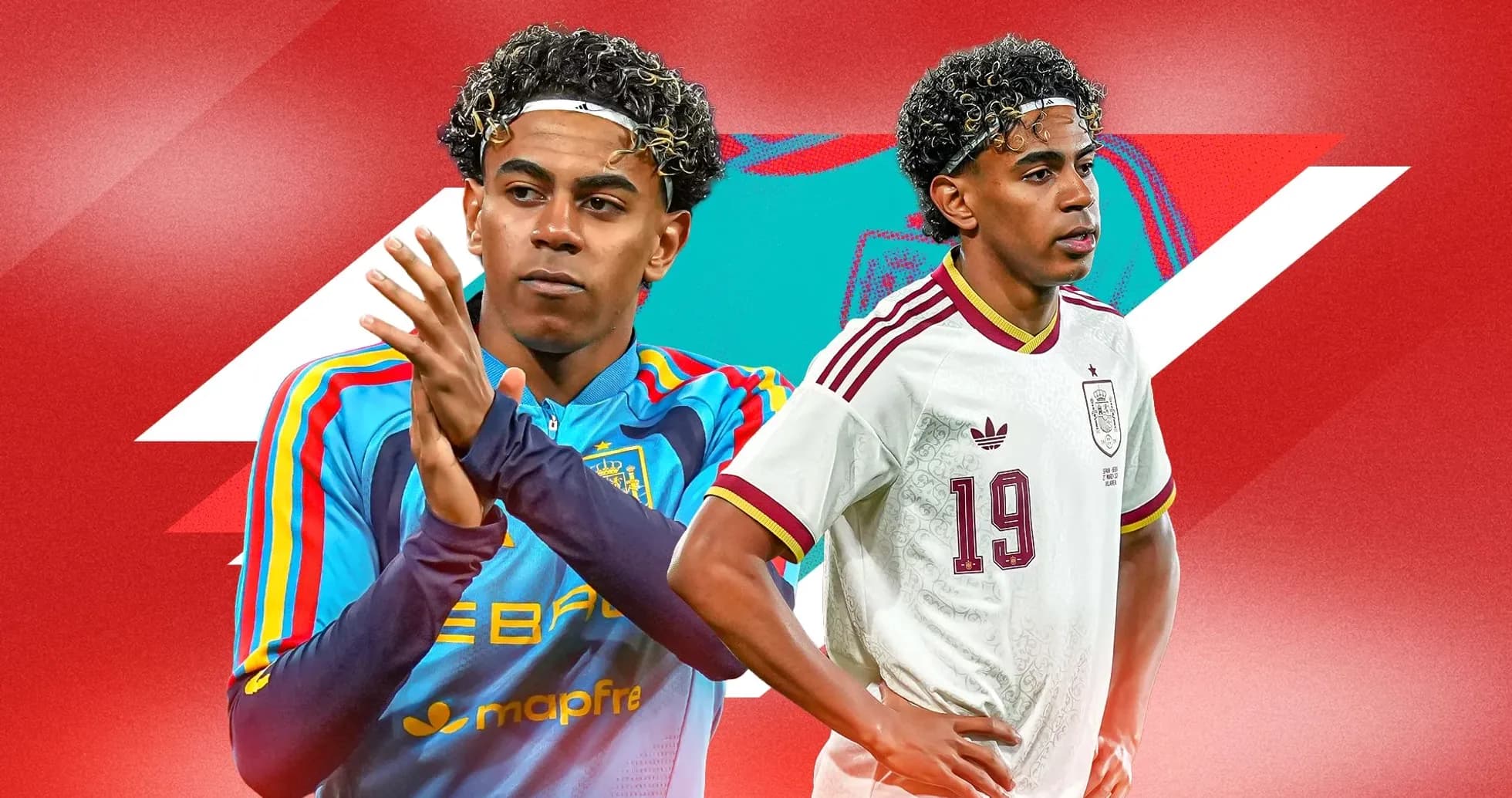

Lamine Yamal's World Cup Hopes Amid Injury Concerns
Lamine Yamal’s World Cup dream was supposed to be routine. A penalty, a celebration, a stroll back to halfway. Instead, the moment that should have underlined his status as Barcelona’s rising star has left a nation holding its breath.
Seconds after burying what turned out to be the winner against Celta Vigo on April 22, Yamal signalled to the bench, sank to the turf and stayed there. The noise inside the stadium flipped from joy to anxiety in an instant. Hamstring. Left leg. The two words no winger wants to hear.
A season of brilliance, and breaks
He has not played since. Early reports in Spain painted a grim picture: fears of a torn hamstring, talk of up to eight weeks out, and the nagging suggestion that even that might not be enough to restore full sharpness before the World Cup in North America.
Barcelona tried to steady the mood. The club confirmed a hamstring injury in his left leg, announced a conservative treatment plan and ruled him out for the rest of the league season. Crucially, they also insisted he was still expected to make the World Cup. Hansi Flick backed that stance, a clear sign of just how central Yamal has become not only to Barça’s project, but to Spain’s.
This was not an isolated bump in the road. For all his outrageous talent, Yamal’s campaign has been punctured by physical setbacks that serve as a reminder: he is still a teenager, still adapting to the brutal rhythm of elite football.
Right at the start of the season, pubalgia stopped him cold. The chronic groin issue – the same problem that dogged Chelsea’s Cole Palmer through much of 2025-26 – cost him five games. It is the classic sports hernia complaint, a by-product of those violent changes of direction, the feints and bursts that define a modern winger. Young players, newly exposed to senior intensity, often pay the price.
In September, the condition flared again and dragged him into a familiar club-versus-country storm. Spain were accused of failing to “take care” of him after he aggravated the problem on international duty. The response from Barcelona was swift: no November camp, no risks. They will not want that saga replayed on the biggest stage of all.
Back on the grass, back in the spotlight
Late May brought the first real sign that the tide might be turning. Yamal posted a video from Barcelona’s training ground: back on the grass, ball at his feet, moving with the swagger that has already become his trademark. At one point he flicked the ball over a training dummy with his heel, then cushioned it away as if to say: don’t worry about my touch.
Two days later, his name appeared – inevitably – in Spain’s World Cup squad. No manager in the world leaves out that level of talent if there is even a reasonable chance of using it, and Luis de la Fuente is no different. Spain’s opener against Cape Verde on June 15 was still almost three weeks away. Time, on paper, to build him back up.
The reality is more complicated. World Cups are littered with stories of coaches rolling the dice on half-fit superstars. Some pay off. Many don’t. Yamal is shaping up to be one of the most high-profile gambles of this edition.
Reports in Spain suggest he may not be ready until the third group game, against Uruguay on June 27. According to Mundo Deportivo, medical teams from Barcelona and the Spanish federation have been in constant contact and broadly agree: he should not be risked in the first two matches.
De la Fuente has sounded slightly more bullish in public. He has spoken of expecting Yamal, Nico Williams and Mikel Merino to be available for the first match, or failing that the second or third. The injuries, he admitted, are putting the squad under pressure. Any problem picked up now is hard to shake off in time.
Can Spain cruise without their wonderkid?
Spain’s luck lies in the draw. Group H is forgiving for a reigning European champion. Cape Verde first, Saudi Arabia next, then Marcelo Bielsa’s Uruguay as the final hurdle. On paper, La Roja should have enough to control the group even if Yamal watches the early action from the bench or the stands.
There are options. Yeremy Pino’s versatility makes him an obvious candidate to fill the right flank. Victor Munoz of Osasuna can also operate out wide. Both are diligent, both can stretch the pitch, both understand the demands of tournament football.
The picture is complicated by the fact that Nico Williams, Spain’s electric left-winger, is only just returning from his own hamstring issue. De la Fuente has protected himself by loading the squad with players who can slide between positions. Alex Baena can drift wide from midfield, Mikel Oyarzabal has played across the front line for years. Spain’s attacking jigsaw has enough pieces to complete the early picture.
The calculation changes once the knockouts begin.
If Spain top their group, the last 32 should bring the runner-up from Group J, most likely Austria or Algeria unless Argentina stumble. After that, the names get heavier: Croatia or Colombia in the round of 16, perhaps Belgium in the quarter-finals, then the spectre of France looming over a potential semi-final. Survive all of that and England may be waiting at the end.
Those are the nights when a team needs more than structure and depth. It needs a player who can tilt a game in a single movement. That is why Spain are prepared to be patient. Yamal proved at Euro 2024 that he is exactly that type of footballer.
He started that tournament quietly, then caught fire when it mattered. Assists in the last 16, quarter-finals and final. A thunderous, unforgettable strike against France in the semi-final. At 17, he was already deciding the biggest games on the continent.
The 20-minute weapon
De la Fuente has already hinted at one possible role if Yamal cannot yet handle 60 or 70 minutes: the 20-minute closer. The player you unleash when the game is stretched, when tired legs and tired minds are begging to be punished.
“In a call we contemplate all the scenarios,” he told Sport in April. Winning, losing, playing against 10 men – he wants specialists for every situation. Some players, he noted, may not be able to give 50 or 60 minutes, but can deliver 20 “very good ones”. In knockout football, those 20 minutes can define an entire campaign.
Spain’s coach is clear about the priority: arrive at the decisive moment with the best possible team, even if that means waiting, even if that means using Yamal as a weapon off the bench rather than the face of the starting XI.
A World Cup built for a star
The world will not wait quietly. Players like Yamal are the reason neutral fans tune in, the reason children stay up late, the reason a World Cup still feels like a global event rather than just another tournament. To lose him, or to see him diminished, would be a waste.
His dribbling is not just effective, it is theatrical. He feints, stops, explodes. He toys with defenders, then punishes them. He can turn a group-stage dead rubber into a highlight reel and a tight knockout tie into a personal showcase.
De la Fuente knows what he has on his hands. He has called Yamal “very young but very mature”, a player who understands that this is his moment and that football does not guarantee a second one. No one knows what the next World Cup will bring. Injury, form, competition – nothing is promised.
Yamal will not turn 19 until six days before the final. By then, he could be a world champion, a global superstar, the undisputed reference point of this Spain side. Or he could be left wondering what might have been, his tournament reduced to cameos and caution.
The hamstring will decide how often we see him. His talent will decide what we remember.