.svg&w=384&q=75 "Naijagoal logo")

Jay-Z's Roc Nation Sports Dominates European Transfer Market
Jay-Z has spent a career turning culture into empire. This week, his latest power play didn’t drop on a stage or a streaming platform, but in the boardrooms and back channels of the European transfer market.
Twenty-four hours after his first rap verse in four years surfaced on Beyoncé’s extended remix pack of Morning Dew (Donk), another victory arrived – this time for Roc Nation Sports, the sporting arm of his entertainment machine. The beat wasn’t a bassline. It was the thud of a record-breaking transfer fee landing in Real Madrid’s accounts and the rustle of a new mega-contract for one of the world’s most marketable forwards.
From Tidal streams to transfer fees
Jay-Z’s portfolio has long spilled beyond music: Tidal, streetwear, champagne, cognac. But it is Roc Nation Sports – born in 2013 in partnership with Creative Artists Agency – that is now muscling its way into football’s most sensitive territory: the transfer market and its power dynamics.
The agency cut its teeth in American sports, representing stars from the NBA, NFL and MLB, including Kevin Durant. Football came later. Jérôme Boateng became the first major client from the European game in 2015. Four years on, Roc Nation Sports International (RNSI) was launched, with London as its base and a clear objective: secure a foothold among elite players at the biggest clubs.
It has worked. The roster now runs beyond 100 footballers, headlined by Vinícius Júnior, the Brazil forward whose new contract with Real Madrid this week underlined both his value and the agency’s clout. The deal, believed to be worth around €25m a year, arrived after months of speculation and a determined attempt to push his earnings closer to Kylian Mbappé’s bracket.
Arsenal had hovered, intrigued by the possibility of a seismic move. They were prepared to spend heavily on a fee, but those close to the situation believed a free transfer next summer was a more realistic route. RNSI allowed Vinícius’s deal to run into its final 12 months, inviting interest and pressure. The message was clear: pay up, or risk losing him.
Real Madrid blinked first. They raised their offer, Vinícius signed, and a potential auction vanished. The decision strengthens their frontline yet may carry a cost elsewhere. The size of the Brazilian’s new package is understood to have complicated Real’s pursuit of Rodri, with Barcelona seizing the initiative in the race for the Manchester City midfielder.
Diomande’s record move and a €17m commission
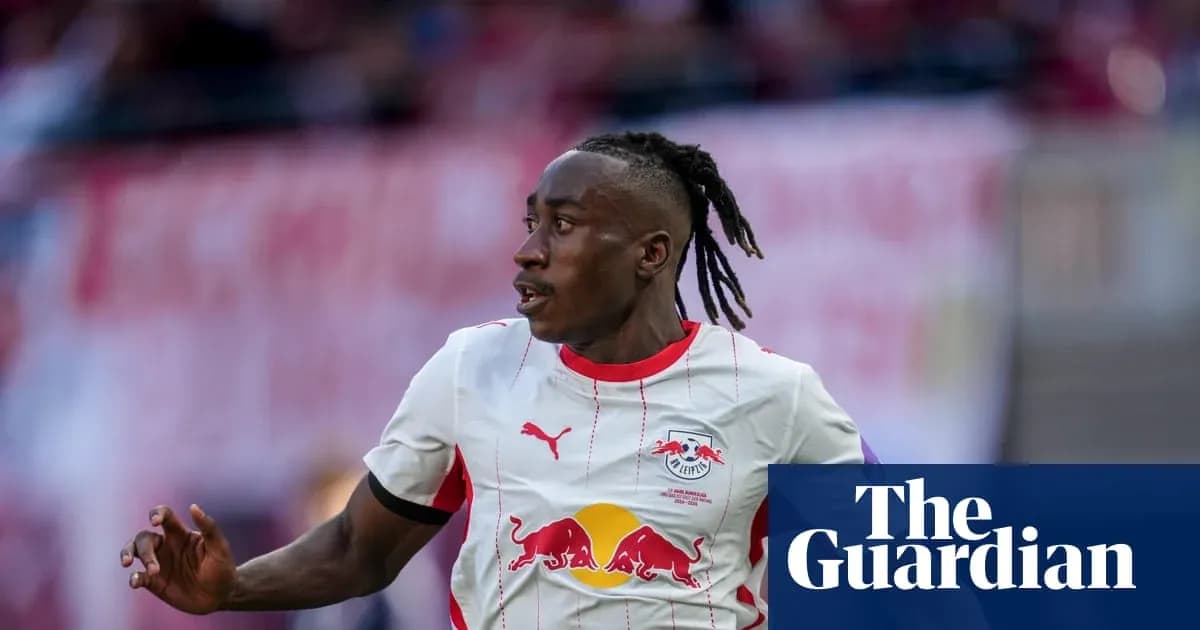
On the same day Vinícius’s six-year contract extension was confirmed, another Roc Nation client touched down in Madrid. Yan Diomande, 19 years old and only 46 senior appearances deep into his career with RB Leipzig and Leganés, arrived to complete a £115m move that makes him the most expensive African player in history.
The image that followed told its own story: Diomande on a private jet, flanked by his agents Nathan Campbell and Kareem Gbaja, flying towards the Bernabéu and a seven-year deal. RNSI is reported to have earned up to £17m in commission and fees from the transfer – a staggering figure that underlines just how central agents have become to football’s financial ecosystem.
Liverpool’s failed pursuit set the tone for the saga. Their £70m bid in June was rejected by Leipzig, who stood firm on their valuation. As the weeks passed, the price climbed, the tension rose and the suitors circled. Paris Saint-Germain were told they would need to go beyond £100m to get a deal done. They walked away at the end of July, issuing a pointed statement accusing unnamed agents of “inflationary and manipulative games”.
Real Madrid stayed in. They paid. Diomande joined, and the power of RNSI’s network became impossible to ignore.
Legal fights in the shadows
Big money rarely travels alone in modern football. Diomande’s rise has already triggered two legal battles, both aimed at securing a slice of his future earnings and image.
Former Bournemouth winger Max Gradel, through his agency Maxidel Management, claims to have had an existing agreement with the player. He has lodged a complaint with Fifa, arguing that Diomande was already tied to his representation before joining RNSI. World football’s governing body did not move to block the transfer, so the winger’s Madrid move went through on schedule. RNSI has declined to comment on the dispute.
Another challenge has come from the Rainbow World Group, which launched proceedings in the high court in London and in the British Virgin Islands in mid-June. Rainbow insists it holds binding image rights and intellectual property agreements connected to Diomande’s early development. The group says it invested heavily in his career, taking him for trials at Chelsea, Bournemouth, Crystal Palace and Newcastle before Leganés finally signed him.
Again, RNSI has remained silent publicly. Dez Bamba, president of AFI Sud Comoé – Diomande’s first club in Côte d’Ivoire – has claimed the player was persuaded to join Roc Nation after receiving a call from Vinícius himself. In the background, the story is already a case study in how influence, relationships and timing can be just as decisive as goals and assists.
Africa: the next frontier
Diomande’s explosive ascent is not an accident of scouting. It is part of a broader shift. As European clubs hunt for the next undervalued market, Africa has become the new battleground.
Jeff Luhnow, the former general manager of the Houston Astros and St Louis Cardinals, now owns Leganés through his Blue Crow network of clubs. He has already helped build recruitment and development programmes across several African countries, including Ghana and Zambia. Speaking last year, Luhnow said Diomande was expected to be the first of many players to emerge from that pipeline. The bet is clear: invest early, develop locally, sell globally.
RNSI has moved quickly to plant its flag in the same territory. In July 2023, it took over the Brazilian agency TFM – which already represented Vinícius, Gabriel Martinelli and Endrick – and rebranded it as Roc Nation Sports Brazil. That deal strengthened its grip on South America’s production line. The next step was obvious.
In November, RNSI announced the signing of eight young African prospects, among them Ghana Under-17 midfielder Joseph Narbi and Francis Gomez, a Gambian winger at AC Horsens in Denmark. Campbell called Africa “a hotbed of untapped footballing potential” and framed the expansion as a natural evolution of Roc Nation’s global vision.
The strategy is unapologetically aggressive: secure talent early, support their development, then stand at the centre when the big European clubs come calling. In a market where agents fight tooth and nail for every signature, Roc Nation’s arrival has shifted the balance.
Jay-Z once rapped about not being a businessman, but “a business, man”. In football’s dog-eat-dog world of intermediaries, commissions and legal disputes, his agency is no longer the new kid on the block. It is the one writing some of the game’s biggest cheques – and deciding who gets paid.