.svg&w=384&q=75 "Naijagoal logo")

Japan Faces Brazil Without Kubo Takefusa in World Cup Showdown
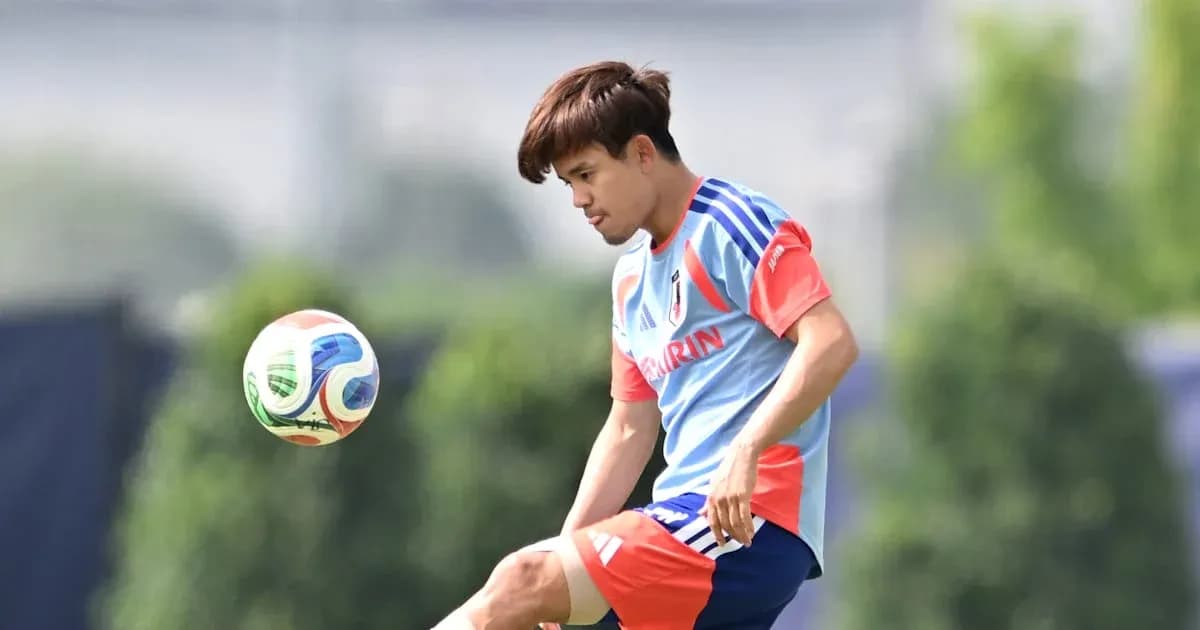
The tape around Kubo Takefusa’s left knee tells one story. His words tried to tell another.
“I’m good,” he said on the eve of Japan’s World Cup round of 32 showdown with Brazil, a casual shrug at an injury that has already cost him two matches. In reality, since crumpling to the turf in Japan’s tournament-opening draw with the Netherlands, the Real Sociedad playmaker has done little more than rehab work and solitary running. No full training, no real football. Just a heavily strapped joint and a nation holding its breath.
On Sunday, coach Moriyasu Hajime cut through the optimism.
Kubo, he confirmed, will not play against Brazil.
For a country prepared to stay up until 1 a.m. to watch, the news lands with a thud. This was supposed to be Kubo’s World Cup: 25 years old, finally in his prime, carrying the creative burden after a string of high-profile absences. Mitoma Kaoru, captain Endo Wataru, Minamino Takumi – all ruled out before the tournament. One by one, the established pillars fell away. Kubo stepped forward.
His team-mates felt his presence everywhere in camp. On the pitch, he offered something no one else quite has – that snap of invention on his left foot, the ability to break a game’s rhythm with a feint, a pass, a shot that didn’t seem on. Off it, he had begun to sound like a leader, not a prodigy.
Now Japan must go into the biggest match of their modern footballing history without him.
And yet, this team has been built for exactly this kind of blow.
Moriyasu has leaned hard into depth. Across the group stage and into the knockouts, he has used all but three of his 26-man squad, the only outfielders yet to feature being the two backup goalkeepers. Rotations have not felt like compromises. When one player has stepped aside, another has stepped in, and the level has held. The “next man up” line that so often feels like a hollow sporting cliché has, for Japan, become a working identity.
They will need that collective strength now, because the name on the other side of the bracket still carries a certain weight: Brazil.
Once, that name alone would have dictated the tone in Japan. When the J.League launched 33 years ago, Brazil were the model, the dream, the unreachable standard. Japanese football grew up in awe of the Selecao and Joga Bonito. Brazilian stars filled early J.League squads, and a whole generation learned the game with Brazilian flair as the reference point.
Listen to this Japanese squad and you hear something different.
Asked who he considered the strongest teams at this World Cup, Wolfsburg striker Shiogai Kento went straight to Europe. “France and Argentina,” he said. No mention of Brazil.
“You don’t really hear about Brazil lately,” he added, almost offhand.
The numbers say otherwise. Neymar has scored nine goals in five previous matches against Japan, a personal tormentor in yellow. Yet even that history doesn’t seem to rattle this group.
“That’s Neymar of the old,” Shiogai said. “I think we’re OK right now.”
There’s a quiet defiance in that line, a sense that the psychological hierarchy has shifted. Japan have not come to this World Cup to admire anyone. They have openly said they believe they can beat Brazil. They have spoken, without flinching, about winning the entire tournament.
Without Kubo, that ambition looks bolder, maybe even reckless. But it also strips the story back to what has driven this side all along: a deep, balanced squad, a relentless work ethic, and a belief that no opponent is untouchable.
Japan are undeniably better with Kubo on the pitch. His absence removes a slice of magic, a player capable of deciding a knockout tie with one moment. It also removes the safety net. There is no single genius to lean on now, no obvious hero to wait for.
So the responsibility spreads. Across a defence that has quietly grown into one of Asia’s most reliable. Across a midfield that must now create by committee. Across forwards like Shiogai, who talk about Brazil without reverence and will be judged by how they play, not what they say.
An entire nation will sit in front of their screens in the small hours, wondering about the player who cannot join them on this stage and the team that must find a way without him. Wondering, too, whether the old order in world football still holds, or whether this is the night Japan finally tears up the script.
For years, the question against Brazil was how close Japan could come.
This time, with Kubo in the stands and a hardened squad on the grass, the question is sharper: are they ready to finish the job?