.svg&w=384&q=75 "Naijagoal logo")


Indy Eleven's 2–0 Win Over Forward Madison: A Statement of Intent
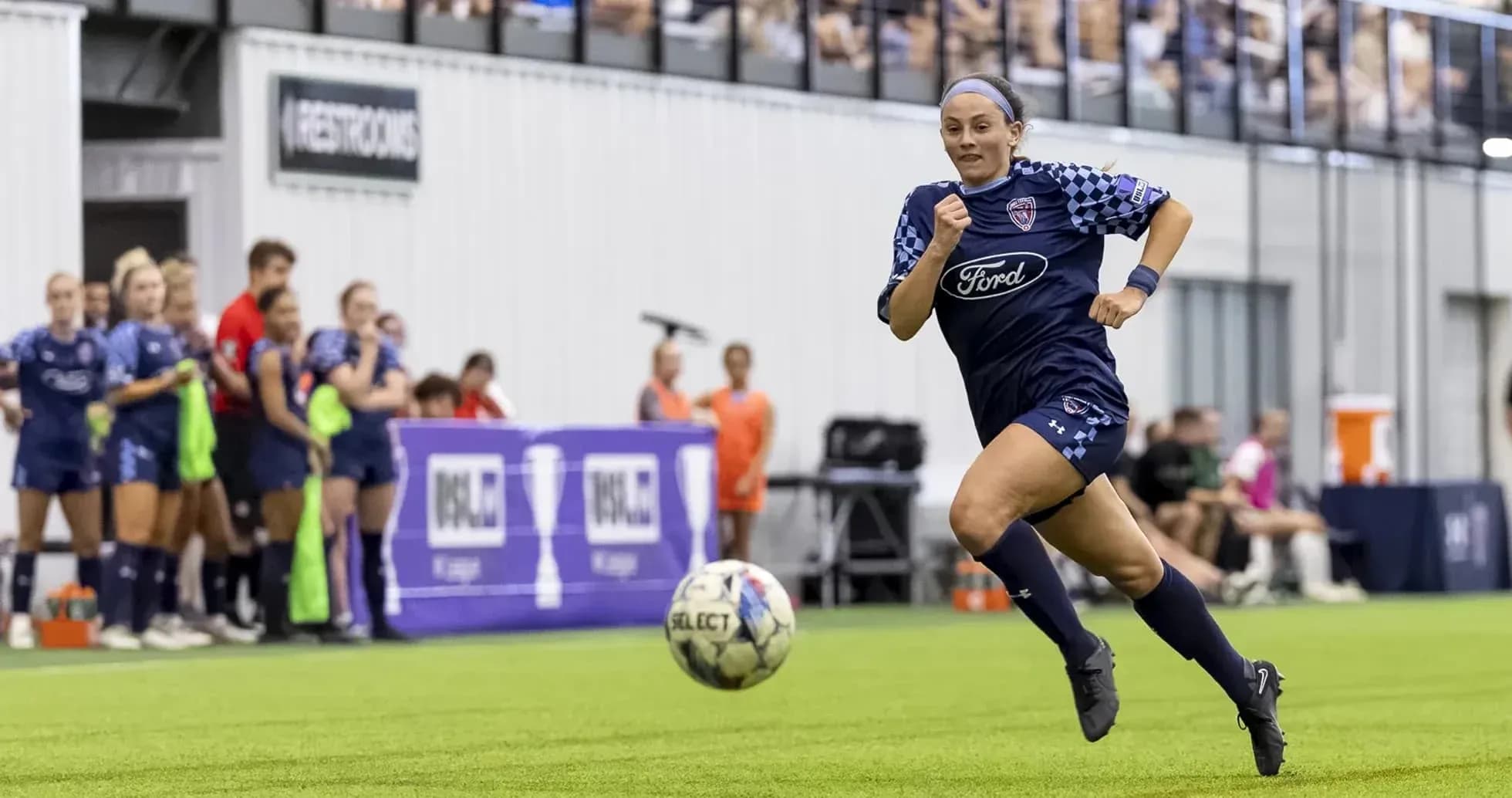
Under the lights at Michael A. Carroll Stadium, Indy Eleven’s 2–0 win over Forward Madison felt less like a routine group-stage result and more like a quiet declaration of intent in the USL League One Cup. Following this result, Indy sit 4th in Group 4 with 5 points and a goal difference of 3, while Madison languish in 7th, still pointless with a goal difference of -5. The table tells a blunt story: one side sharpening into a cup contender, the other still searching for a foothold.
I. The Big Picture – Indy's emerging identity vs Madison’s slide
Indy’s campaign profile is increasingly clear. Overall this season they have played 3 matches, winning 2 and losing 1, with no draws. Their attack has been efficient rather than wild: 6 goals in total, split evenly with 3 at home and 3 on their travels. The averages underline the pattern: 1.5 goals at home, 3.0 away, 2.0 overall. This is a side that can travel with menace but is learning to control games in Indianapolis.
Defensively, Indy are not watertight but are trending upward. They have conceded 4 goals in total – 2 at home and 2 away – for averages of 1.0 at home, 2.0 away, 1.3 overall. That yields an overall goal difference of +2 in the raw season stats, but in the group standings their goal difference is 3, reflecting how ruthlessly they have punished weaker opponents in this cup environment. The clean-sheet column matters: 1 at home, none away, 1 overall. This 2–0 win folds neatly into that story of a side whose defensive concentration is improving at Carroll Stadium.
Forward Madison, by contrast, are locked in a downward spiral. Across their 3 matches they have lost all 3, scoring just 2 goals overall and conceding 7. The attacking averages are stark: 0.0 at home, 1.0 on their travels, 0.7 overall. They are not completely blunt away from Madison, but they lack sustained threat. Defensively, the numbers are brutal: 1 goal conceded at home, 6 away, 7 overall – with averages of 1.0 at home, 3.0 on their travels, 2.3 overall. This defensive fragility on the road was exposed again in Indianapolis.
II. Tactical Voids – Discipline, control, and what’s missing
There is no explicit list of absentees, so we read the voids through usage and structure. Sean McAuley named a settled-looking core: R. Charles-Cook in goal, protected by a defensive unit anchored by L. Neidlinger, M. Rasheed and P. Craig, with the experienced A. Quinn and metronomic C. Lindley in midfield. Ahead of them, B. Rendon, J. O'Brien, J. Blake, K. Williams and E. Kizza formed a fluid attacking band.
The disciplinary profile is revealing. Indy’s yellow cards this season are distributed with two clear spikes: 28.57% in the 31–45 minute range and another 28.57% between 61–75 minutes. That suggests a team that tightens the screws either side of half-time, willing to take tactical fouls to kill transitions. Crucially, they have no red cards recorded in any time window, underlining controlled aggression rather than chaos.
Madison’s card map is far more volatile. Their yellows cluster between 0–15 minutes (25.00%), 46–60 (37.50%), and 61–75 (25.00%), pointing to a side that starts on edge and then frays badly after the break. The most damning statistic is their red-card profile: 100.00% of their reds arrive in the 76–90 minute window. Even if that is based on a small sample, it captures the narrative of a team that unravels late, just as legs and concentration should be at their most disciplined. In a tight group-stage environment, that late-game indiscipline is a tactical void in itself.
III. Key Matchups – Hunter vs Shield, Engine Room battles
Hunter vs Shield
Indy’s “hunter” is not a single prolific scorer in the data, but a collective front line. K. Williams, wearing 10, operates as the creative fulcrum between lines, with E. Kizza as the primary reference point in the box. J. Blake and B. Rendon give McAuley options to attack half-spaces and wide channels. This group is backed by a side that, heading into this game, had already shown it could score 3 goals on their travels and 3 at home in total, with their biggest home win a 2–0 and their biggest away success a wild 2–3.
The “shield” they tested belongs to a Madison defense that had already conceded 6 goals away and 7 overall, with an away average of 3.0 goals against. Their biggest away defeat, 4–2, revealed a back line that can be stretched and pulled apart in open games. With J. Shannon and K. Toure in the starting defensive structure, Madison tried to hold a higher line and compress space, but the numbers suggest they repeatedly fail to protect their penalty area once the game becomes transitional.
Engine Room – Playmaker vs Enforcer
In midfield, the duel was less about brute force and more about rhythm. For Indy, C. Lindley and A. Quinn form the double axis. Lindley, in shirt 6, is the tempo-setter, while Quinn adds bite and vertical passing. Their job is to dictate the game’s pace and manage those key disciplinary windows where Indy historically flirt with bookings.
Opposite them, G. Kanyane and H. Karamoko carry much of Madison’s midfield burden. Kanyane’s presence in the 6 shirt signals his role as the primary shield, tasked with screening the back line and breaking up Indy’s combinations. Yet Madison’s card distribution – with heavy yellow concentration just after half-time – hints at a midfield forced into desperate tackles once structure breaks down. When Kanyane is dragged wide or bypassed, the center of the pitch opens alarmingly for runners like Williams and Blake.
IV. Statistical Prognosis – xG shadows and defensive solidity
We do not have explicit xG numbers, but the patterns are loud enough to sketch their outlines. Indy’s 2.0 overall goals-for average, combined with Madison’s 2.3 overall goals-against and 3.0 conceded on their travels, implies that heading into this game the underlying chance volume was always likely to tilt toward the hosts. Add in Madison’s failure to keep a single clean sheet – 0 at home, 0 away, 0 overall – and the probability of Indy scoring at least once, and probably twice, was high.
Defensively, Indy’s 1.0 goals-against average at home and their single home clean sheet suggested a side capable of strangling a low-confidence attack. Madison, who have failed to score in 2 of their 3 matches overall and average just 0.7 goals, arrived with a blunt edge. The collision of those two trends played out exactly as the numbers hinted: Indy’s structure and discipline suffocated Madison’s forward line, while the hosts’ diverse attacking cast found enough chances to make the scoreline comfortable.
Following this result, Indy Eleven look like a team whose statistical profile and on-pitch identity are beginning to align: measured, disciplined, and increasingly ruthless in Indianapolis. Forward Madison, meanwhile, remain trapped in a cycle of soft concessions, late-game indiscipline, and an attack that flickers rather than burns. In a group stage where margins are thin, those patterns are not just numbers – they are the story of two campaigns heading in opposite directions.