.svg&w=384&q=75 "Naijagoal logo")

Hellas Verona's Season Finale: A Defeat to AS Roma
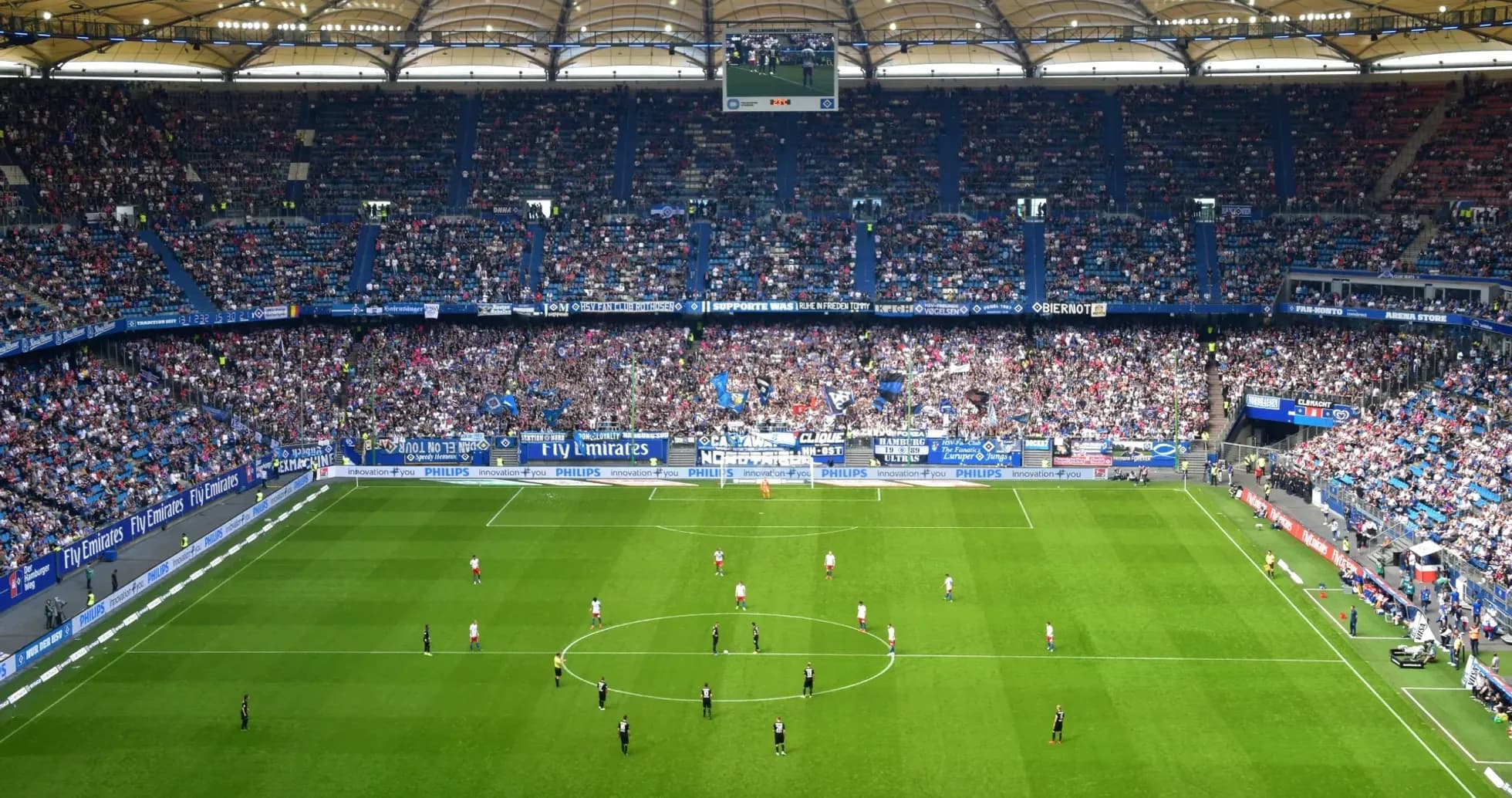
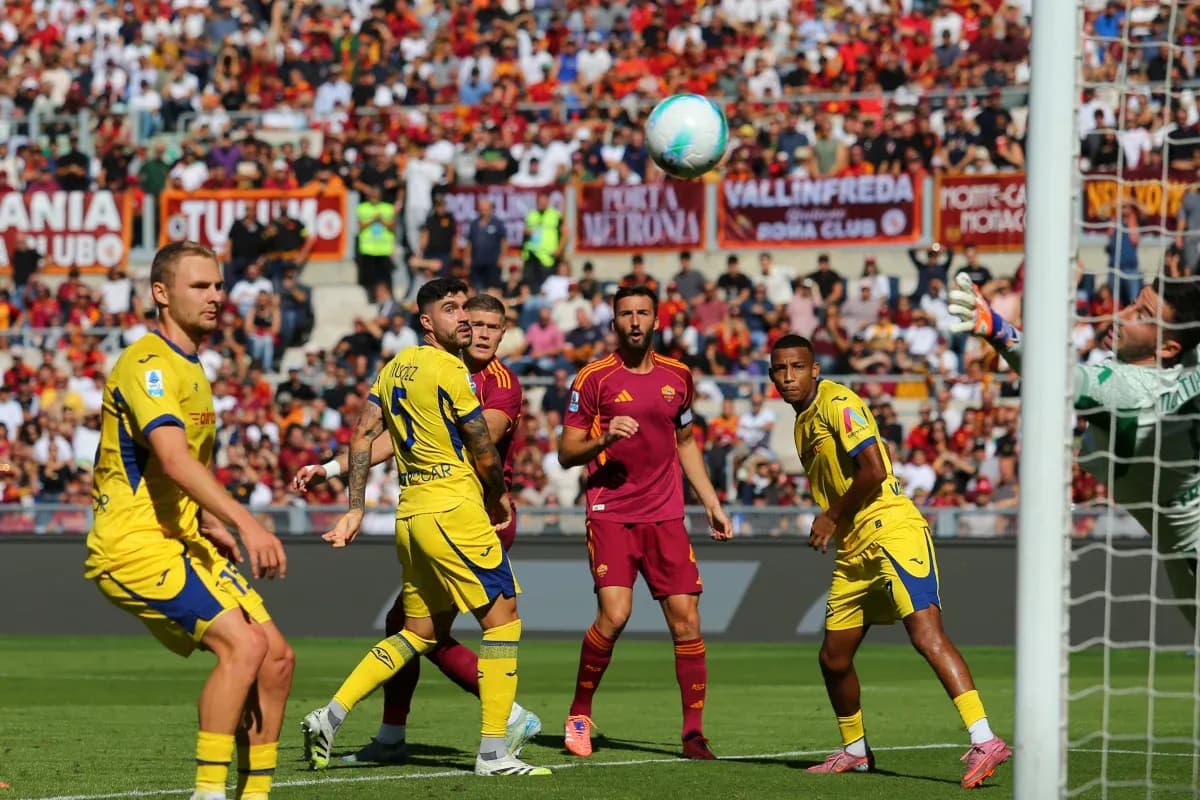
Under the soft Verona evening at Stadio Marcantonio Bentegodi, the final chapter of the 2025 Serie A season unfolded with a brutal kind of clarity. Hellas Verona, already entrenched in 19th place and destined for Serie B, closed a miserable campaign with a 0–2 home defeat to AS Roma – a result that neatly mirrored the season’s structural imbalance between these two clubs.
Following this result, the table tells the story without mercy. Verona finish on 21 points, with a goal difference of -36, built from 25 goals scored and 61 conceded overall. At home they have been especially fragile: 1 win in 19, 12 home goals at an average of 0.6 per game against 28 conceded at 1.5. Roma, by contrast, cement 3rd place on 73 points, their overall goal difference of 28 the product of 59 goals for and 31 against. On their travels they have been imperfect but potent: 10 away wins, 26 away goals at 1.4 per match, conceding 21 at 1.1.
I. The Big Picture: Systems and Season DNA
The formations on the teamsheet were a distillation of each side’s identity. Paolo Sammarco stayed loyal to Verona’s season-long blueprint, rolling out a 3-5-2 – the shape they used in 26 league matches. L. Montipo stood behind a back three of N. Valentini, A. Edmundsson and V. Nelsson, with M. Frese and R. Belghali stretching the width as wing-backs. The central band of J. Akpa Akpro, S. Lovric and A. Harroui was tasked with compressing space, while T. Suslov and K. Bowie led the line.
Across from them, Piero Gasperini Gian’s Roma arrived with the 3-4-2-1 that has been their structural spine, deployed 30 times this campaign. M. Svilar anchored a back three of M. Hermoso, D. Ghilardi and G. Mancini. Z. Celik and D. Rensch offered width from the flanks, with B. Cristante and N. Pisilli forming the double pivot. Ahead, the creative triangle of M. Soule and P. Dybala floating behind D. Malen promised both incision and variety.
The contrast in seasonal DNA could hardly be sharper. Verona’s attack has sputtered all year – 25 goals in total at 0.7 per match, failing to score in 20 of 38 games. Roma’s front line, by comparison, has carried Champions League-level punch: 59 goals overall at 1.6 per game, backed by 18 clean sheets.
II. Tactical Voids: Absences and Discipline
Verona came into this fixture shorn of both steel and spark. R. Gagliardini, their yellow-card magnet with 10 bookings, was suspended, his absence stripping Sammarco of a midfielder who has made 73 tackles, 13 successful blocks and 54 interceptions. Without him, the hosts lost their primary ball-winner and organiser in front of the back three. Further injuries to D. Mosquera, D. Oyegoke, J. Peci and S. Serdar, plus the inactivity of G. Orban – a 7-goal forward who also owns a red card this season – forced Verona into a softer, less intimidating core.
Roma’s absentees were high profile but better absorbed. E. Ferguson (ankle), E. Ndicka and L. Pellegrini (both thigh), K. Tsimikas (illness), Wesley Franca (suspended after a red card) and B. Zaragoza were all missing. Yet the depth in Gasperini Gian’s squad allowed him to maintain his preferred structure. The disciplinary ledger underlined Roma’s edge in control: across the season they have taken fewer red cards than Verona, and their card timing shows a concentration of yellows in the 46–90 minute window, a sign of tactical fouling rather than chaos.
Verona’s own card profile is more erratic. Their yellow peaks sit between 31–60 minutes, with 21.35% of yellows arriving from 31–45 and 24.72% from 46–60, and their reds split between 0–15, 46–60 and 76–90. It is the statistical fingerprint of a side that often loses emotional control in transition phases.
III. Key Matchups: Hunter vs Shield, Engine Room Battles
The headline duel was always going to be D. Malen against a Verona defence that has creaked all year. Malen enters this fixture as one of Serie A’s most efficient hunters: 14 league goals from 18 appearances, with 49 shots (31 on target), and a 7.23 average rating. He has also scored 3 penalties but missed 1, a reminder that even elite finishers carry a blemish. Against a Verona back line that has conceded 61 goals overall and 33 on their travels’ mirror, the mismatch was stark.
Behind him, Roma’s creative engine was split between the subtlety of P. Dybala and the vertical menace of M. Soule. Dybala, with 6 assists and 55 key passes from 683 total passes at 83% accuracy, is the league’s 11th-ranked creator by rating. Soule, rating position 16, adds 6 goals and 5 assists, 46 key passes and 95 dribble attempts, 35 of them successful. Together, they probe between the lines, pulling defenders out of shape.
Verona’s “shield” was a collective rather than an individual. With Gagliardini suspended, the responsibility for disrupting Roma’s rhythm fell heavily on J. Akpa Akpro and S. Lovric. Akpa Akpro’s 44 tackles and 7 successful blocks this season show his willingness to engage, while M. Frese on the left has quietly been one of Verona’s most combative presences: 84 tackles, 10 blocked shots and 29 interceptions, plus 2 goals from deep. Yet without Orban’s outlet up front, the home side’s ability to turn regains into counter-attacks was blunted, leaving Suslov and Bowie often isolated.
In Roma’s back three, G. Mancini and M. Hermoso embodied the away side’s defensive solidity. Mancini has 52 tackles, 14 successful blocks and 49 interceptions, plus 9 yellow cards that speak to his readiness to foul for the cause. Hermoso adds 36 tackles, 6 blocks and 29 interceptions, along with 3 goals and 2 assists, giving Roma a left-sided defender who can both break lines and threaten on set pieces.
IV. Statistical Prognosis: Why 0–2 Felt Inevitable
Following this result, the numbers simply confirm what the eye suggested. Roma’s defensive platform – 31 goals conceded overall at 0.8 per game, with 7 away clean sheets – was always likely to suffocate a Verona attack that averages 0.6 goals at home and has failed to score in 11 of 19 home matches. The away side’s offensive ceiling, driven by Malen’s 14 goals, Dybala’s 6 assists and Soule’s 6+5 return, was always too high for a Verona defence leaking 1.5 goals per home match.
Without xG data, the expected goals story has to be inferred from structure and volume. Roma’s season-long pattern – 1.4 away goals scored on their travels against 1.1 conceded – aligns neatly with a controlled, two-goal win here: enough attacking quality to break through twice, enough organisation to keep a clean sheet against a side that has failed to score in more than half its games.
In narrative terms, this was less an upset than a logical conclusion. A relegated Verona side, stripped of its most combative midfielder and its primary goal threat, tried to compress the pitch in a 3-5-2 shell but lacked the conviction and quality to hurt a top-three Roma. Gasperini Gian’s 3-4-2-1, powered by Malen’s ruthless movement and the creative elasticity of Dybala and Soule, imposed its rhythm, turning season-long trends into a final, decisive 0–2 scoreline that felt like the table made flesh.