.svg&w=384&q=75 "Naijagoal logo")

Harry Kane's Signature England Night Against DRC
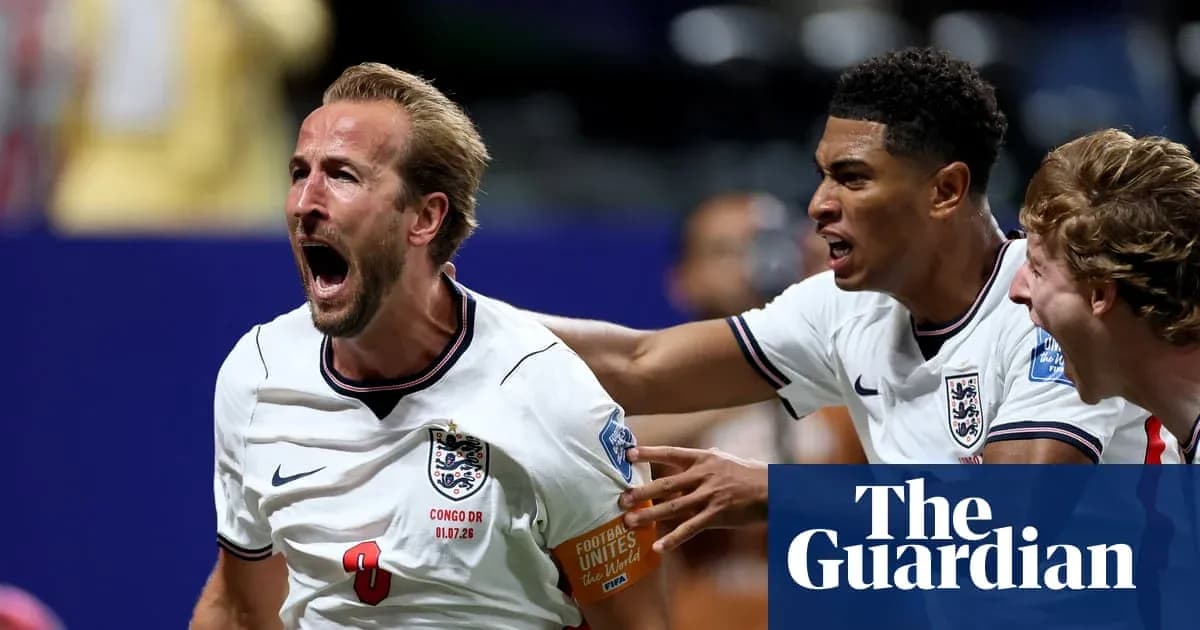
Thierry Henry leaned back in the Fox studio and almost winced as he described it. The body twisting away from goal, the ball arriving awkwardly, the clock draining away. Then Harry Kane, off balance yet utterly in control, whipped his second goal past the Democratic Republic of the Congo with the inside of his right foot.
“Do you know how hard it is to generate power then? At the end of the game?” Henry asked. “If I did that now, I’d break my back.”
From a man who turned finishing into an art form, the admiration told its own story. This was not a routine Kane strike. This was technique pushed to its limit: the torso rotating, arms flung for extra force, legs exploding through the ball, the England captain accepting that the landing might hurt but the moment demanded everything.
It looked like a career highlight in real time. Kane has since called it one of his favourite England goals. It felt like more than that. It felt like the night he dragged a faltering team and an under-pressure manager back from the brink.
Kane’s signature England night
England were going out. The DRC had them where so many opponents have had them in tournaments: anxious, flat, short of ideas. Then Kane, as he has done for nearly a decade, rewrote the script.
First came the equaliser, a clever, instinctive header that shifted the mood. Then came the thunderbolt, that outrageous late finish that secured a last-16 tie with Mexico and, in all likelihood, kept Thomas Tuchel in a job.
This was Kane at his most complete: ruthless in front of goal, relentless in his movement, unshakeable in his belief that the game still belonged to him. With those two goals he moved to 84 in 118 caps, extending his lead as England’s all-time top scorer. He now has five goals from England’s first four games at this World Cup and has already passed Gary Lineker’s tally at the tournament.
The numbers are becoming absurd. They also demand a serious question: where does Harry Kane sit in the history of English football?
On the Stick to Football podcast this week, Gary Neville, Roy Keane, Ian Wright and Jill Scott did not blink when placing him in the same breath as Bobby Moore and Sir Bobby Charlton. It sounded bold. It did not sound ridiculous.
The missing piece
For all his records, Kane has long carried one accusation: that when tournaments reach boiling point, he cools. Moore lifted the World Cup in 1966. Charlton won the Ballon d’Or that same year. Their legacies are gilded by the biggest prizes.
Kane’s story has been more jagged. He was subdued in the Euro 2020 final. In Qatar in 2022, his late missed penalty against France in the quarter-final turned him into a national punchline in some quarters. At Euro 2024, he trudged off in the final against Spain to a chorus of “finished” takes.
He heard it all. He just kept scoring.
This season, for club and country, Kane has 72 goals. He is a leading contender for the Ballon d’Or. At this World Cup he has covered 43,433 metres, more ground than any other England player. The supposed slowing of his game has been replaced by hard evidence that he is running more, not less.
“The best I’ve felt in my career,” Kane said. He spoke about a conscious decision last summer to push his fitness to another level: extra work on recovery, new methods, a sharper focus on the details that keep muscles supple and joints forgiving. He acknowledged the role of luck in staying injury free, but luck alone does not build a body that can twist like that in the 90th minute and still explode through the ball.
The move to Bayern Munich has helped. The winter break in Germany gave his legs air. Bayern’s routine dominance in the Bundesliga has allowed him to rest rather than grind through every minute. He has added layers to his game, dropping off the front line to thread passes that few No 9s even see, let alone execute. No striker is better at slipping team-mates through on goal.
Then, when the moment comes, he still finishes like the old No 9s he grew up idolising.
A flawed team, a flawless finisher
Strip Kane and Jude Bellingham out of this England side and the picture darkens quickly. The wingers have promised more than they have delivered. The midfield looks heavy-legged. The defence wobbles at awkward moments. Right-back has turned into a running injury bulletin.
Now comes Mexico, the altitude of Mexico City and the cauldron of the Azteca Stadium. England have trained in the Florida heat, trying to prepare their bodies for what awaits, but altitude is a different beast.
“There is not much we could do with altitude training,” Kane admitted. To do it properly, England would have had to base themselves in Mexico for 10 days. That would have shredded their wider tournament plan. So they accepted the trade-off and leaned into smaller tricks, marginal gains, any edge that might help lungs and legs adjust.
“It’s a big talking point and will have a small difference but we’re professional athletes. We have to deal with adversity every now and then,” he said. There was no complaint, just a shrug and a challenge: get through it, and the win will taste even better.
Kane knows tournaments rarely follow the fantasy script. Kyle Walker, watching from the outside now, argued that there is a unique joy in winning after playing badly. Kane did not disagree.
“You very rarely see the team come out of the gates hot and then sustain that all the way through to the end,” he said. “Tournament football is about getting used to each other. There’s not always a perfect way to win.”
Sometimes you blow teams away. Sometimes you grind. Sometimes you need your centre-forward to drag you through a game you barely deserve to survive.
The captain’s voice
Kane has grown into the armband. Early in his England career he led by example more than volume. Now the voice is louder.
After the win over the DRC in Atlanta he gathered his team-mates into a huddle on the pitch and delivered a message. It was not his natural stage. “Sometimes I feel like it can look a little bit staged,” he admitted. This time, he did it anyway.
He wanted England to savour the moment. He thought back to the Panama game at the 2018 World Cup, when a comfortable win and top spot in the group were brushed off almost casually. “It’s easy as an England player sometimes to take things for granted,” he said.
That is the thing about Kane: for all the numbers, he is acutely aware of the fragility of success. Nothing has ever been handed to him. Every level has been a climb.
Against the DRC he had to swallow frustration again. In the first half he was denied what he remains convinced was a clear penalty when Lionel Mpasi came rushing out. Kane got there first, felt a push in the back, felt the goalkeeper crash into him, and hit the deck. The referee waved play on. VAR stayed silent.
“It’s a clear penalty,” Kane insisted afterwards. He talked through the physics of the collision: the speed he was travelling at, the push, the impact, the way he tried to protect himself as he fell. Leave your leg planted and you risk “serious, serious injury”. If it had been a defender rather than a goalkeeper, he argued, nobody would hesitate to call it a foul.
He was baffled by the decision. He was baffled that VAR did not intervene. Then he moved on and won the game anyway.
In the end, he said, it did not matter because England won. That is what separates this version of Kane from the younger one who carried the weight of every missed chance like a personal failing. The obsession with improvement remains, but the scars do not define him.
He studies his running stats after every match. He chases marginal gains in recovery. He pushes himself to run more, lead more, speak more. He has 84 goals for his country and yet still talks like a man who believes the defining chapter has not been written.
The debate about England’s greatest player will rumble on. Moore has the trophy. Charlton has the Ballon d’Or. Kane has the records and, now, a World Cup performance that finally feels like it belongs in the same conversation.
Mexico, altitude, the Azteca and a nation’s expectation await. If this really is the best he has ever felt, what does the next knockout night look like?