.svg&w=384&q=75 "Naijagoal logo")

Argentina's Tactical Dominance Over Cape Verde Islands in World Cup
Argentina’s 2-1 extra‑time win over Cape Verde Islands at Hard Rock Stadium in this World Cup Round of 32 tie was a study in territorial dominance versus compact resistance. Argentina advanced after 120 minutes, having led 1-0 at half-time, been pegged back to 1-1 in normal time, fallen behind again in extra time, and finally turned the game with a late own goal.
Argentina imposed a clear positional and possession structure from the outset. Lionel Scaloni’s 4-4-2 was a very ball‑dominant interpretation: 64% possession, 849 passes with 92% accuracy. Enzo Fernández and Alexis Mac Allister formed the central axis, with Rodrigo De Paul and Thiago Almada starting as nominal wide midfielders but repeatedly stepping inside. This created a box in midfield that overwhelmed Cape Verde Islands’ single pivot in their 4-1-4-1, drawing out Kevin Lenini and forcing the visitors’ second line to collapse centrally.
That interior overload underpinned Argentina’s shot volume: 22 total shots, 15 from inside the box and 10 on target. The first goal on 29 minutes encapsulated their structure. With Cape Verde Islands pinned deep, Lisandro Martínez stepped aggressively into the left half-space from centre-back, linking play and then providing the assist for Lionel Messi. Argentina’s centre-backs, particularly Martínez, were encouraged to advance into midfield to maintain pressure and prevent transitions.
Cape Verde Islands, under Pedro Leitao Brito, accepted a low‑block, counter‑attacking role. Their 4-1-4-1 was narrow and vertically compact, aiming to funnel Argentina wide and then protect the box. Despite having only 36% of the ball and completing 476 passes at 86% accuracy, they still generated 16 shots (6 inside the box, 5 on target). The plan was clear: survive long spells without the ball, then attack quickly through Ryan Mendes, Deroy Duarte and Jovane Cabral running off Nuno Da Costa.
The equaliser on 59 minutes came exactly from that pattern. Cape Verde Islands broke through midfield, Mendes found a pocket between Argentina’s lines, and Deroy Duarte arrived from central midfield to finish. It was one of the few moments when Argentina’s aggressive rest‑defence was exposed: with full-backs advanced and midfield pushed high, the distances between Cristian Romero, Lisandro Martínez and the double pivot briefly opened.
Substitutions around the hour marked a tactical inflection. At 63', Nicolás González (IN) came on for Thiago Almada (OUT) and Julián Alvarez (IN) for Lautaro Martínez (OUT), shifting Argentina towards more vertical, penalty‑box‑focused occupation. González provided width and depth on the left, while Alvarez attacked the space behind Cape Verde Islands’ back line more relentlessly, making Argentina’s 4-4-2 look at times like a 4-2-4 in possession.
Pedro Leitao Brito answered at 67' with Dailon Rocha Livramento (IN) for Nuno Da Costa (OUT) and Jamiro Monteiro (IN) for Laros Duarte (OUT), refreshing the front and midfield lines to maintain pressing intensity and transitional threat. The yellow card for Kevin Lenini (68' — Foul) underlined how much defensive work the lone pivot was doing to protect the back four.
As the game stretched, Cape Verde Islands leaned further into a counter-punching model. Double changes at 80' — Hélio Varela (IN) for Jovane Cabral (OUT) and Willy Semedo (IN) for Ryan Mendes (OUT) — added fresh legs on the flanks to exploit any Argentine over-commitment. Scaloni responded with more control: Leandro Paredes (IN) for Rodrigo De Paul (OUT) at 84' to stabilise circulation, and Nicolás Tagliafico (IN) for Facundo Medina (OUT) at 86' to add a more orthodox left-back profile and secure the flank.
Lisandro Martínez’s 93' goal, assisted by Alexis Mac Allister, came from sustained pressure and set the tone for extra time: Argentina pushing their centre-backs high, Cape Verde Islands defending deep. Yet early in extra time, the underdogs struck again. At 100', Gilson Tavares (IN) replaced Kevin Lenini (OUT) and Yannick Semedo (IN) came on for Deroy Duarte (OUT), subtly shifting the visitors towards more attacking profiles. Three minutes later, Sidny Lopes Cabral scored from a rare advanced position, punishing Argentina’s high line and making it 2-1 to Cape Verde Islands on the night.
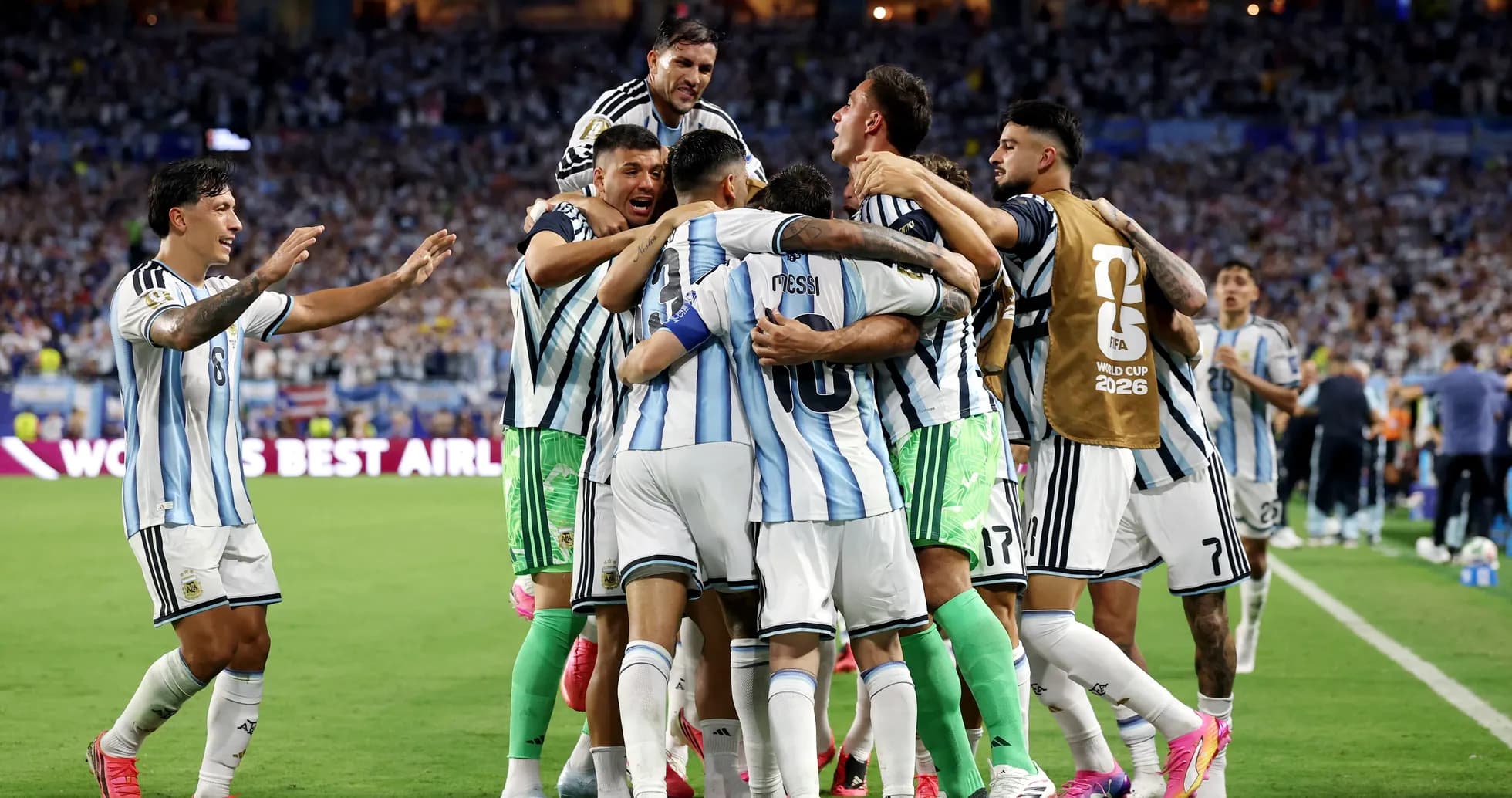
Scaloni’s final structural tweak came at 104', with Gonzalo Montiel (IN) for Nahuel Molina (OUT), adding fresher legs and slightly more direct crossing from right-back as Argentina chased the game. The decisive moment arrived at 111', when Diney Borges, under heavy pressure in his own box, turned the ball into his own net. Registered as an own goal for Argentina, it was the logical outcome of relentless box occupation: 7 blocked shots and constant deliveries forcing defensive errors.
Defensively, Argentina’s back four held a high line for most of the match, compressing the pitch and enabling counter-pressing. Their 13 fouls, compared to Cape Verde Islands’ 12, reflect a willingness to break transitions early. The late yellow card for Gonzalo Montiel (115' — Foul) came as Argentina protected their narrow extra‑time lead, using tactical fouls to disrupt any late Cape Verde Islands surges.
In goal, Emiliano Martínez (Argentina) faced 5 shots on target and made 3 saves, with a negative goals prevented figure (-0.6) indicating that Cape Verde Islands’ finishing slightly outperformed the modelled expectations. On the other side, Vozinha (Cape Verde Islands) was under siege: Argentina put 10 shots on goal, and he made 8 saves. Despite conceding twice (one from open play, one via own goal pressure), his performance was central to keeping the tie alive deep into extra time.
The underlying numbers frame the tactical story clearly. Argentina’s xG of 2.16 against Cape Verde Islands’ 0.45 mirrors the shot profile and territorial dominance. The hosts’ 8 corners to 8, despite such possession superiority, underline how Cape Verde Islands successfully limited clear set-piece overloads by defending deep and narrow. Argentina’s 7 blocked shots show how often the visitors managed to get bodies in front of efforts inside the box, but the sheer volume of Argentine attacks eventually broke them down.
In season‑form terms, this looked like a classic heavyweight versus underdog knockout tie: Argentina controlling almost every structural metric — possession, passing volume, shot quality — yet having to navigate moments of transition vulnerability and extra‑time jeopardy. Cape Verde Islands executed their compact, counter‑attacking blueprint with discipline and nearly stole the tie, but Argentina’s bench depth, positional rotations and relentless box occupation ultimately tilted the balance in Miami.