.svg&w=384&q=75 "Naijagoal logo")
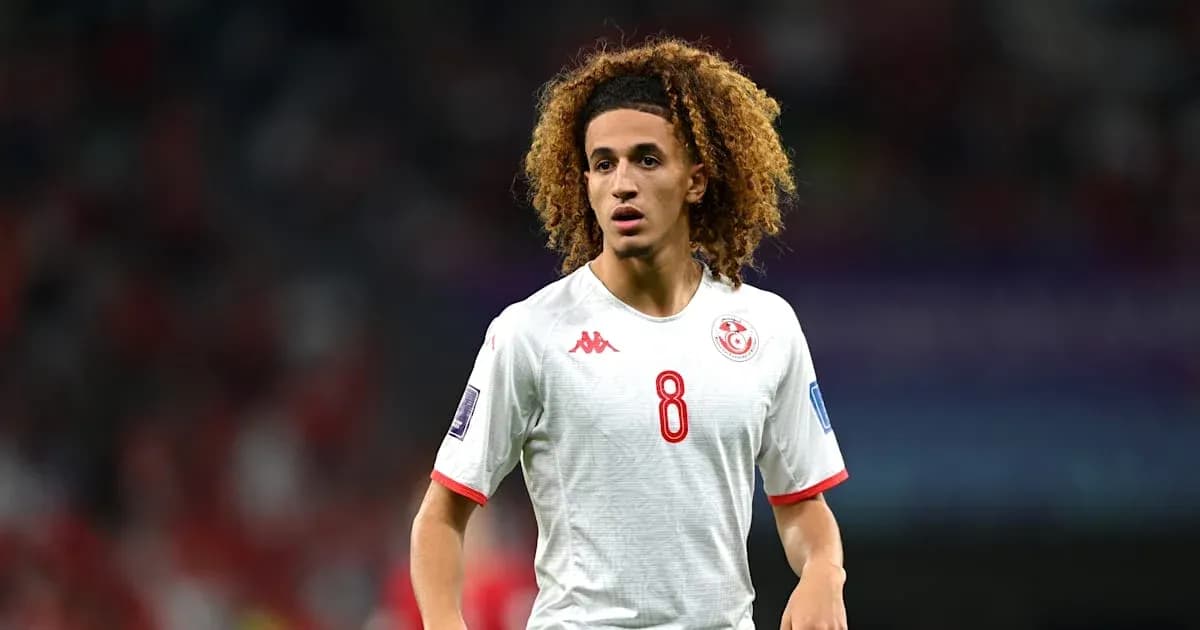

Hannibal Mejbri: Tunisia's Rising Star at the 2026 World Cup
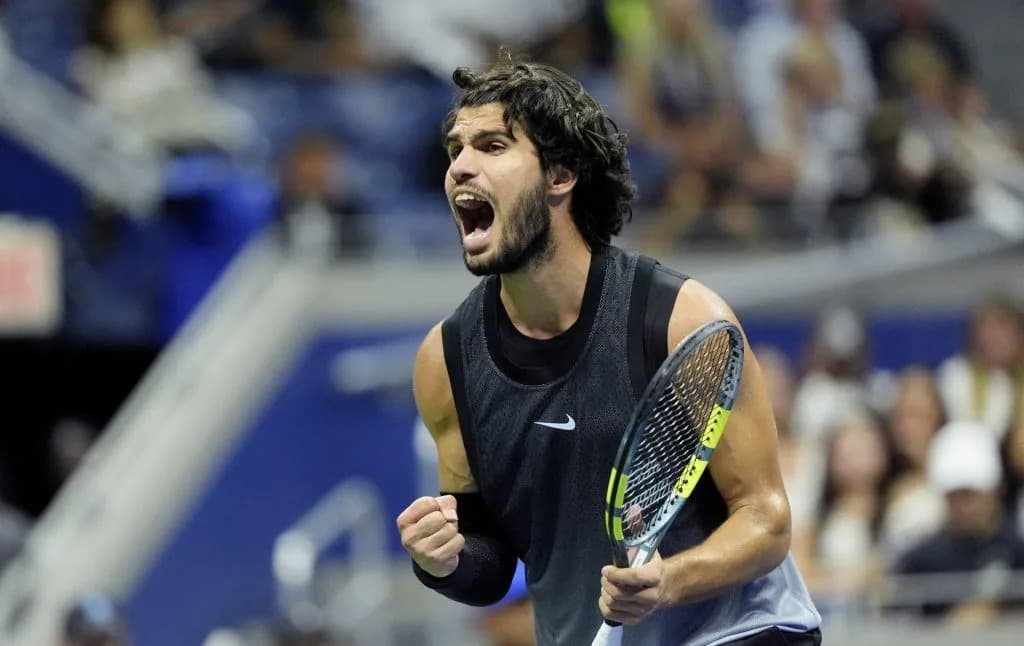
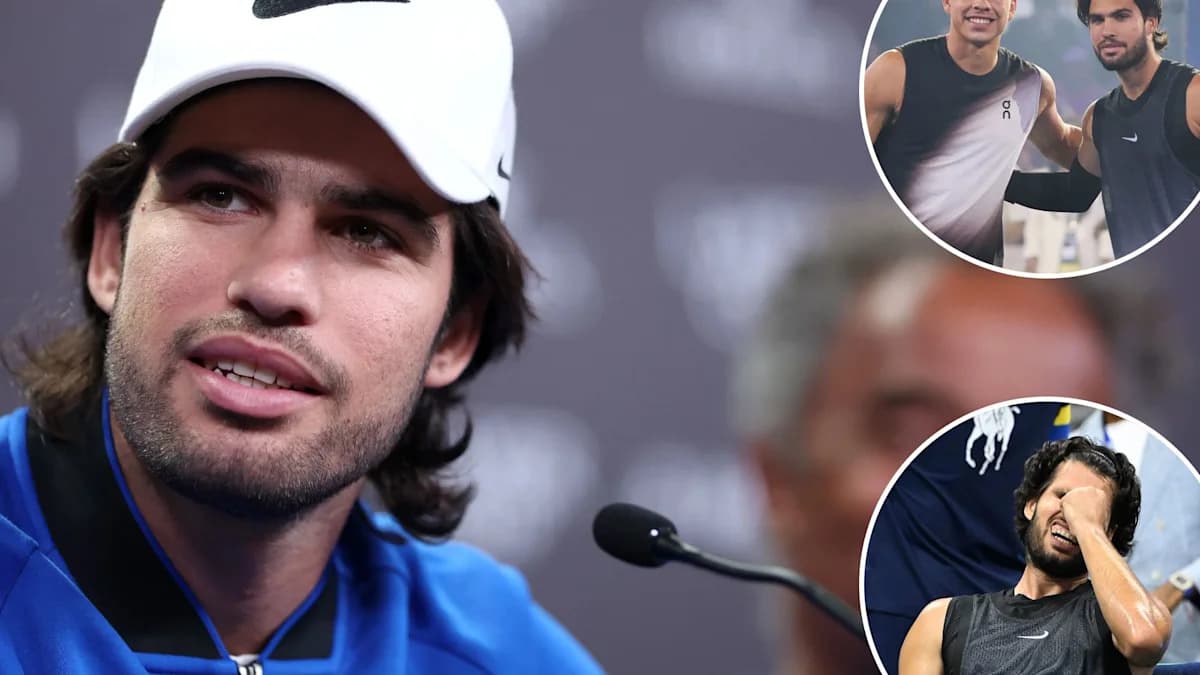
The Eagles of Carthage have carried some grand nicknames down the years, but few fit quite as neatly as the one now resting on a single pair of young shoulders. Tunisia’s midfield is driven by a player named after one of antiquity’s most daring generals, and at the 2026 FIFA World Cup, Hannibal Mejbri is trying to finish a journey his namesake never could.
Hannibal Barca crossed the Alps and reached the gates of Rome before history stalled him. Two thousand years on, Hannibal Mejbri is trying to drag Tunisia over their own mountain: the group stage barrier that has always blocked their path. At 23, he is already one of the Eagles of Carthage’s central figures, the modern standard-bearer for a team intent on rewriting the limits of Tunisian football.
From La Banane to the world
His story does not begin in Tunis, but in Paris. Mejbri was born in the French capital to Tunisian parents and raised in the 20th arrondissement, a dense, working-class slice of the city where life spills out onto the pavements and the game is played in every spare patch of concrete.
He remembers it as a neighbourhood rich in North and West African roots: “many Tunisians, many Algerians, many Moroccans, lots of Senegalese, Malians as well” — a place where backgrounds varied but football stripped away the differences. The ball levelled everything.
At the heart of that area sits a curved block of flats known as La Banane — the Banana. It was there, among the tower shadows and cramped courtyards, that a future international was quietly being shaped.
“Instead of going straight up to my house, I used to stay out and play football until night fell,” Mejbri recalls in the series *World at Their Feet*, which tracks emerging talent on the road to the 2026 World Cup. No private academies. No personal entourage. “I was a normal boy, there was no master plan. I had my friends, I was focused on my life as a kid.”
To those around him, though, he was never entirely ordinary. Childhood friend Hubert Mbuyi remembers a boy who was impossible to miss. Not just the touch, the swagger, the constant presence on any available pitch. The hair.
“He had a unique style, with big hair, big blonde hair. So everyone knew him and had a lot of expectations for him,” Mbuyi says. “Where you could find a pitch and a ball, you will find Hannibal.”
A million-euro teenager
The game quickly carried him beyond the confines of La Banane. At six, Mejbri entered the academy of Paris FC, where he spent almost seven years learning the structure that underpinned his street instincts. A brief spell at Boulogne-Billancourt followed, and then the first seismic shift.
In 2018, Monaco stepped in. The Ligue 1 club paid €1 million to bring the 15-year-old into their youth ranks, a figure that underlined how loudly his talent was already speaking.
“I could feel the richness of Monaco,” Mejbri says of that move. The surroundings changed overnight: from the bustle of the 20th arrondissement to the polished wealth of the principality. “So yeah, it was a little bit of a shift, a little dream, and I learned a lot there.”
The experience was not always smooth. He did not find Monaco to be the perfect fit. But the combination of flair, bite and imagination in his game had already drawn the gaze of Europe’s giants. Bayern Munich watched. Paris Saint-Germain looked at bringing him back to the city he knew best. Barcelona tracked his progress.
He chose a different path.
In August 2019, at 16, Mejbri signed for Manchester United, three-time Champions League winners and a club whose academy history weighed heavily in the decision. Old Trafford became his next proving ground.
Rage, release and Old Trafford lights
Once in Manchester, the climb was quick. By 2021 he had made his Premier League debut, a teenager stepping into one of the most scrutinised midfields in world football. Two years later came the moment every academy player dreams of: his first league goal.
It arrived in September 2023, at home to Brighton. The night itself was grim for United, a 3–1 defeat that exposed their flaws. Yet in the middle of that came a flash of something else. Mejbri, still searching for a regular starting place, drove in his first Premier League strike.
“I still get chills,” he admits. The goal did not change the result, but it revealed something raw. “I don’t know why I started to celebrate when we were losing 3–0, and you can see in my celebration that I had a certain rage in me and that I let go of everything when I scored.”
It was a glimpse of the fire that Tunisia now rely on — the same edge that has turned a boy from La Banane into a leader in red and white.
Choosing a flag with the heart
On the international stage, Mejbri had options. He wore the blue of France at under-16 and under-17 level, a natural step for a Paris-born prodigy. The French system knew his potential and tried to keep him close.
When the senior choice arrived, he looked elsewhere.
In 2021, he committed to Tunisia, the country of his parents and of his childhood summers, and answered his first call-up to the Eagles of Carthage.
“I joined Tunisia because I chose with my heart,” he explains. It was not a rejection of the country that raised him. “Even though I lived in France, it doesn’t take away the love I have for France. But I find that the love I have for Tunisia is greater.”
That decision has defined his career. He has already amassed 44 caps, a remarkable haul for a player still in his early twenties, and has twice been named African Revelation of the Year at the Africa d’Or awards. Each time he pulls on the Tunisian shirt, he carries more than one flag.
“When I represent my country, I also represent my neighbourhood,” he says. “Because I know that I will represent them, and so all of that, it’s a bit related to pride.”
For Mbuyi and the people of La Banane, that connection is visceral. “All Tunisians are proud of him,” his friend says. “Because in the end, he’s a kid from the neighbourhood. When he plays matches, everyone focuses on the match. We’re all watching Hannibal’s hair on the pitch. We try to spot him every time.”
Giving back to La Banane
Success has not loosened the tie to home. Every summer, Mejbri returns to the curved block that shaped him and turns La Banane into a festival of football. He organises a local tournament, a day where the kids who once chased his passes now chase his example.
Last year, he handed out around 100 shirts. They were not collector’s items to be framed and hidden away; they were worn, immediately, by the people who had watched him grow.
“You can just walk around here and find two or three people wearing his shirt,” Mbuyi says. It is not just about fabric and names on the back. It is about visibility.
“Hannibal is a great example of what the people look for in this area. Because of him, the young kids can dream.”
Now those dreams stretch beyond the high walls of La Banane and the floodlights of Old Trafford, towards the vast stage of the World Cup. The original Hannibal reached the gates of an empire and was forced to turn back. This one stands at the edge of another historic frontier, trying to drag Tunisia over their own ridge and into uncharted territory.
If the Eagles of Carthage finally soar out of the group, a neighbourhood in Paris will feel every beat of their wings.