.svg&w=384&q=75 "Naijagoal logo")

FC Barcelona's Influence on the World Cup: A Personal Connection
This World Cup is being sold as the biggest in history. For FC Barcelona, it feels even larger than that. It feels personal.
Across the vast sweep of the United States, Mexico and Canada, the tournament is laced with blaugrana threads. Wherever you look, there is a hint of Camp Nou, a memory of La Masía, a familiar face in a different shirt. For culers, this is not just a month of following one national team. It is a rolling reunion.
Sixteen in the present, countless in the past
The most obvious connection sits in the here and now. Sixteen current Barça players, spread across eight national teams, have made it to the World Cup. That alone would give the club a powerful presence on the global stage.
But the story runs deeper. Scan the squads and the past keeps resurfacing: former Barça defenders, wingers, academy graduates who never quite broke through in Catalonia but blossomed elsewhere. This World Cup is full of them, each carrying a small piece of Barcelona into another dressing room.
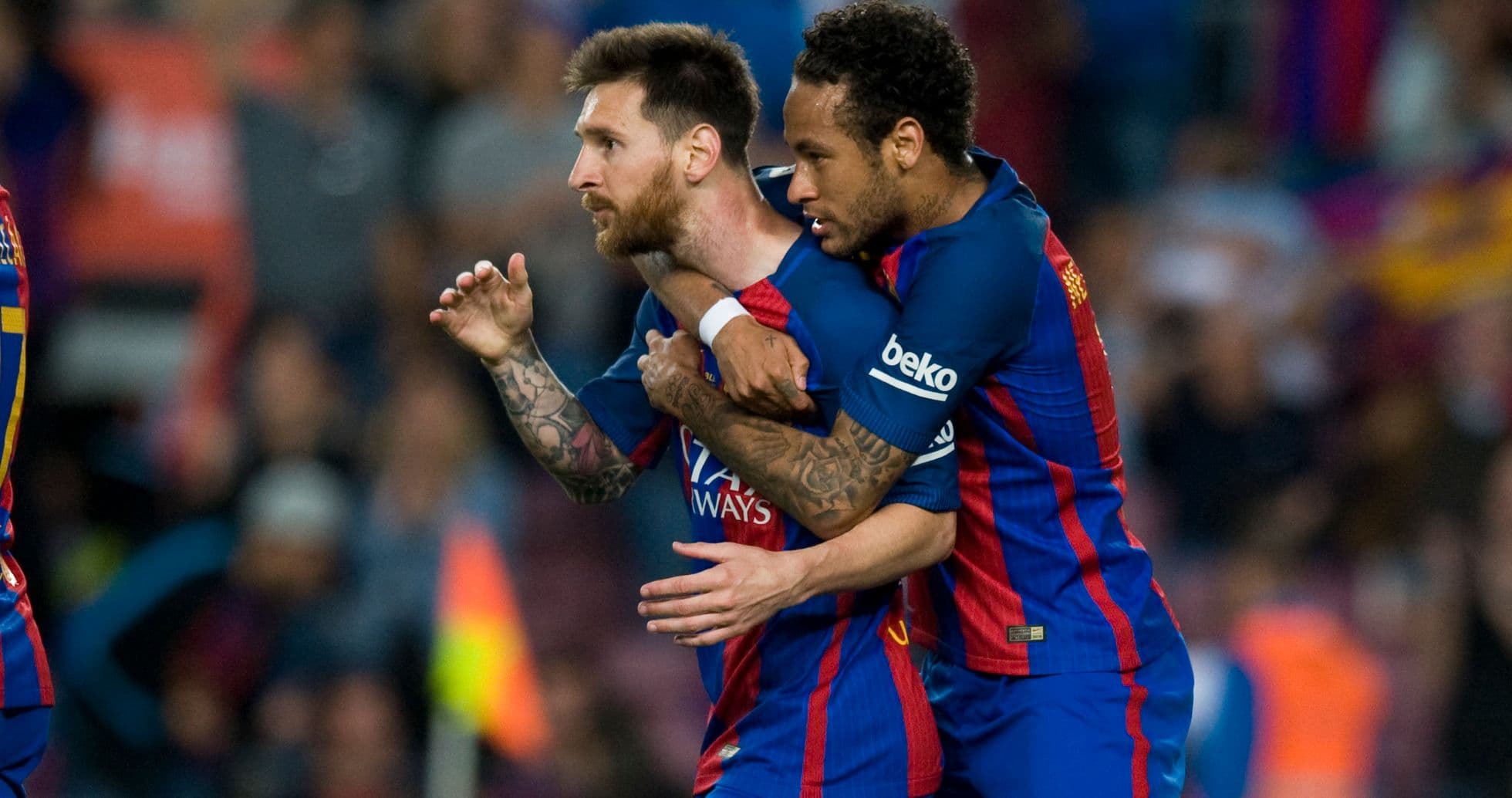
Messi, Neymar and the star power of the past decade
At the heart of it all, as ever, stands Leo Messi. The man who defined an era at Barça now arrives as the reigning world champion with Argentina, defending the crown won in 2022. His shadow stretches across the tournament. Every touch, every free-kick, carries the weight of history.
France, beaten finalists last time, bring their own slice of Camp Nou heritage. Ousmane Dembélé, now the Ballon d’Or holder, is one of Didier Deschamps’ headline names. Alongside him is Lucas Digne, another former Barça full-back, and Marcus Thuram, whose surname alone evokes blaugrana memories through his father, Lilian Thuram. Marcus even passed through the FCB Escola during those years, a child on the training pitches while his father wore the shirt.
Portugal’s squad reads like a mini Barça alumni list. João Félix, Francisco Trincão and Nélson Semedo all carry links back to the club. One of their group opponents, Colombia, fields Yerry Mina, the towering centre-back who once patrolled Barcelona’s back line.
The connections keep coming. Franck Kessié, a key figure for Côte d’Ivoire, sharpened his game in Catalonia. Sergiño Dest is expected to start at right-back for the United States, one of the host nations, taking Barça’s style to American soil.
And then there is Neymar. His return to the Brazil squad, two and a half years after his last call-up, is one of the tournament’s main attractions. Injury will keep the Santos forward out of the opening match, but his presence still looms large. Few players in this World Cup are as instantly recognisable, or as closely associated with the modern Barça era.
Memphis Depay is another former Camp Nou forward with a central role to play. Now based in Brazil at club level, he remains one of Ronald Koeman’s main attacking threats for the Netherlands. A coach and a striker, both with Barcelona on their CVs, chasing glory together on the biggest stage.
Blaugrana on the touchline
Koeman himself embodies one of the tournament’s more intriguing subplots. The hero of Wembley ’92, scorer of that famous European Cup-winning free-kick, now leads the Dutch national team into a World Cup where his old club’s fingerprints are everywhere.
He is not alone. Julen Lopetegui, another with Barça ties, takes charge of Qatar, while Thomas Christiansen, once part of the Barcelona set-up, stands on the touchline for Panama. These are not traditional powerhouses, but their coaches carry the tactical schooling and competitive edge forged in Catalonia.
Morocco, injuries and emerging names
Not every Barça-tinted storyline begins at kick-off. Ez Abde, one of Morocco’s form players, is set to miss his side’s opening match through injury, a frustrating pause for a winger whose stock has risen sharply. His absence will be felt.
Morocco still have a strong Barça link in the spine of the team. Centre-back Chadi Riad, another La Masía product, is expected to feature prominently. For him, this World Cup is a stage to show just how far a youth prospect from Barcelona can go when given the platform.
La Masía’s global footprint
Riad is only one name in a long list. La Masía’s imprint on this World Cup is vast, stretching across continents and styles.
Spain alone bring three such stories. Both left-backs, Marc Cucurella and Alejandro Grimaldo, came through Barça’s academy, learning the game in the same corridors that produced generations of tiki-taka artisans. Young winger Víctor Muñoz, also a La Masía graduate, is currently recovering from injury but remains part of that same lineage.
Uruguay’s defence includes Santi Bueno, another who learned his trade in Barcelona’s youth ranks. Japan’s attack features Take Kubo, the skilful winger who once dazzled in the academy and now carries his creativity onto the world stage.
The influence reaches even further. Paraguay’s leading striker, Antonio Sanabria, also passed through La Masía. South Korea’s Seung-Ho Paik, once regarded as one of the brightest prospects in the youth system, now anchors a midfield half a world away from Catalonia.
These are not fringe tales. They are proof of a production line that continues to shape international football, even when the players’ careers take them far from the Camp Nou.
Everywhere you look at this World Cup, a Barça story unfolds: in the boots of a superstar, in the tactics of a coach, in the journey of a once-unknown academy kid now standing for the anthem on the game’s biggest stage.