.svg&w=384&q=75 "Naijagoal logo")

Enzo Maresca Returns to Manchester City as Head Coach
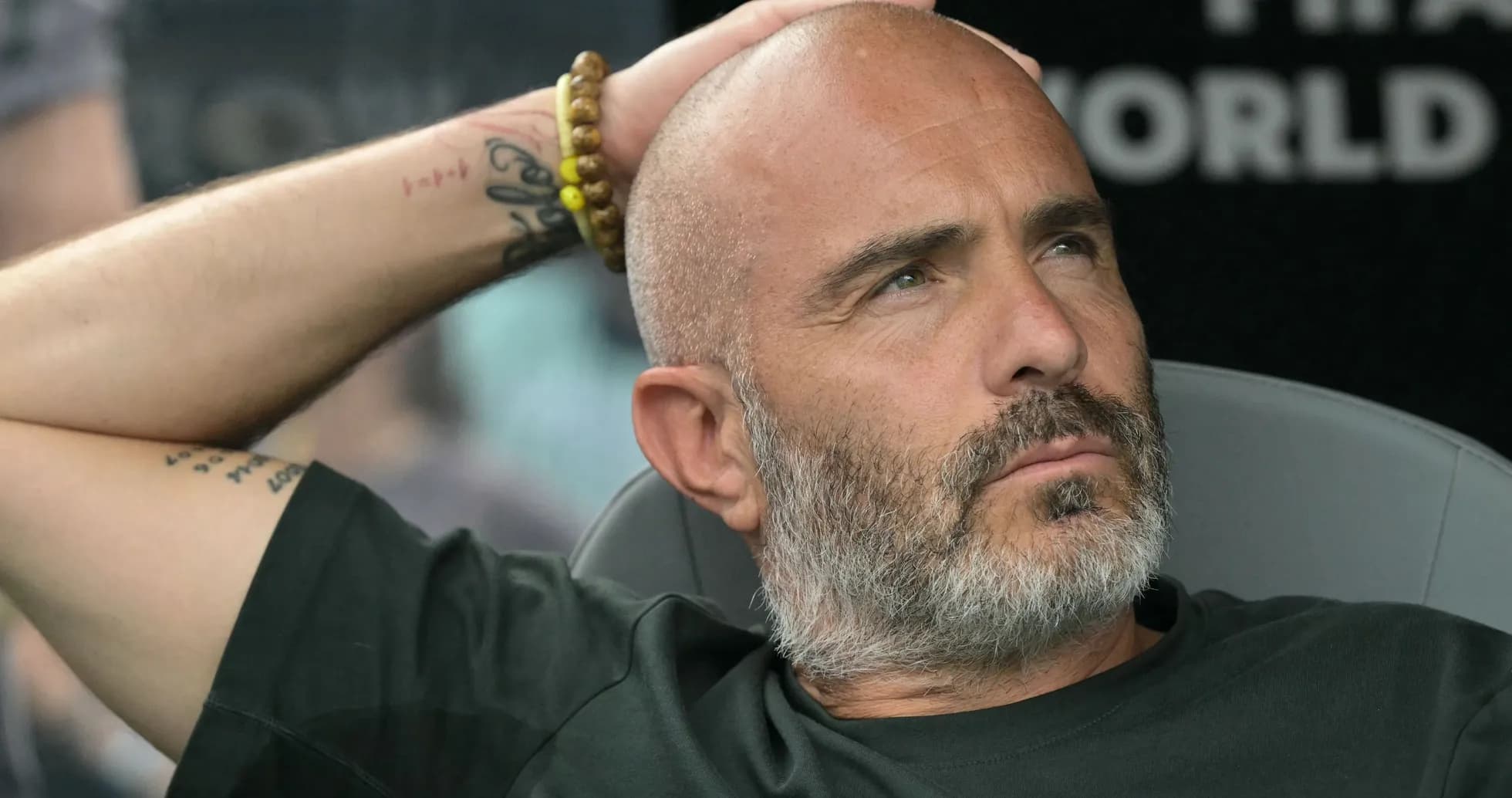
Enzo Maresca walks back into Manchester City not as a wide‑eyed apprentice, but as the man trusted to follow the most transformative coach in the club’s history. He knows exactly what that means. He also knows exactly where he is.
This, as he put it, feels like coming home.
A familiar face, a very different job
Before a ball, a tactic or a transfer was discussed, Maresca opened his first City press conference with a pause for someone else. He sent condolences to the family of Kevin Keegan, a nod to a previous era at this club before turning to his own.
“I feel as though I have returned home,” he said, describing the welcome from day one as “wonderful” and making it clear this was not a leap into the unknown. This is his third spell inside the building. He has coached City’s elite development side. He has worked at Guardiola’s side on the technical staff. He understands the corridors, the people, the way decisions are made.
That, he admitted, was decisive.
He spoke of “knowing the institution well” and of a club that has changed managers just three times in around 17 years. In modern elite football, that level of continuity is almost anachronistic. For Maresca, it is a safety net and a springboard.
“The club’s stability… reflects the strength of the administrative structure and its belief in giving projects time,” he said. Once City called, there was, in his words, “no doubt” about accepting.
From Leicester and Chelsea to Guardiola’s seat
Maresca arrives with medals, not just potential. He guided Leicester City to the Championship title in 2023–24, then crossed to Chelsea and promptly collected the UEFA Conference League and the FIFA Club World Cup in 2024 and 2025. Those are not small lines on a CV.
Now comes the role that defines careers: succeeding Pep Guardiola.
“First of all, it is a great privilege that this club has chosen me,” Maresca said, before delivering the line that framed his task. Guardiola, he repeated, is “perhaps the best coach in the world over the past twenty or twenty-five years.” To follow that is “a wonderful challenge”.
He knows the history. He name‑checked Sir Alex Ferguson and Arsène Wenger, men who built dynasties and left enormous shadows. The message was clear: the only way to live with that weight is to get the fundamentals right from day one, for the club and for the fans.
Again, he leaned on City’s structure. He pointed to the line that runs from Roberto Mancini through Manuel Pellegrini to Guardiola, and now to him. One institution, one long project, three managers over nearly two decades. The rarity of that, he said, gives him confidence they can “continue the journey”.
Transfers, timing and a young pre-season
There will be no illusion of a finished squad in July. Maresca made it plain: City are still working.
“I think there is always something that can be done,” he said of the transfer window. Targets are shaped by “the dynamics of the transfer market”, but he was open that “some things… need to be completed” and insisted the club is already on with them.
For now, pre-season belongs to the kids.
The final group of senior players will not report back until three or four days before the Community Shield. Until then, the training pitches are dominated by youth prospects, and Maresca sounded genuinely energised by what he has seen.
He spoke of “a large number of young players” bringing “great energy”, and highlighted that some are already hitting “very impressive levels”. For a coach whose reputation was forged in development squads before senior success, that is no small detail.
Rodri, rumours and recovery
No new City manager escapes transfer speculation around his best players. For Maresca, the first big question arrived with Rodri’s name attached.
Exit talk has swirled around the midfielder, but the Italian brushed it aside as the inevitable noise around an elite performer who has just won a World Cup and dominated games for club and country.
“Big players are always surrounded by rumours,” he said. Any coach in the world would want Rodri, he admitted, but his immediate concern is medical, not market-based. Rodri undergoes surgery on Monday, then faces a period of rest and recovery before returning to City’s midfield.
On Chelsea, and the club’s statement after his departure, Maresca refused to be drawn into a row. He described himself as “fortunate” to have worked at both Leicester and Chelsea, grateful for the successes and the “clear identity” forged at each. Then he shut the door: his focus now is “entirely on Manchester City” and there was, he stressed, “nothing I have to add.”
Grealish, Trafford and the open window
Jack Grealish’s future is another recurring storyline. For now, Maresca’s stance is straightforward.
“Jack is here, and he is a Manchester City player,” he said. As long as that remains the case, it is his “duty to work with him”. He spoke warmly of Grealish’s “big heart” and “wonderful personality” and left the rest where it belongs in July: “we will see what happens later.”
The same pragmatic tone applied to goalkeeper James Trafford. Maresca knows him well from their time together with City’s under‑23s, where Trafford was his No 1. Today, Trafford is “one of our goalkeepers”. The window is open, “anything is possible”, and again, the manager’s line was simple: wait and see.
Evolving ideas, familiar identity
Maresca does not pretend football stands still. He talked about the game’s constant churn, about changes in set‑piece work, in man‑to‑man defending, in the small details that decide big matches. The job, as he sees it, is to keep finding “appropriate solutions” as those trends shift.
Yet he will not rip up the identity that brought him here.
He pointed to the “clear identity” his Leicester and Chelsea sides showed and suggested that was “one of the reasons Manchester City signed me”, because “some of the ideas are similar to what the previous coach used to deliver.”
High pressing when the ball is lost. Control of the match. Imposing their style. Above all, winning.
That, he underlined, remains the “most important thing in football”.
Long balls, short passes and Haaland as a weapon
One question cut straight to tactics. With a goalkeeper of Gianluigi Donnarumma’s profile and Erling Haaland up front, would City lean more on long balls as a weapon?
Maresca did not dismiss it. “That could be one of the solutions,” he admitted. Sometimes the game demands short build‑up. Sometimes it demands direct play. The opponent will dictate part of the script.
Having a goalkeeper like Donnarumma and a striker like Haaland, he said, gives City “a great advantage” if they want to go long. But he was equally clear: it “will not be the only solution”. This City must have “varied solutions” to suit different matches, different problems.
That is the balance he now has to strike: honouring a philosophy that has taken City to the summit, while bending it just enough to be his own.
The banners, the songs and the history around the Etihad still belong to Guardiola’s era. The next chapter, though, will be written by Enzo Maresca. How quickly he can make this home truly his will define what comes next for Manchester City.