.svg&w=384&q=75 "Naijagoal logo")

England's World Cup Campaign: Injuries and Decisions Under Pressure
England’s World Cup campaign has barely cleared the runway and already it has lurched through every emotional pocket of turbulence available.
From the defensive chaos against Croatia to the exhilarating response that followed, Thomas Tuchel’s side briefly looked like the real thing. That second half felt like a statement, a surge of controlled aggression and attacking clarity that England fans have been waiting years to see. Then came Ghana. Flat. Laboured. A goalless draw that dragged the mood back down and reminded everyone how fragile early optimism can be.
Still, the table is kind. England remain in charge of the group and a win over Panama on Sunday should seal top spot and smooth away some of that Ghana frustration. On paper, it is the softest landing they could ask for.
On the pitch and in the treatment room, it is anything but straightforward.
Tuchel’s right‑back gamble under strain
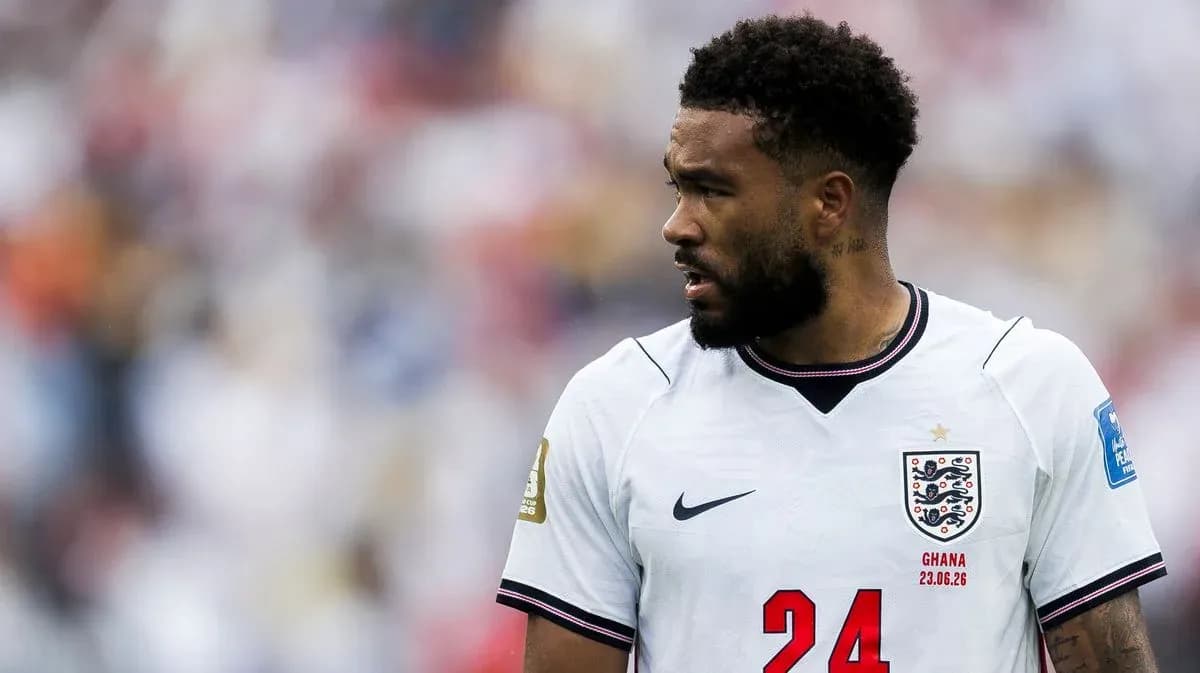
Reece James has become the latest and most significant headache for Tuchel. The Chelsea defender missed England’s final training session in Kansas City with a hamstring problem before the squad flew to New Jersey. The FA framed it as James following his own programme, but there is no return date pencilled in. That is the detail that will worry England more than any polite medical bulletin.
James, 26, lost a large slice of last season to similar issues. Tuchel knows his importance. He also knows his fragility. Now, with chief reporter John Cross describing him as a major injury concern who is set to miss the Panama game – and with doubts creeping towards the knockout rounds – the manager’s decision-making at right-back is under the spotlight.
This is not an isolated blow. Tino Livramento, the obvious understudy and closest thing England had to a like-for-like alternative, fell out of the tournament picture before a ball was kicked. Tuchel chose not to bring another orthodox right-back. He rolled the dice on James’ fitness and versatility elsewhere in the squad.
The risk is starting to bite.
Panama may be forgiving. The knockouts will not.
In pure competitive terms, there are worse fixtures to navigate without James. With full respect to Panama, this is not a heavyweight clash under the lights. If Tuchel had planned to rest his best all-round right-back at any stage, this was the game that made the most sense.
The problem is not Sunday. It is what comes after.
If James misses only Panama, England survive the inconvenience. If the absence stretches into the knockouts, Tuchel’s right flank begins to look like a patchwork job in a tournament that punishes compromise.
Ezri Konsa is expected to slide across from centre-back this weekend, with Jarell Quansah another emergency option. Both are accomplished defenders. Both are also centre-backs by trade. They do not offer James’ blend of power, delivery and attacking thrust. They do not mirror Livramento’s natural width either.
Over one game, you can make it work. Over a tournament, you end up with square pegs at right-back and an entire system bent out of shape to protect them.
All of this circles back to the most glaring omission of Tuchel’s squad: Trent Alexander-Arnold. No matter the tactical reasoning, England now stand on the brink of a World Cup knockout phase potentially without a single natural, fully fit right-back at their disposal. Djed Spence can operate there, but has increasingly worked from the left despite being right-footed.
If James cannot shoulder the majority of minutes, the questions won’t stop at the medical team’s door. They will land squarely at Tuchel’s.
Saka, Rice and the Arsenal aftershock
The concerns do not stop on the right flank. They run through the spine of England’s side and back to north London.
Bukayo Saka arrived at this World Cup nursing an Achilles problem and has been eased in from the bench. He is pushing to start against Panama, but his reduced role has already been felt. Noni Madueke flashed threat in spells against Croatia, yet England have missed Saka’s reliability, his timing, his ability to turn half-chances into defining moments.
Declan Rice, meanwhile, finished the Ghana game with a dressing around his calf and was seen struggling towards the end. Reports suggest the issue that kept him out of Thursday’s training is not serious, but it adds another layer of unease around a player who has been managing his body through a brutal calendar.
Both men have just come off a relentless domestic season with Arsenal, one that ended with a first Premier League title in over 20 years. The emotional and physical cost of that triumph is now being paid in England colours. The very engine that powered Arsenal’s renaissance is flickering on the international stage.
Lose Rice, even briefly, and England’s midfield balance changes. Lose Saka from the starting XI for much longer, and the attack loses its sharpest edge.
A strong XI, a fragile foundation
Tuchel can still field a side on Sunday that looks imposing on paper: Jordan Pickford behind a back four of Konsa, John Stones, Marc Guehi and O’Reilly; Adam Anderson and Kobbie Mainoo in midfield; Saka, Jude Bellingham and Marcus Rashford supporting Harry Kane.
That is a team that should beat Panama. It is a team that should win the group. It is also a team stitched together by caveats and conditional clauses: if Saka is ready to start, if Rice’s calf settles, if James recovers in time for the games that will define this tournament.
England’s week has been largely positive. The performances, at their best, have been as bold and assured as anything seen in recent years. Yet beneath the surface, the fault lines are clear.
The football has promised something. The injuries threaten to take it away.
Tuchel wanted control of this World Cup campaign. Right now, he is watching some of his most important decisions – and some of his most important players – hang in the balance just as the tournament is about to get serious.