.svg&w=384&q=75 "Naijagoal logo")

Egypt Achieves Historic World Cup Knockout Victory Over Australia
Hossam Abdelmaguid walked from halfway with 70,000 people on his shoulders and a nation in his boots. One kick later, Egypt were somewhere they had never been before: the last 16 of a World Cup.
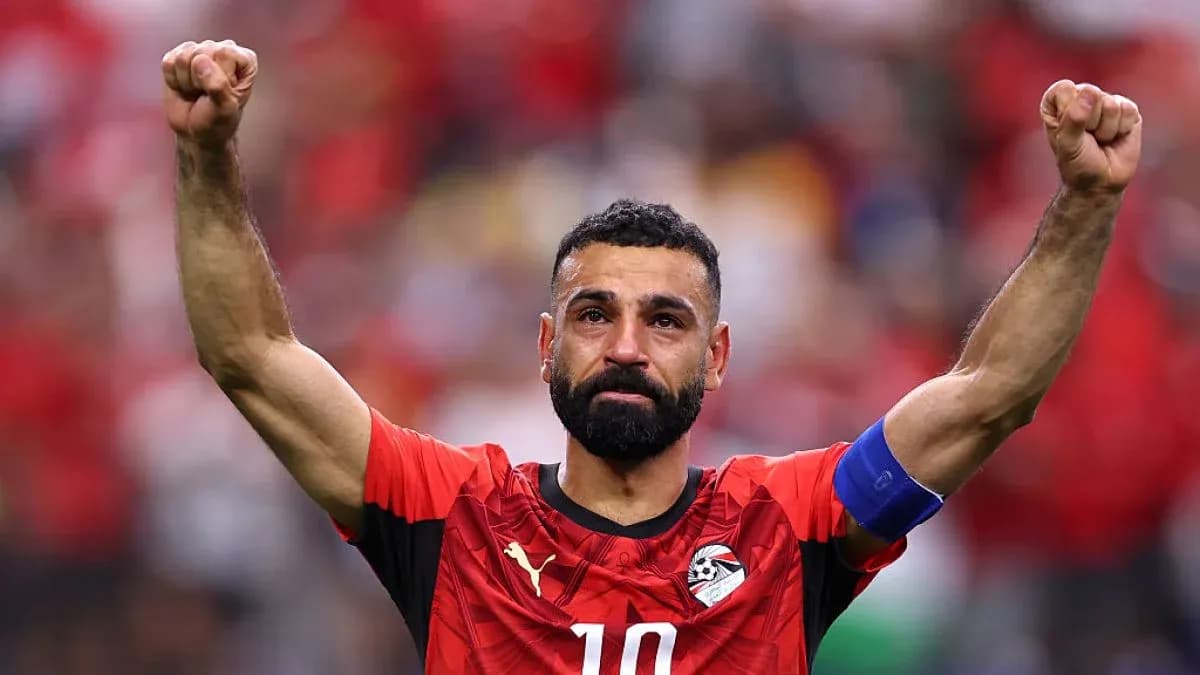
He buried his penalty, low and true, to seal a 4-2 shootout win over Australia in Texas after a draining, anxious 1-1 draw that stretched across 120 minutes and several lifetimes. Mohamed Salah, so often Egypt’s saviour, stood this time as a tearful witness. The story belonged to others.
Egypt hold their nerve, Australia crack
Australia coach Tony Popovic played his final card before the shootout, sending on veteran goalkeeper Mathew Ryan in a late, desperate roll of the dice. It didn’t work.
Shooting towards a bank of Egypt fans, with whistles slicing through the humid night, Harry Souttar strode up first for the Socceroos and hammered his effort over the bar. Advantage Egypt. Immediate, brutal.
The next five takers all scored. Salah, subdued all evening, stepped up and rolled in his penalty with icy calm, a reminder of why defenders fear him even when he is limping through a tournament.
Then came 18-year-old defender Lucas Herrington. He went high, too high, smacking the bar and watching the ball spin away into the dark. Abdelmaguid followed, unflinching, and sent Egypt into uncharted territory, leaving Australian players crumpled on the turf.
A night heavy with history
For Egypt, this is not just a win. It is a first-ever appearance in the knockout phase of a World Cup, a barrier finally broken by a side that had long carried the weight of seven Africa Cup of Nations titles but no equivalent success on the biggest stage.
Both teams arrived knowing what was at stake. Neither Egypt nor Australia had ever won a men’s World Cup knockout tie. Every loose touch, every throw-in, felt loaded.
The start reflected that tension, but Egypt struck first. Against the early pattern of play, they found clarity.
After just 13 minutes, Emam Ashour slipped away at the back post. Australia forward Nestory Irankunda lost him for a fatal second, Karim Hafez delivered a teasing cross, and Ashour – already on the scoresheet earlier in the tournament – powered home a header. Egypt, who had looked nervous at the back and had seen Cristian Volpato rattle the top of the crossbar within five minutes, suddenly had the lead and something to cling to.
Australia, who had scored only twice in the group stage, now had to chase a game they are rarely comfortable opening up.
Salah struggles, Australia strike back
Salah, 34 and nursing a hamstring strain from Egypt’s previous match, never quite caught fire. He drifted, he probed, but the explosive bursts that once shredded defences were mostly absent. The first half became an attritional arm-wrestle, more collisions than combinations.
Australia’s best moment before the break came when Aziz Behich finally forced Mostafa Shobeir into a routine save, their first shot on target arriving 10 minutes before half-time. Shobeir’s presence alone carried a story: his father, Ahmed, kept goal for Egypt at the 1990 World Cup. Another generation, another stage, another layer of expectation.
The half ended with a crunch. Jordan Bos, one of the quickest players in the tournament, lay in a heap after a fierce, flying challenge from Rabia. Bos could not continue and Kai Trewin replaced him at the interval, a significant blow to Australia’s width and pace.
Egypt should have killed it seconds after the restart. Omar Marmoush, the Manchester City attacker, slid a close-range effort wide when it looked easier to score. That miss felt big in the moment. It grew larger with every passing minute.
The pressure told at the other end. From an in-swinging free-kick, Mohamed Hany, under heavy physical pressure, misjudged his header and steered the ball into his own net. It was his second own goal of the tournament, a cruel, looping reminder of how thin the margins can be at this level.
Suddenly the game tilted. Egypt’s coach had warned about Australia’s physical edge, and here it was, crashing into his back line and onto the scoreboard.
Extra time, exhaustion, and one last push
Normal time closed with Egypt back on the front foot. Salah finally found pockets of influence, linking play as Ramy surged through late on, only to see Australian goalkeeper Patrick Beach spring to his right and make a superb save deep into added time.
Extra time felt inevitable. So did the fatigue.
Egypt started the additional 30 minutes with more belief. Salah cut inside and lashed a right-footed effort high over the bar, a half-chance that only underlined how far he was from his best rhythm. The minutes bled away, legs grew heavy, and the game narrowed into a waiting room for penalties.
Neither side found a decisive moment. The fear of a mistake seemed to outweigh the desire to risk everything for a winner. The shootout beckoned, and with it, the chance for someone less heralded than Salah to etch his name into Egyptian football folklore.
Abdelmaguid took it.
Argentina – or Cape Verde – await
Egypt’s reward is as daunting as it is glamorous. Lionel Messi’s Argentina stand next in Atlanta, assuming the reigning champions avoid a seismic shock against tournament debutants Cape Verde in their last-32 tie.
Whatever happens there, this Egypt side has already changed its country’s World Cup story. They came to this tournament still searching for a first win on the global stage and found it against New Zealand in the group phase. Now they have something far greater: a knockout victory, a penalty shootout survived, a night when history finally moved their way.
The Pharaohs will travel to Atlanta with Salah still chasing form, with scars from a bruising encounter, and with the knowledge that they have already stepped where no Egyptian team has stepped before.
The next question is simple, and far more daunting: how much further can they go?