.svg&w=384&q=75 "Naijagoal logo")


Detroit City vs Lexington: Cup Tactics and Key Matchups
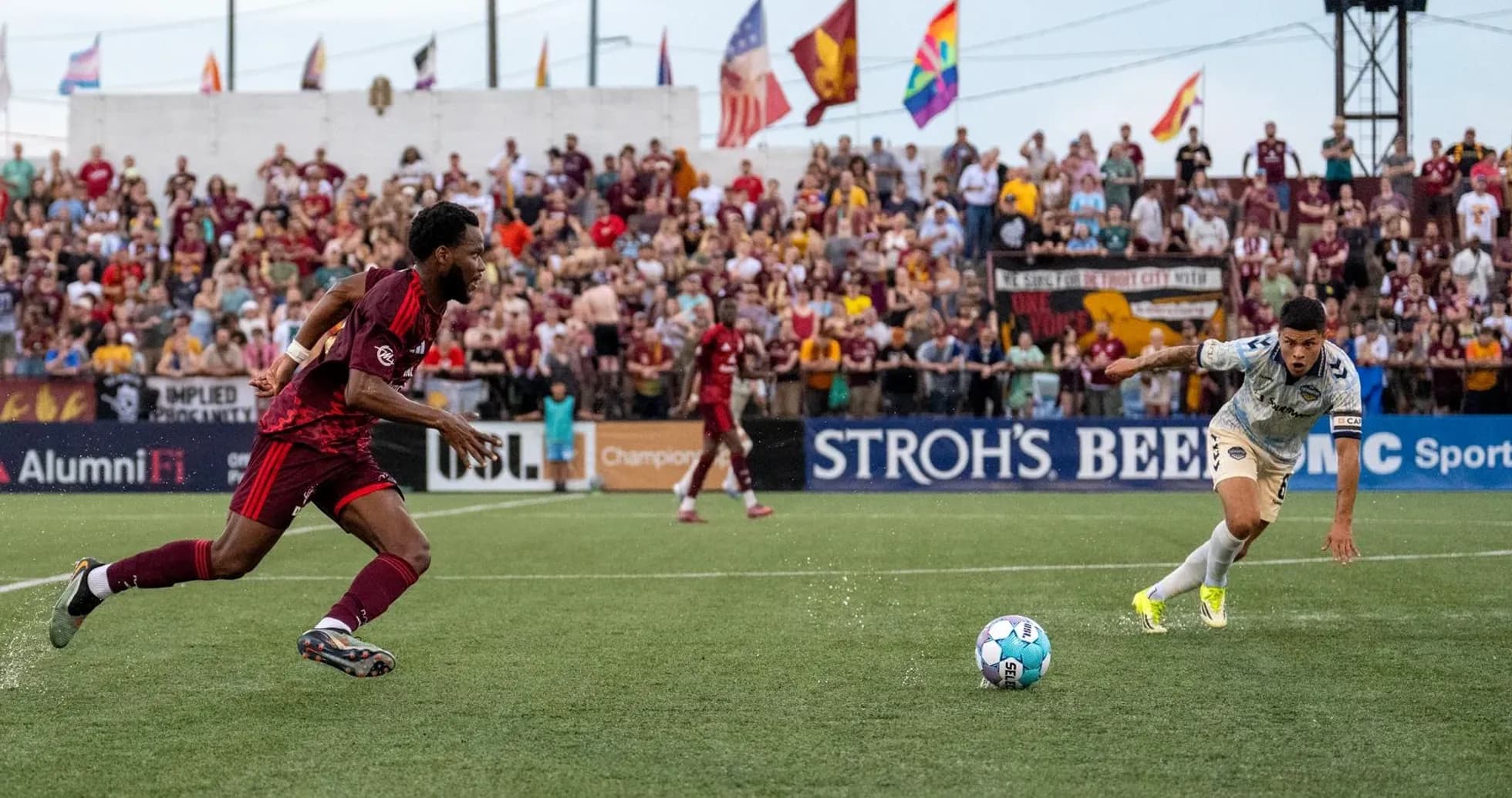
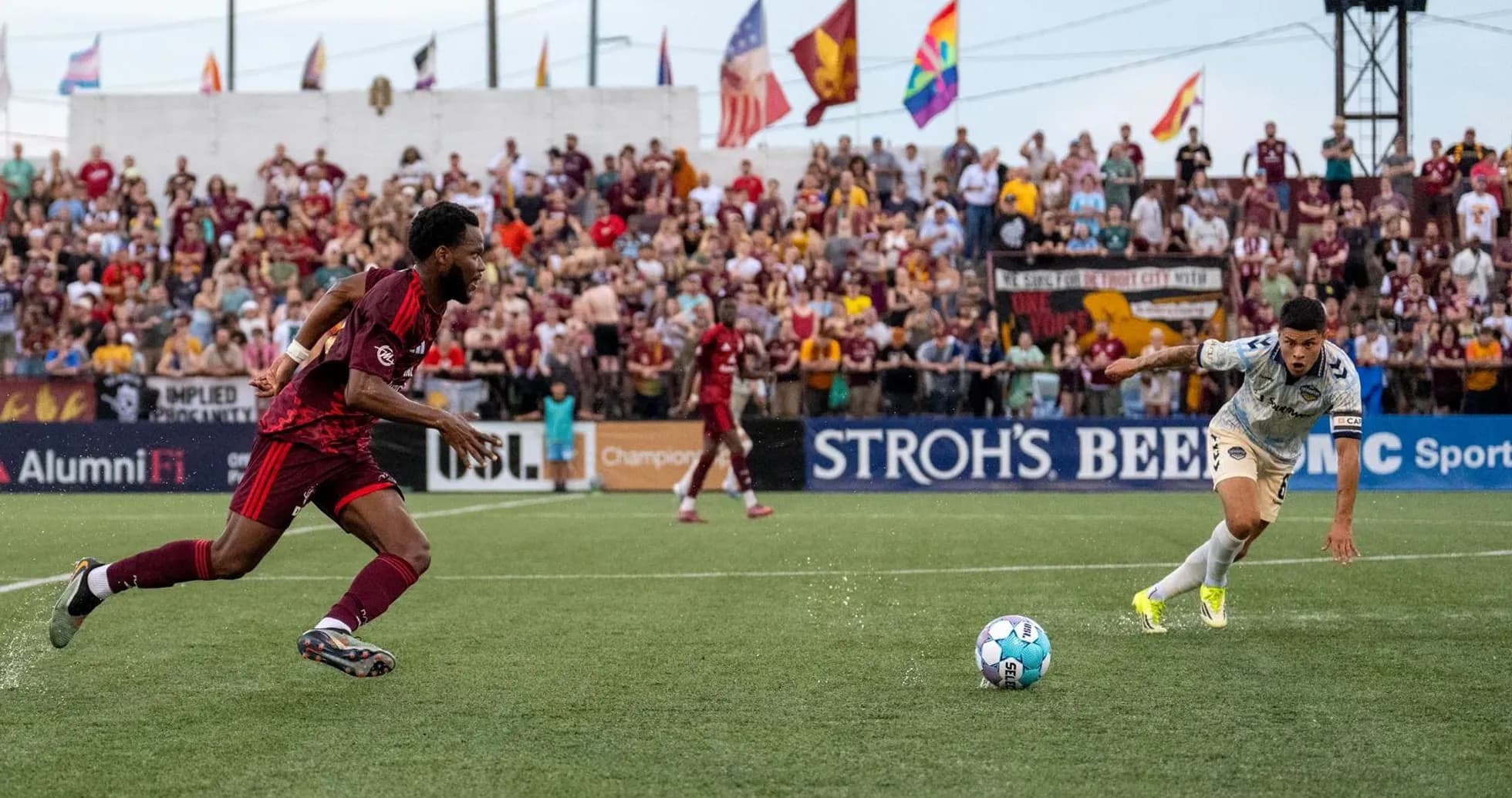
Under the lights at Keyworth Stadium, Detroit City and Lexington played out a tense USL League One Cup Group Stage tie that went the full 120 minutes and beyond. The scoreboard read 1-1 after normal time, and still deadlocked after extra time, before Lexington held their nerve from the spot to claim a 3-1 win in the shootout.
Following this result, the group table underlines the contrast between these two sides’ early Cup identities. Detroit City sit 5th in Group 4 with 4 points and a goal difference of -1, reflecting a campaign built on narrow margins: overall they have 1 win and 1 loss from 2 matches, scoring 3 and conceding 4. At home, their Cup record is harsher: 1 defeat in 1 outing at Keyworth, with 1 goal scored and 2 conceded. On their travels, they have been more efficient, winning their only away match 1-0.
Lexington, by contrast, have embraced chaos and productivity. They are 3rd in Group 4 with 5 points and a goal difference of 4. Across 2 matches they remain unbeaten, with 2 wins from 2, scoring 8 and conceding 4 overall. At home they have a 4-2 win; away, a 2-1 victory. This is a side that leans into high-event football: overall averages of 3.0 goals for and 1.5 goals against per game in the Cup speak to an open, attacking approach that still leaves room for defensive questions.
The penalty shootout in Detroit did not change those underlying patterns so much as dramatise them: Detroit’s more controlled, lower-scoring profile versus Lexington’s willingness to trade blows and trust their front line.
II. Tactical Voids and Discipline
Injuries and suspensions are not documented in the data, but the lineups show both coaches leaning into continuity and balance. Danny Dichio’s Detroit City XI was built on a sturdy spine: C. Herrera in goal, a back line anchored by D. Amoo-Mensah and C. Montgomery, and a midfield platform including K. Hernandez-Foster and R. Williams. Ahead of them, Rafa Mentzingen, A. Dalou, A. Diouf, and D. Smith offered running power and direct threat.
Masaki Hemmi’s Lexington answered with their own structural clarity. O. Semmle started in goal, shielded by a defensive group including X. Zengue, K. Burks, A. Ordonez, and J. Hafferty. The midfield pairing of B. Ferri and A. Molloy provided the metronome and the bite, while the creative and attacking burden fell on A. Midence, Nick Firmino, M. Epps, and T. Scott.
Detroit’s season-long disciplinary profile hints at a side that often has to absorb pressure in waves and respond with tactical fouls. Their yellow-card distribution in the Cup is heavily clustered between 31-60 minutes: 16.67% of their cautions arrive from 31-45 minutes, and a striking 50.00% between 46-60 minutes, before another 16.67% from 61-75 and 16.67% from 76-90. That mid-game spike suggests a team that, after the interval, frequently finds itself stretched and forced into late challenges as opponents raise the tempo.
Lexington’s yellow cards are more evenly spread but still reveal a similar mid-game tension. They pick up 14.29% of their yellows from 0-15 minutes and another 14.29% from 16-30, before a combined 57.14% between 31-60 minutes (28.57% from 31-45 and 28.57% from 46-60). A further 14.29% arrive late, from 76-90. Both sides, then, tend to get dragged into physical, card-heavy contests around half-time, when tactical adjustments collide and intensity spikes.
Neither team has seen a red card in this Cup run, and neither has been involved in penalties in open play: both have 0 penalties awarded, with 0 scored and 0 missed. That made the shootout in Detroit a psychological frontier rather than a continuation of an existing pattern.
III. Key Matchups
Lexington’s “hunter” identity in this Cup is collective rather than individual. Their overall scoring rate of 3.0 goals per game, with 4.0 at home and 2.0 away, reflects a multi-pronged threat. In Detroit, the front four of A. Midence, Nick Firmino, M. Epps, and T. Scott formed a fluid attacking unit: Firmino’s capacity to drift between lines, Epps’ direct running, and Scott’s work across the front made Lexington difficult to pin down.
Detroit’s shield is built on structure and work rate rather than sheer defensive dominance. Heading into this game, they had conceded 2 goals overall in the Cup, with an overall average of 1.0 goal against per match, but that figure hides a split personality: at home they concede 2.0 goals per game, away 0.0. C. Herrera’s presence in goal, supported by the central pairing of D. Amoo-Mensah and C. Montgomery, gives Detroit a rugged core, but the numbers suggest that Keyworth has not yet become the fortress they need it to be in this competition.
The duel between Lexington’s roaming attackers and Detroit’s central block was always likely to define the narrative. When Lexington pulled Detroit’s midfield wide, the spaces in front of the back line invited Firmino and Midence to operate between the lines. Conversely, when Detroit compressed centrally, Epps and Scott became the key to stretching the play and isolating full-backs.
Engine Room
The midfield battle at Keyworth was a clash of styles as much as personnel. For Detroit, K. Hernandez-Foster and R. Williams offered a blend of circulation and combat. Hernandez-Foster is the smoother passer, tasked with connecting defence to attack and finding early lanes into Rafa Mentzingen and D. Smith. R. Williams, by contrast, is the breaker of rhythm: the one who steps into duels, accepts yellow-card risk, and tries to disrupt Lexington’s patterns.
On the other side, Lexington’s double pivot of B. Ferri and A. Molloy is central to their high-output attacking identity. Molloy’s passing range allows Lexington to flip the field quickly, while Ferri’s positioning and pressing set the tone without the ball. When they are on top, Lexington’s attacks arrive in waves, which helps explain their overall 6 goals in 2 matches and the willingness to accept that they will concede (3 goals against overall, an average of 1.5 per game).
Further ahead, Rafa Mentzingen and A. Dalou were Detroit’s creative levers. Mentzingen’s ability to drift inside from advanced positions and combine with A. Diouf and D. Smith gives Detroit a route to goal that does not rely on sheer volume of chances but on the quality of their few openings. That fits a side that averages 1.0 goal for per game overall in the Cup, both at home and away: they are economical rather than explosive.
IV. Statistical Prognosis
Strip away the drama of extra time and penalties, and the underlying Cup numbers paint a clear tactical contrast. Lexington are a high-variance, high-reward side: 2 wins from 2, 6 goals scored and 3 conceded overall, with no clean sheets but a relentless attacking edge. Detroit are more conservative: 1 win and 1 loss, 2 goals scored and 2 conceded overall in the statistics snapshot, one clean sheet away and none at home, and no failures to score in either venue.
In an xG-framed lens, Lexington’s profile hints at a team that consistently generates enough volume and quality to outscore their defensive frailties. Their multi-goal matches suggest sustained pressure and repeated entries into high-value zones. Detroit, with their tighter scorelines and lower scoring rate, likely live on finer margins, where game state and individual moments weigh heavily.
Following this result, the Cup trajectory feels set: Lexington’s attacking engine, powered by the likes of Firmino, Epps, Midence, and Scott, looks built for knockout volatility and shootout composure. Detroit’s path is narrower. To progress deep into this competition, Dichio’s side will need to transform Keyworth from a site of narrow defeats into a venue where their compact structure, the industry of Hernandez-Foster and R. Williams, and the ingenuity of Rafa Mentzingen can tilt those one-goal games in their favour—before the lottery of penalties ever comes into view again.