.svg&w=384&q=75 "Naijagoal logo")
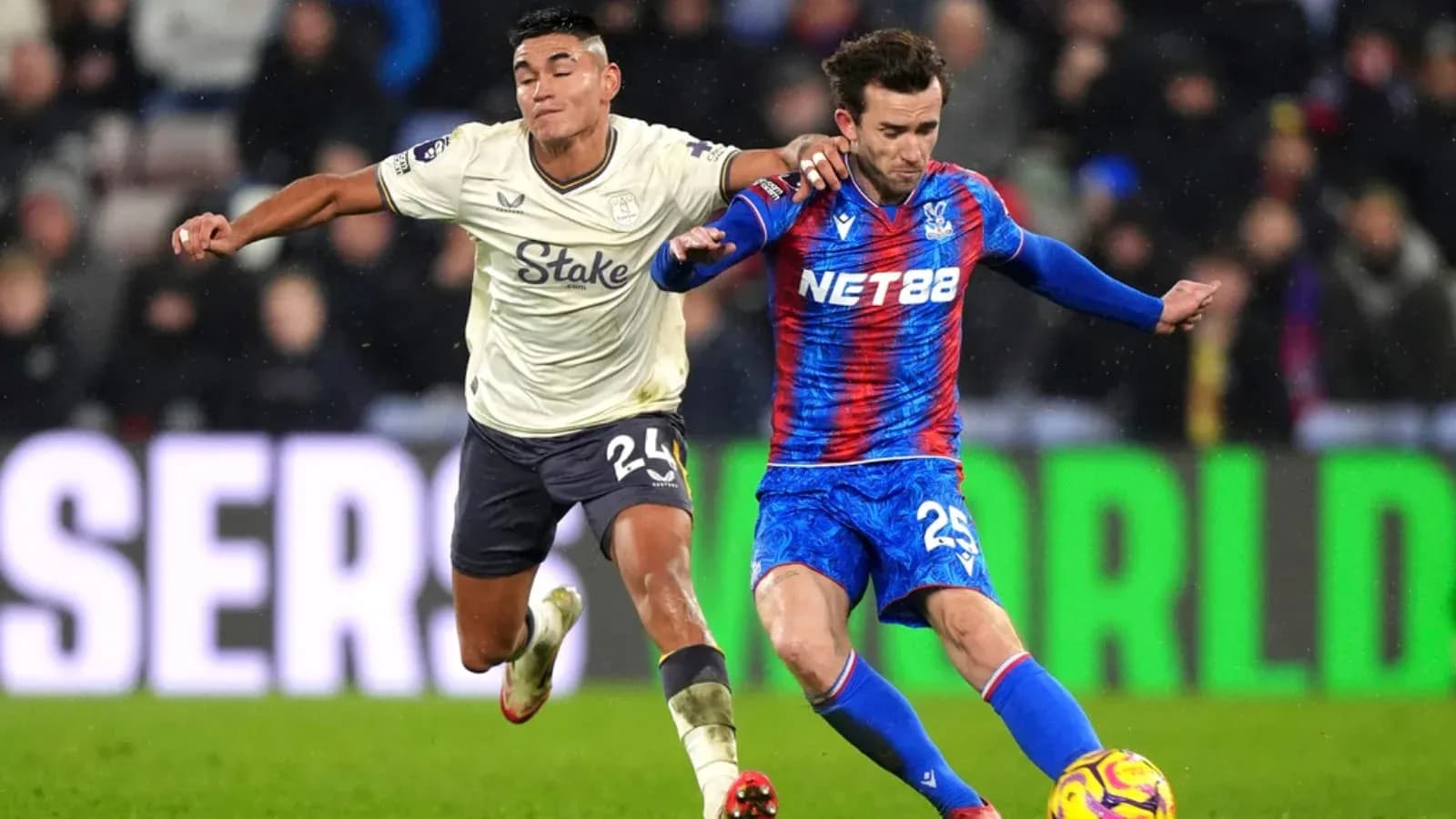
Crystal Palace vs Everton: Mid-Table Clash Preview
Selhurst Park stages a mid-table meeting with very different pressures on 10 May 2026, as 15th‑placed Crystal Palace host 10th‑placed Everton in the Premier League. With three games left for Palace and just two for Everton, the stakes are about positioning, prize money and momentum rather than survival, but the underlying data suggests a tight, attritional contest rather than an end‑of‑season exhibition.
Context and stakes
In the league, Crystal Palace sit 15th on 43 points after 34 matches (11 wins, 10 draws, 13 defeats, goal difference -6). They are not mathematically profiled here, but their cushion suggests relative safety; the priority now is to arrest a shaky run of form – “LLDWD” across their last five league games – and avoid being dragged back towards danger.
Everton arrive in London in 10th with 48 points from 35 games (13 wins, 9 draws, 13 losses, goal difference 0). Their recent “DLLDW” form hints at inconsistency, but a top‑half finish is within reach if they can turn performances into points over the final fortnight.
The venue matters. Selhurst Park has been stubborn rather than intimidating: Palace’s home record in the league is 4 wins, 8 draws and 5 defeats from 17, with only 16 goals scored and 19 conceded. Everton have travelled relatively well: 7 wins, 4 draws and 6 losses away, scoring 19 and conceding 20. On raw home/away numbers, the visitors look marginally more comfortable outside their own ground than Palace do in SE25.
Tactical shapes and stylistic clash
Across all phases this season, Palace have been heavily wedded to a back three. They have lined up 30 times in a 3‑4‑2‑1 and 4 times in a 3‑4‑3. That structure underpins a cautious, low‑scoring profile: they average 1.1 goals for and 1.2 against per game (36 scored, 42 conceded in 34 matches). At Selhurst, the numbers are even more conservative – 0.9 goals for and 1.1 against on average.
The three‑centre‑back system is designed to protect a defence that, in volume terms, has not collapsed: Palace have kept 12 clean sheets (7 at home) across all phases. However, they have also failed to score 11 times (7 at home), underlining how often games involving them become tactical stalemates. Their biggest home win is 2‑0; their heaviest home defeat is 0‑3. When they lose, they can lose heavily, but more often it is about fine margins.
Everton, by contrast, are a back‑four side. Their default is a 4‑2‑3‑1 (21 uses), with a single outing in a 4‑3‑3. Their statistical profile is slightly more expansive: 44 goals scored and 44 conceded in 35 games (1.3 for, 1.3 against per match). Away from home they mirror Palace’s attacking output (1.1 goals scored per game) but are marginally tighter defensively (1.2 conceded).
Both teams are relatively comfortable in low‑margin games. Everton have 11 clean sheets (5 away) and have failed to score 9 times (5 away). The tactical picture points towards a match where structure and discipline dominate: Palace’s back three plus wing‑backs trying to lock down wide areas, Everton’s double pivot shielding a back four that is missing a key piece.
Team news and selection puzzles
Crystal Palace are hit hard in key zones. C. Doucoure (knee injury) is out, depriving them of a central presence in front of the back three. E. Guessand (knee), E. Nketiah (thigh) and B. Sosa (injury) are also ruled out. That combination affects both ends of the pitch: Doucoure’s screening, Sosa’s left‑sided balance and Nketiah’s depth in attack.
Everton have their own issues. J. Branthwaite (hamstring) is missing, which is a major blow to their central defence, especially against a physical centre‑forward like J. Mateta. J. Grealish (foot injury) is also out, removing a creative option between the lines. In midfield, I. Gueye and T. Iroegbunam are listed as questionable with injuries; their availability will shape how aggressive Everton can be in the press and in transitions.
These absences could subtly shift the tactical emphasis. Palace, without Doucoure, may be more cautious about exposing their back line, perhaps keeping their wing‑backs a little deeper. Everton, without Branthwaite, may be reluctant to hold a very high line against Mateta’s physicality and Palace’s willingness to play into him early.
Key players and attacking focus
The standout attacking figure in the data is Jean‑Philippe Mateta. The Crystal Palace striker has 10 league goals this season in 28 appearances (24 starts, 2,095 minutes). His shot profile is robust – 53 attempts, 30 on target – and he is central to Palace’s limited attacking output: he accounts for more than a quarter of their league goals.
Mateta’s game is not just about finishing. He has 8 key passes and is involved heavily in duels (274 contested, 104 won), reflecting his role as a focal point in a side that often plays into him with back to goal. His penalty record this season is precise: 4 scored, 0 missed. Given Palace’s overall tally of 7 penalties scored from 7, he is clearly trusted from the spot and offers a reliable route to goal in tight matches.
With Nketiah unavailable, Palace’s attacking plan becomes even more Mateta‑centric. The 3‑4‑2‑1 will likely be built around his ability to occupy centre‑backs, bringing the two narrow attacking midfielders into play in the half‑spaces.
For Everton, the dataset does not list individual scorers, but their spread of goals – 44 in 35 games – and their use of a 4‑2‑3‑1 suggest a more collective threat, with contributions from wide players and the central “10”. The absence of Grealish reduces some creativity, but the structure remains familiar.
Head‑to‑head: Everton edge the recent duels
The last five competitive meetings (four Premier League, one FA Cup) show a clear Everton edge:
- 05 October 2025, Premier League, Hill Dickinson Stadium (Liverpool): Everton 2-1 Crystal Palace – Everton win.
- 15 February 2025, Premier League, Selhurst Park (London): Crystal Palace 1-2 Everton – Everton win.
- 28 September 2024, Premier League, Goodison Park (Liverpool): Everton 2-1 Crystal Palace – Everton win.
- 19 February 2024, Premier League, Goodison Park (Liverpool): Everton 1-1 Crystal Palace – draw.
- 17 January 2024, FA Cup 3rd Round Replays, Goodison Park (Liverpool): Everton 1-0 Crystal Palace – Everton win.
Across these five, Everton have 4 wins, Crystal Palace 0, with 1 draw. Notably, Palace have lost both of the league fixtures at Selhurst Park in this sample (1-2 in February 2025, plus the broader pattern of narrow defeats). Scorelines have been tight – three 2-1s, a 1-1 and a 1-0 – but the balance of results favours the Merseyside club.
Discipline, game state and refereeing trends
Palace’s card profile shows a tendency for yellow cards to cluster around the end of each half, particularly between 31‑45 and 46‑75 minutes. Everton’s bookings spike after the interval, with a high proportion between 46‑60 and 76‑90. Both sides have seen red cards across multiple time bands this season, suggesting that an intense, scrappy midfield battle could easily spill over.
Referee T. Bramall takes charge here. While no specific card data is provided for him, the combination of these two teams’ disciplinary patterns and the likely physical duel between Mateta and an Everton back line missing Branthwaite points towards a match where set‑pieces and fouls could be decisive.
The verdict
The statistical and historical indicators converge on a tight, low‑margin contest. Palace’s home numbers – low scoring, lots of draws, decent clean‑sheet count – contrast with Everton’s slightly more productive but still balanced away profile. The head‑to‑head trend strongly favours Everton, but the margins have consistently been a single goal.
In tactical terms:
- Palace will lean on their 3‑4‑2‑1, defensive structure and Mateta’s presence, hoping to edge a game of few chances, potentially via a set‑piece or a penalty.
- Everton, even without Branthwaite and Grealish, have enough collective threat and away resilience to create opportunities, but may be wary of overcommitting against Palace’s counter.
Given Palace’s difficulty scoring at home, Everton’s respectable away record and the recent head‑to‑head dominance, the visitors look slightly better placed to avoid defeat. However, Palace’s need to respond to a “LLDWD” run and the Selhurst Park factor suggest that a draw is a very plausible outcome.
Expect a cautious, physically demanding match, likely decided by a single goal or shared points, with Mateta’s duel against an adjusted Everton back four at the heart of the narrative.