.svg&w=384&q=75 "Naijagoal logo")
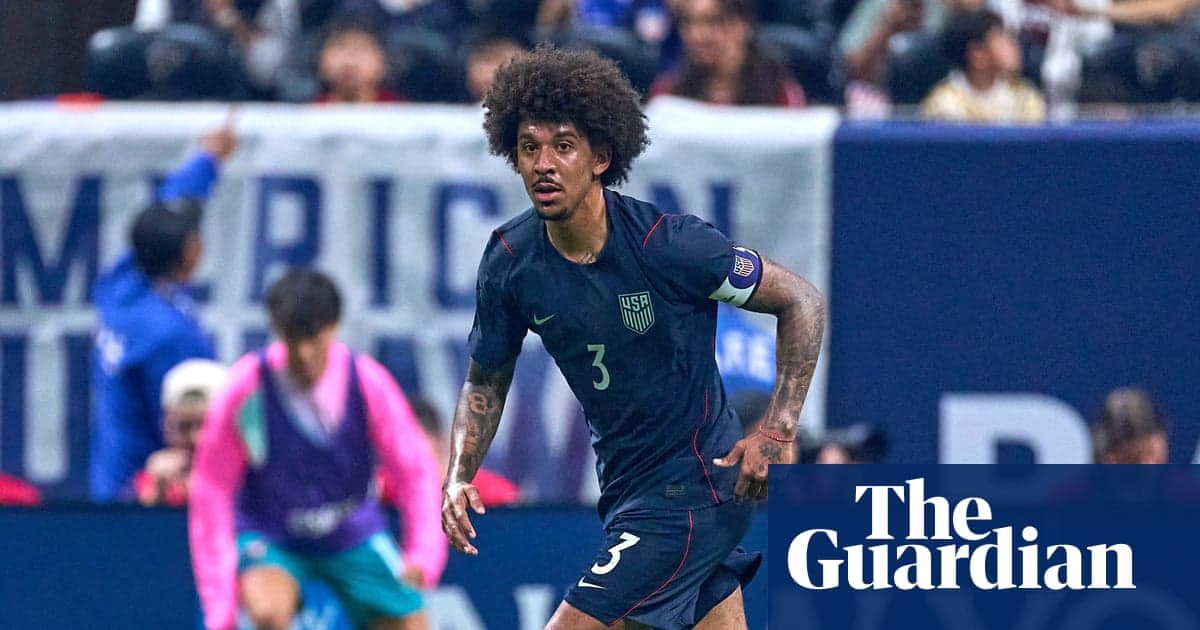

Chris Richards' World Cup Status Uncertain Due to Ankle Injury
Mauricio Pochettino will take the United States into their final World Cup tune-up without one of his most important defenders – and, right now, there’s no guarantee Chris Richards joins them at the tournament at all.
The Crystal Palace center-back has been ruled out of the friendly against Germany, Pochettino confirmed on Friday, with his recovery from an ankle injury stuck in neutral and time draining away before the World Cup opener against Paraguay on 12 June.
“He’s still not ready to compete and play,” Pochettino said. The staff will reassess “in the next few days” and then decide on his World Cup status. That decision suddenly feels far heavier than a routine late-camp fitness call.
From cautious optimism to growing frustration
Richards’ problems began in Palace’s penultimate Premier League match of the season against Brentford, when he damaged his ankle. Palace manager Oliver Glasner later said the American had torn ligaments. Richards missed the league finale against Arsenal and did not feature in the Conference League final against Rayo Vallecano.
Glasner had suggested before the Arsenal match that Richards might be available for the European final, a hint that fed optimism in the US camp. Reports around the player echoed that confidence, indicating little doubt from Richards’ camp about his availability for the World Cup.
Pochettino admitted on Friday that he, too, had believed the defender was closer to a return based on those Palace updates, particularly the idea he could have played in the Conference League final.
“There was a line of information where we were thinking that he could play that final against Rayo Vallecano in Conference League,” Pochettino said in Spanish. “He was on the bench of subs, you remember? After that, [we thought] he could maybe be [involved] against Senegal. In the end, the timelines [are] lengthening and [it] angers me a bit. I’m not happy, because we know Chris Richards is an important player. Of course we all know it.”
The irritation is clear. Pochettino built much of his defensive plan around Richards’ presence. Instead, the defender has spent most of the pre-World Cup camp in rehab, working alone while his teammates sharpened up.
On Wednesday at the National Training Center, he finally stepped onto the pitch with the group, but not into full training. While the rest of the squad moved through stretching circles and sharp rondos, Richards was on a neighboring field with trainers, pushing through resistance-band work and lateral movement drills. Close enough to see, still too far to play.
No risks, no passengers
Pochettino’s stance is blunt: there will be no gambles on half-fit players, no matter their status.
“We are never going to take a decision to play with some player that [has a] minimum risk,” he said. “We prefer to not take [a] risk. That’s why all of the players that are going to start, or players that’s going to come from the bench, it’s because they are healthy, and they are 100% fit to play.”
That line matters. Richards is not just racing the clock; he’s racing a manager who refuses to bend his principles for sentiment or reputation.
World Cup squads can be changed for medical reasons up to 24 hours before their first group-stage match, giving Pochettino until 11 June to make a final call. On paper, that’s a cushion. In reality, every day Richards spends away from full training sharpens the dilemma: even if he’s cleared, can he truly compete after a month without playing?
“In the end, we can hope that Chris can be there,” Pochettino said. “But in the end, we’re going to find ourselves with a player who’s coming without competing [for a month] and after, we have to make the decision if he’s in form to compete or not. And there’s not a lot of time [until] the World Cup.”
Life without Richards: options and adjustments
The United States got a first look at a Richards-less back line in last weekend’s 3-2 win over Senegal. Mark McKenzie anchored the center of a back three, Tim Ream stepped out from the left to break lines, and Alex Freeman operated as an “elbow” back, tucking deeper in defensive phases and sliding wide to help in build-up.
That setup wasn’t an accident. Pochettino’s 26-man squad is heavy on defenders, with five center-backs and several wide players capable of shifting inside. The idea was to build flexibility and chemistry early, reducing the need for a like-for-like swap if injuries struck.
Richards’ uncertain status now casts that selection in a different light. The United States may already be living in the contingency plan.
For Pochettino, the calculation is brutally simple: hold a spot for a key defender who might arrive undercooked, or lean fully into the group that has trained, played, and bled together in his system over the last weeks.
Hope remains that Richards can still board the plane and play a role. The clock, the ankle, and Pochettino’s no-risk stance will decide whether that hope becomes a late boost – or the defining omission of the United States’ World Cup campaign.