.svg&w=384&q=75 "Naijagoal logo")
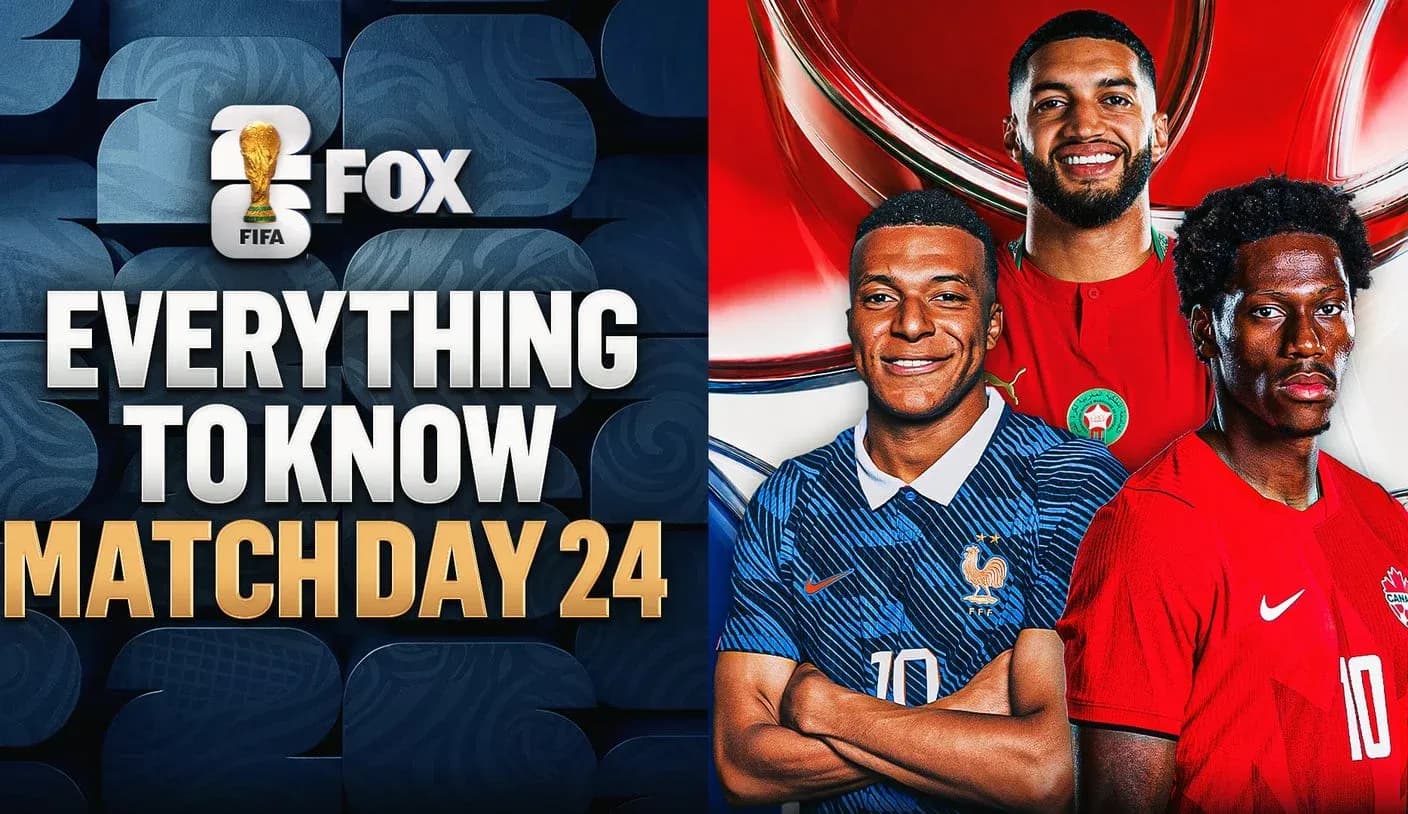

Canada Faces Morocco in World Cup Knockout Showdown
On a sweltering July 4, as the host nation marks 250 years since its founding, the 2026 World Cup shifts into knockout mode with a double-header that feels tailor‑made for drama: Canada’s reborn hopefuls against Morocco’s hardened contenders in Houston, then a fearless Paraguay trying to derail France’s juggernaut in Philadelphia.
This is where stories either take off or end abruptly.
Canada’s coming‑of‑age test against Morocco
When Canada last met Morocco at a World Cup, in Qatar in 2022, it was a mismatch of experience and expectation. Morocco won 2–1 in the group stage on their way to a historic semifinal run. Canada went home with lessons and little else.
Four years on, the rematch in Houston carries a very different weight.
Canada arrive having finally broken their World Cup knockout duck. A country that once treated this stage as distant fantasy now walks into the round of 16 with a Copa América semifinal on its recent résumé and a belief that they belong in these games. Under Jesse Marsch, the growth has been tangible, if not always smooth.
The group phase told that story in fast-forward. A flat, worrying draw with Bosnia and Herzegovina. Then an explosion: a 6–0 demolition of Qatar that shoved them into the knockouts. Just when momentum seemed secure, a deflating loss to Switzerland dragged doubts back to the surface. Canada answered with nerve, grinding out a 1–0 win over South Africa, Stephen Eustáquio striking late to keep the tournament alive.
This is not a polished side, but it is a stubborn one.
Up front, the names are big, the performances less so. Jonathan David, Cyle Larin and Tajon Buchanan give Canada a front line that can hurt anyone on paper, yet each has flickered rather than burned through this World Cup. Against Morocco, inconsistency will not be enough. Marsch needs all three locked in, ruthless and efficient.
Then there is Alphonso Davies, the great unknown. The Bayern Munich star finally stepped onto the pitch in the 75th minute against South Africa, his first minutes of the tournament after a hamstring injury. His presence alone changes the geometry of a game, but the question lingers: is he ready to start, or even to sprint at full tilt for 90 minutes? If he can’t, Canada lose not just a weapon, but a release valve against Morocco’s aggressive right side.
Because this opponent is no longer a fairy‑tale upstart. It is a fully formed contender.
Morocco have carried the swagger of a team that expects to be deep in this tournament. A controlled 1–1 draw with Brazil where they outplayed the five-time champions for long stretches. A tight, professional 1–0 win over Scotland. A 4–2 victory over Haiti that showed they can open the throttle when needed.
Then came the epic against the Netherlands in the round of 32, one of the tournament’s standout matches. The Dutch snatched the lead against the run of play, only for Morocco to keep pushing, keep probing, and finally break through deep into stoppage time. The equalizer came from an unlikely source: central defender Issa Diop, who had only just switched his international allegiance from France to Morocco before the squads were finalized. Morocco had dominated most of the contest; in the shootout, their composure finished the job.
This is a side that has built on its 2022 success rather than been weighed down by it.
Ismael Saibari has emerged as one of the tournament’s sharpest forwards, scoring three goals in the group stage and earning a move from PSV Eindhoven to Bayern Munich in the middle of it all. Achraf Hakimi, the Paris Saint-Germain right back, remains the team’s relentless engine on the flank, one of the best in the world at driving play from deep. Brahim Díaz offers guile and incision from out wide for Real Madrid, while teenage midfielder Ayyoub Bouaddi has announced himself as one of the brightest young talents on show.
Across the pitch, Morocco look settled, dangerous and deep. They are heavy favorites for a reason.
Canada, stripped of any home-field advantage after failing to top their group, will still bring a sizeable traveling support to Texas. The noise will be there. The question is whether the shock can follow. For that to happen, Canada must produce the biggest result in their footballing history, contain a multi-layered Moroccan attack, and find the clinical edge that has so often deserted them on this stage.
The margins are brutal at this level. One mistake, one lapse against a team this polished, and the dream can vanish in a heartbeat.
Player to watch: Achraf Hakimi
If Davies is limited or absent, Hakimi’s influence could tilt the entire game. The Spanish‑born PSG fullback has played every minute of Morocco’s four matches, surging forward with the conviction of a winger and the engine of a marathoner. Give him time and space down that right side, and Canada may spend the evening chasing shadows.
France’s machine meets Paraguay’s resistance
Hours later, the focus swings to Philadelphia, where the heat will be oppressive and the stakes even higher. France, one of the pre‑tournament favorites and so far every inch the part, face a Paraguay side that has made a habit of ripping up scripts.
On paper, this should be a mismatch. On grass, Paraguay have already shown they don’t read from anyone else’s lines.
Their World Cup began in chaos: a 4–1 defeat to the USA that could have sent them spiraling. Under Gustavo Alfaro, they chose another route. They tightened up, dug in and started to thrive in discomfort.
The first statement came against Türkiye. Down to 10 men for the entire second half, Paraguay defended as if their lives depended on it, nicking a 1–0 win built on sheer discipline and resolve. It was a warning.
The second was a full‑blown shock. Against Germany in the round of 32, La Albirroja ceded possession but not control. They clogged passing lanes, denied space between the lines and turned the game into a grind. Germany saw more of the ball, but rarely the whites of Orlando Gil’s eyes. After a 1–1 draw over 120 minutes, Paraguay held their nerve in the shootout to complete the tournament’s biggest upset so far.
Their backbone runs through midfield and the back line. Matias Galarza has been outstanding, the heartbeat and the hinge. His World Cup has doubled as an audition after his loan spell at Atlanta United ended, and he has responded with decisive contributions: assisting Julio Enciso’s goal against Germany, burying his penalty in the shootout, and scoring the winner versus Türkiye.
Around him, others have risen. Enciso has offered the attacking spark. At the back, José Canale, Gustavo Gómez, Juan Cáceres and Júnior Alonso have formed a rugged, uncompromising unit, shielded by the assured hands of Gil in goal. This is a team built on structure and sacrifice, a side that embraces suffering as part of its identity.
Now comes France, and a different level of storm.
Didier Deschamps’ squad is stacked with elite talent at every position, and they have played like a group intent on reclaiming the trophy. Kylian Mbappé has treated this World Cup like his personal stage, scoring six goals via three braces. On the one night he did not find the net, against Norway, he simply shifted into creator mode and delivered two assists.
His pursuit of Lionel Messi’s all‑time World Cup scoring record has become a narrative of its own, but France’s threat runs far wider than one superstar.
Ousmane Dembélé has changed the texture of this attack. Before the second group match against Iraq, he had never scored at a World Cup. That barrier is gone. A goal and an assist against Iraq, a hat trick against Norway, and another assist in the 3–0 dismantling of Sweden in the round of 32 have turned him into a second, equally terrifying focal point. With Dembélé flying, France become almost impossible to pin down.
Behind them, the supply line has been ruthless. Michael Olise has arguably been the tournament’s premier playmaker, threading passes through the tightest of seams. His vision and tempo control have amplified everything Mbappé and Dembélé do in the final third. On the flank, Bradley Barcola has stretched defenses, using his skill and direct running to pry open spaces others exploit.
Paraguay know what awaits them. A barrage of movement, pace and combinations unlike anything they have faced so far.
To survive, Alfaro’s side will have to defend at a level beyond even their Germany masterpiece. Lines must stay compact. Concentration cannot dip for a second. They will need blocks, clearances, tackles on the edge of the box — and no small amount of luck.
The heat wave gripping the East Coast adds another layer of intrigue. A draining, suffocating night could sap legs, slow transitions and test depth on both sides. For an underdog that thrives on concentration and collective effort, it may be both a risk and an opportunity.
France, though, have shown little sign of wilting under any conditions.
Player to watch: Michael Olise
Against a Paraguay side likely to sit deep in a tight, disciplined block, the key will be the man who can unpick locks. Olise already has five assists at this World Cup and has been central to the success of Mbappé and Dembélé. The Bayern Munich midfielder will again be asked to dictate, to slide passes into impossible angles, to turn sterile possession into clear chances.
On a landmark day for the host nation, the World Cup offers its own kind of celebration: one rising power trying to topple a proven force, and one giant aiming to crush the boldest of upstarts. By the end of the night, two more quarterfinalists will be known — and at least one dream will have been shattered in the heat.