.svg&w=384&q=75 "Naijagoal logo")

Colombia Advances to World Cup Round of 16 with 1-0 Victory Over Ghana
KANSAS CITY, Mo. — On a night when the heat wrapped itself around Arrowhead Stadium like a heavy cloak, Colombia never lost its cool.
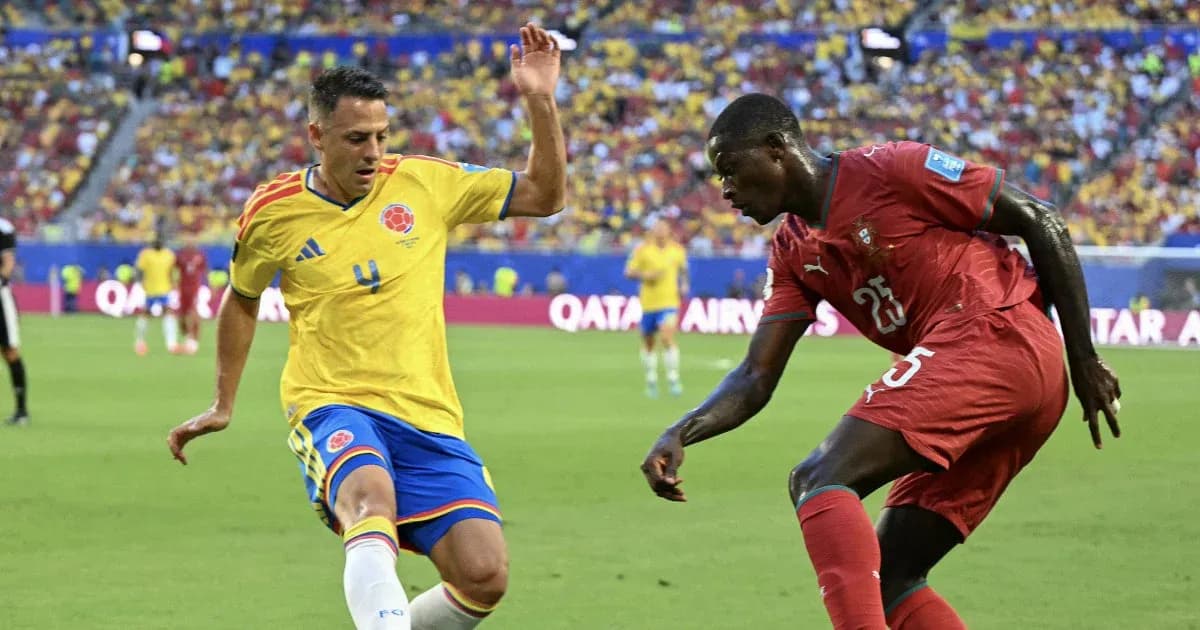
Jhon Arias needed only 14 minutes to settle the contest and send Los Cafeteros into the World Cup round of 16 with a 1-0 win over Ghana, a scoreline that flattered the beaten side more than the victors.
An early shock, a sharper response
The script seemed to wobble almost immediately. Colombia’s plan revolved around Jhon Córdoba up front, but within minutes the forward pulled up, clutching his groin. Néstor Lorenzo had no choice. He turned to Luis Suárez — the Sporting CP livewire, not the Inter Miami icon — far earlier than he would have liked.
It turned out to be a blessing.
Colombia didn’t just absorb the disruption; it accelerated through it. In the 14th minute, Daniel Muñoz slipped a clever ball into Suárez on the right. One touch, head up, and he whipped a low, vicious cross across the face of goal. Arias had timed his run perfectly, darting into the gap and flicking the ball past Lawrence Ati Zigi from close range.
One chance. One goal. One foot in the knockout rounds.
From there, the pattern never really changed.
Heat, hydration, and Colombian control
At kickoff, the temperature sat at 88 degrees Fahrenheit, the heat index pushing 96. The late 8:30 p.m. start had been scheduled with Midwestern summer in mind, but even that felt generous. Every sprint looked heavier. Every recovery run took longer.
Those much-debated hydration breaks? On this night, they were survival tools.
Colombia, though, handled the conditions like a team that expected to be here and expected to go further. They had breezed through the group stage, conceding just once across wins over Uzbekistan and Congo and a draw with Portugal. Their blend of control and incision had already impressed neutral observers — Spain coach Luis de la Fuente had gone as far as to call them “a candidate to win the World Cup.”
They played like it.
Colombia dictated tempo, pressed in bursts, then rested with the ball. Ghana, who had reached the last 16 despite chronic possession issues in a group with England and Croatia, were pushed into the same familiar pattern: chasing shadows, waiting for scraps.
A stadium painted yellow
Arrowhead, the home of the NFL’s Chiefs, usually offers a sea of red broken only by a band of yellow seats in the middle tier. On this night, that band disappeared. Two hours before kickoff, the entire bowl had turned into a Colombian enclave.
Drums. Flags. Songs that didn’t stop, even as players bent over hands-on-knees during stoppages, searching for air.
By the time the teams emerged, the stadium just east of downtown Kansas City felt less like a neutral World Cup venue and more like Barranquilla with better parking. Every Colombia touch drew a roar. Every Ghana clearance was met with a wave of whistles.
The players fed off it. Colombia’s front line, with Suárez and Luis Díaz buzzing between the lines, stretched Ghana’s back four mercilessly. The Black Stars never looked comfortable building from deep, and when they tried to go long, Colombia’s midfield vacuumed up the second balls.
Ghana’s struggle in the final third
Ghana arrived as underdogs, but also as survivors. After missing out on the Africa Cup of Nations last year for the first time in nearly two decades, just reaching the knockout stage of a World Cup again had eased some of the pressure back home.
The challenge against Colombia was clear: could they find any attacking rhythm against one of the most organized, athletic sides in the tournament?
The answer never really changed. Ghana finished with eight shots. Not one of them troubled the goalkeeper.
Colombia’s defensive structure strangled space between the lines. Any time Ghana pieced together two or three passes in midfield, a yellow shirt snapped in, forced the turnover, and suddenly the game tilted the other way. Suárez and Díaz, along with Colombia’s energetic midfielders, turned every loose ball into a counterattacking opportunity.
Ghana worked. They ran. They chased. But they never carved out a clear sight of goal.
Zigi’s resistance and a narrow scoreline
If the score stayed respectable, it was down to Lawrence Ati Zigi.
The Ghana goalkeeper faced a barrage and refused to fold, finishing with seven saves and a performance that kept his team alive long after the contest had tilted decisively in Colombia’s favor.
The pressure spiked early in the second half. In the 56th minute, Díaz thought he had killed the game, darting in behind and finishing coolly, only for the offside flag to cut short the celebrations. Minutes later, he found himself one-on-one at point-blank range, only to see Zigi spread himself and block with a strong, instinctive stop.
Each save bought Ghana a few more minutes of hope, but not momentum. Colombia kept the ball, kept probing, and kept Ghana pinned back, forcing the Black Stars to defend deeper and deeper as the cramps kicked in and the heat took its toll.
A contender moves on
When the final whistle came, Colombia had what they needed: a place in the round of 16 and another layer of credibility to the growing belief around this team.
Next up is Switzerland on Tuesday in Vancouver, British Columbia, with a quarterfinal spot on the line. A different climate, a different opponent, and a very similar expectation.
Colombia have spent this World Cup looking less like a surprise package and more like a side quietly building a case to be taken seriously among the elite. With the heat of Kansas City behind them and a fan base that travels like few others, the question now is not whether they belong in the last 16.
It’s how far this group can push the ceiling that so many are starting to raise for them.