.svg&w=384&q=75 "Naijagoal logo")

Colombia Advances to Last 16 After Narrow Win Over Ghana
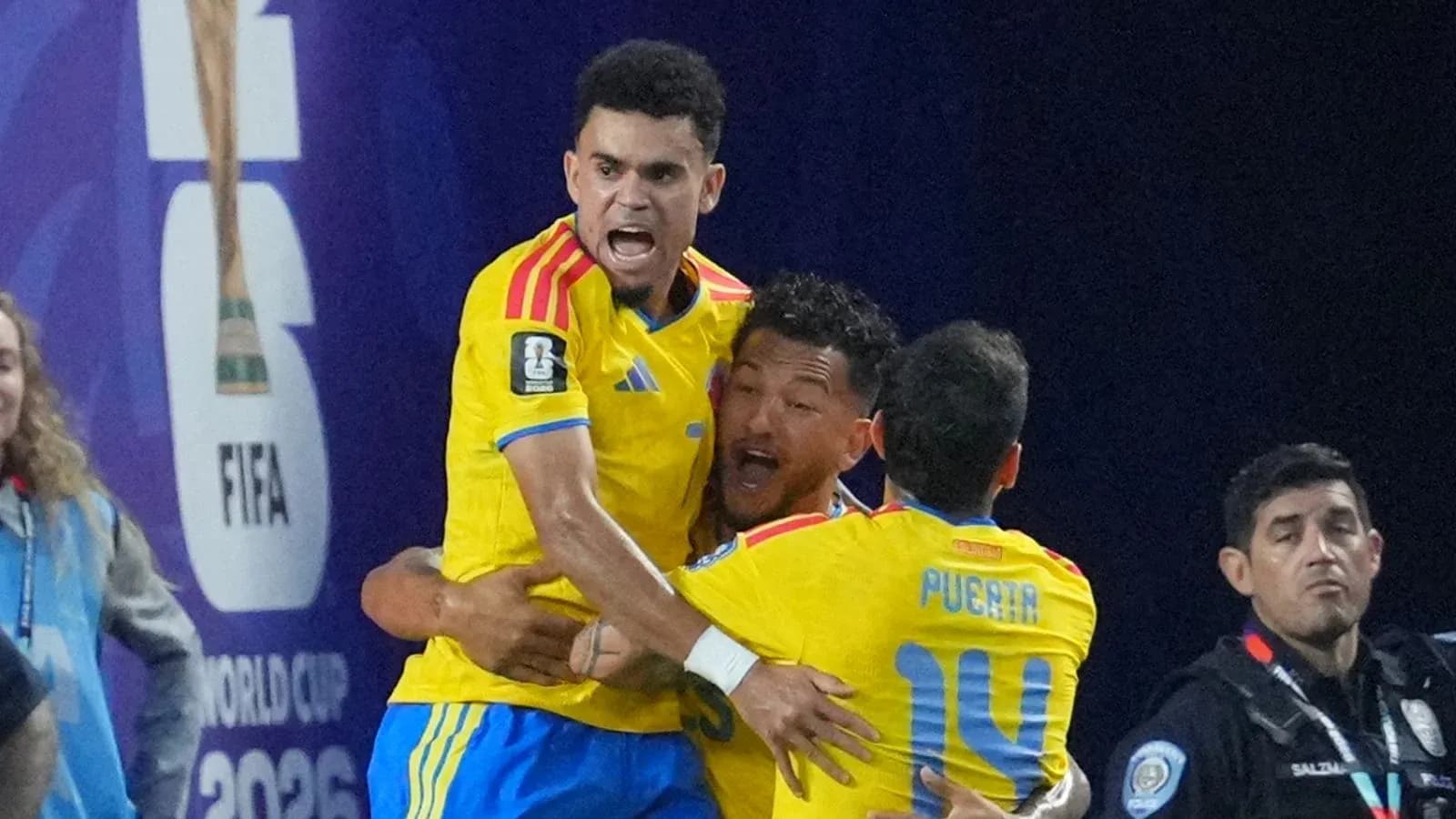
Colombia are through again. A third straight World Cup appearance, a third straight trip to the knockout rounds. The scoreline in Kansas City says 1-0 against Ghana, but the story is of a side that dominated, created, and still left the door slightly ajar.
They got away with it this time.
Chaos, then clarity
The night began with a jolt. World Cups are built on rhythm and spectacle; this one opened with physios and stretchers.
First, after just eight minutes, Jhon Córdoba went down. A muscular worry, a grimace, and Colombia’s focal point was done. Luis Suárez trotted on earlier than planned. Five minutes later, Ghana lost Marvin Senaya as well. By the 13th minute both benches had already dipped into their reserves – something never previously seen so early in a World Cup game on record.
It should have shattered the flow. It didn’t.
Instead, the disruption sharpened Colombia. The new man made his mark almost instantly. Suárez drifted wide on the right, glanced up once and wrapped his left foot around a teasing cross. Ghana’s back line hesitated, the midfield failed to track, and Jhon Arias – ghosting in unmarked – guided a clever header past Lawrence Ati Zigi.
Fourteen minutes gone. 1-0. Efficient, ruthless, exactly what you expect from a side with Colombia’s attacking talent.
Diaz threatens, Ghana retreat
From there, the pattern was set. Ghana, whose compact low block had frustrated opponents in the group stage, sank even deeper. Thomas Partey had already signalled their long-range intent with a 25-yard effort that whistled wide in the first minute, but that early sighter proved more exception than template.
Colombia took control of the ball and, more importantly, the spaces.
Luis Díaz, always on the shoulder, almost doubled the lead before the break. A rapid counter ripped through Ghana’s midfield and released him into the left channel. One touch to steady, another to shoot – the ball flashed just wide of the far post with Ati Zigi beaten.
The chances kept coming. Suárez, buoyed by his early assist, stole into the box and met a cross with a firm header that skimmed past the opposite upright. Moments later, full-back Johan Mojica rose at the back post and seemed certain to score, only for Ati Zigi to spring across his line and claw the ball away in one of the saves of the tournament so far.
Colombia walked off at half-time with only a single goal to show for 45 minutes of control. Ghana walked off grateful to still be in it.
A second that never stood
The pressure resumed after the break. The tempo dipped slightly, but Colombia still moved the ball with purpose, probing for the strike that would kill the contest.
Just before the hour, they thought they had it.
Jefferson Lerma, surging forward from midfield, bent a low cross into the six-yard box. Díaz, timing his run, slid in to stab the ball home and wheeled away to celebrate in front of the Colombian fans. It looked like the release they had been chasing.
Then came the raised flag.
The assistant ruled Díaz offside, and the stadium’s roar turned to a groan. The replay confirmed it: a step too eager, a fraction too early. The score stayed at 1-0, the tension stayed alive.
Yet Ghana never truly seized on the reprieve. Their attack lacked bite, their transitions lacked numbers. For all Colombia’s failure to extend the lead, the Africans rarely looked capable of punishing them.
Quintero changes the feel
Néstor Lorenzo still wasn’t satisfied. He knew the performance needed more incision, more craft between the lines. On 72 minutes, he turned to a familiar conductor.
Juan Fernando Quintero, now 33 and playing his club football with River Plate, replaced goalscorer Arias – and immediately changed the tone of the contest.
He didn’t misplace a single one of his 19 passes. He took 24 touches, each of them measured, each of them dragging Ghana’s block into uncomfortable positions. He created five chances, more than any other player on the pitch, despite his limited time on it.
One moment almost lit up the entire night. Picking up the ball in space, Quintero shifted it out of his feet and unleashed a rising rocket from distance. For a heartbeat, everyone in the stadium thought it was screaming into the top corner. It flew just wide of the right-hand post, leaving Ati Zigi rooted and Ghana thankful.
Around him, Díaz, Davinson Sánchez and Quintero himself all had half-chances to finally add the cushion their dominance deserved. None were taken. The expected goals tally climbed to 2.19; the scoreboard refused to budge.
The truth is, Colombia got away with that wastefulness because Ghana offered so little. Against a side with more edge in the final third, that margin for error shrinks fast.
Through – but with a warning
When the whistle went, Colombia had what they came for: a place in the last 16, another World Cup campaign extending into the knockouts, a date with Switzerland in Vancouver on July 7. Win there, and a quarter-final against either Argentina or Egypt awaits.
The foundations look strong. The structure is clear. The control, for long spells, was absolute.
Yet the story of Kansas City is not just about progression. It is a reminder. This team can dominate a match, bend it to their rhythm, and still leave the outcome hanging on a single goal.
Lorenzo will know he cannot afford that luxury in the rounds to come. He will also know he may already have the answer sitting in his squad.
On this evidence, Juan Fernando Quintero has played his way into a serious conversation. The next chapter in Vancouver might just be written with him in the starting XI.