.svg&w=384&q=75 "Naijagoal logo")

Bradley Barcola's Journey to Liverpool: From Lyon Academy to Premier League Star
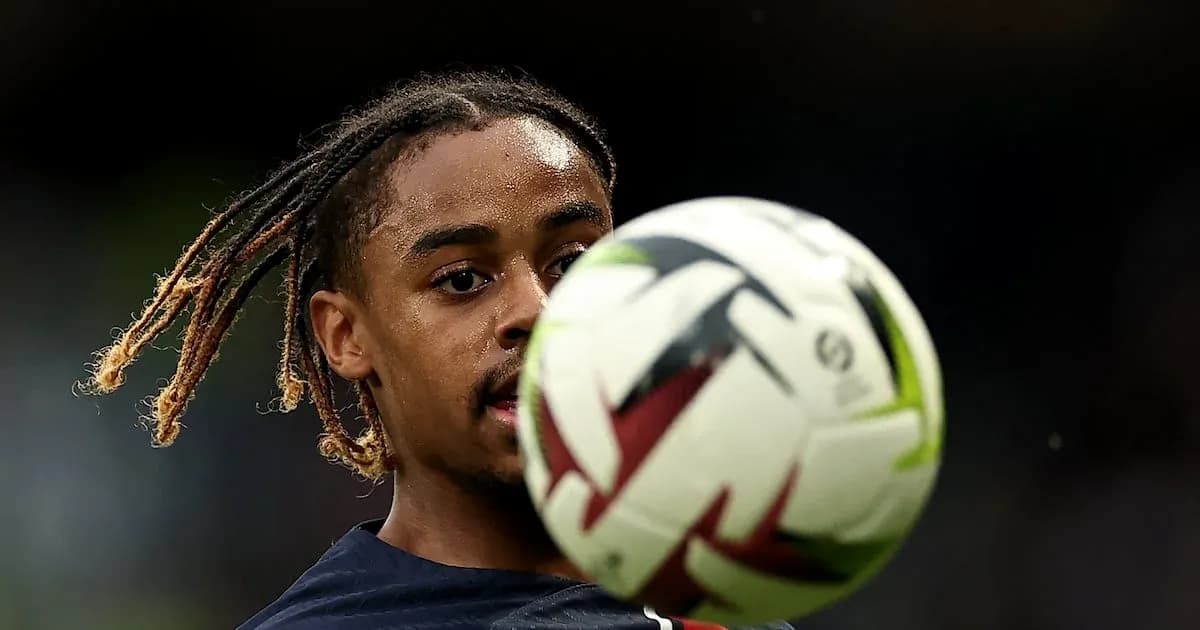
Bradley Barcola used to sit in a Lyon academy office and talk about Liverpool.
“As a kid, he always spoke to me about Liverpool,” recalls Amaury Barlet, one of his youth coaches. So when the call finally came from Anfield, there was no hesitation. No agonising over details. No drawn‑out saga.
He “didn’t ask any questions”.
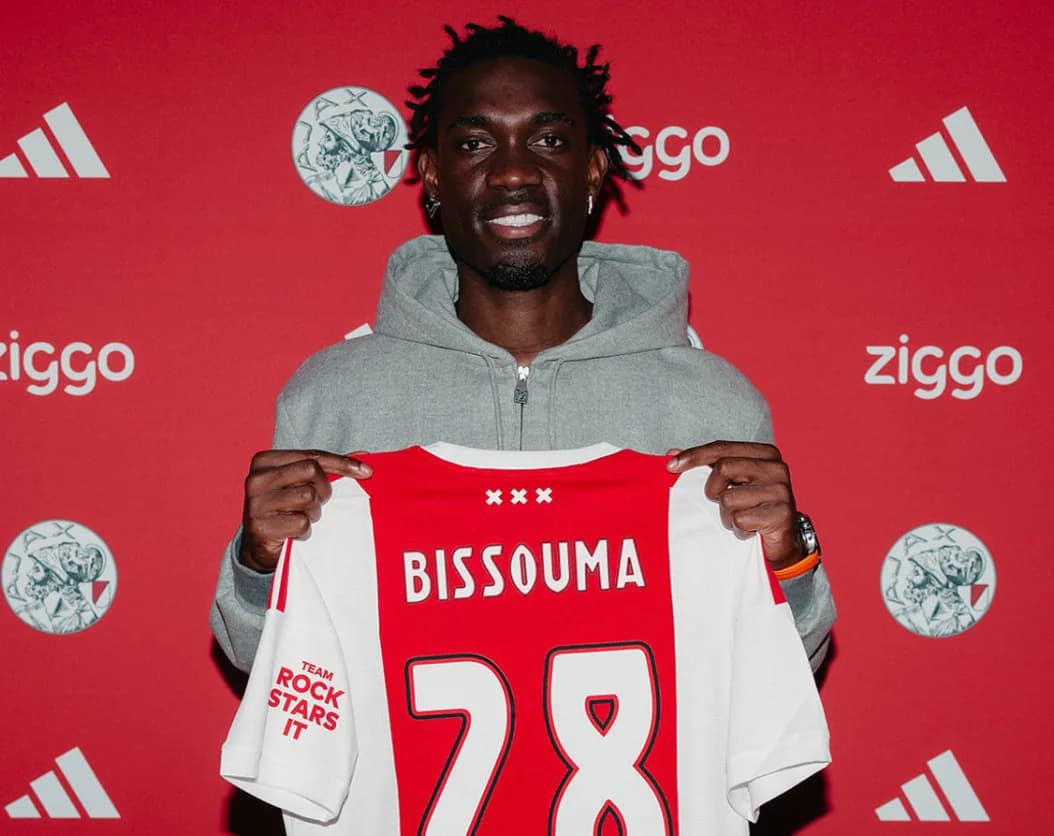
Liverpool wired £123m (€143m) to Paris and the boy who once dreamed in red walked through the doors of a club that had lived in his head since he was 15 or 16. Barlet remembers that conversation clearly. “When he was 15, 16, it was his dream [to play for Liverpool],” he says. “Maybe that changed when he was 19 or 20 ...”
It clearly didn’t.
From Lyon late bloomer to PSG record sale
Barcola arrives in England with three seasons at Paris Saint‑Germain behind him, but his story really starts at Lyon, where the club routinely sit academy graduates down for interviews at the start of each campaign. That is where he first voiced his Liverpool obsession to Barlet.
He was never the prodigy fast‑tracked through every age group. He was the one coaches “were waiting to develop on an athletic level”. Not small, but “very fresh”, very thin, not yet grown. Lyon resisted the temptation to hurry him along. While Rayan Cherki was playing first‑team football at 16, Barcola had to wait until 19 to make his debut.
When he finally broke through midway through the 2021‑22 season, he made up for lost time. One full campaign was enough for PSG to put €45m on the table and take him to Paris.
His body dictated his game. Up against stronger defenders, he learned to attack space early, sometimes too early. “Because he was playing against defenders that were stronger than him, he always wanted to get ahead of them,” Barlet says. “He was very often offside ... he is always someone who has had a habit of making a lot of runs in behind the defence.”
He did not begin as the touchline‑hugging winger Liverpool fans expect to see. “He was a bit of a fox in the box; he scored a lot of goals,” Barlet says. Acrobatic volleys, toe‑pokes, left foot, right foot. Only heading lagged behind. The instincts of a striker stayed with him even as he moved wide: a player who lives off timing, angles and the space behind a back line.
The numbers eventually exploded. His most prolific season came in 2024‑25: 21 goals, 21 assists. Output on paper to silence any doubts, even if the perception of wastefulness lingered. One erratic Champions League display against Newcastle in November 2023 drew a brutal verdict from a French pundit, who labelled him a “little lamb”.
Barcola’s response was to shut out the noise. “I didn’t know what was being said about me, but I knew that there would be criticism,” he told Le Parisien. “I don’t pay any attention to it, whether what they say is good or bad.”
He listens only to a tight inner circle. “I don’t have many friends. I have very few, in fact, so when they say, ‘You’re doing something stupid,’ it is because they’re right, and if they say that I played well, it’s also because it’s true. I don’t listen to what is said on the outside. To be completely honest, it’s my friends who send me the things [being said] in the media. Sometimes we laugh about it, but it doesn’t go any further than that.”
The family structure around him helped. Barlet calls it “the perfect entourage to come through at an academy”. His parents aligned with the coaches, and the proof of that environment lies in his brother Malcolm, a 27‑year‑old goalkeeper at Ittihad Tanger in Morocco, who also came through Lyon’s system.
Squeezed out of Paris, launched towards Anfield
For all the affection in Paris, the writing on the wall came in January 2025. Luis Enrique’s decision to bring in Khvicha Kvaratskhelia tilted the hierarchy. Barcola had started every Champions League match up to and including the last‑16 second leg against Chelsea. Then came the drop to the bench.
He still appeared in the last two Champions League finals, but only as a substitute. In a front line stacked with world‑class options, his inability to be as influential on the right or through the middle narrowed his path in the biggest games.
He could hardly complain about Kvaratskhelia starting. The Georgian’s form justified it. But for Barcola, the message was clear. With his contract running until 2028 and his role shrinking, a summer exit became a priority.
His international record strengthened his hand. Half of his goals for France – three of six – arrived at the most recent World Cup in North America. Those performances did not just swell his reputation; they swelled PSG’s bank balance.
The timing suited everyone. PSG, European champions, cashed in to the tune of a near €100m profit. Barcola became the most expensive departure in the club’s history, surpassing the €90m fee Al‑Hilal paid for Neymar. His sale formed a major chunk of roughly €350m in outgoing transfers, a record summer for any Ligue 1 side.
Inside the dressing room, he left a hole. Team‑mates flooded social media with goodbye messages. The club hierarchy also parted on good terms. Despite his desire to join Liverpool, he never forced the issue. His absence from early‑season matchday squads was, it is understood, PSG’s way of protecting an asset on the verge of a huge move, not punishing him.
Barlet is not surprised by the manner of his exit. He remembers a teenager who hated losing but refused to turn on others. “He’s a very loyal person. When he was young, he had tears in his eyes; he was annoyed when he lost, but he wouldn’t criticise his team-mates. He was more annoyed with himself because he is a real competitor.”
“The ideal team-mate,” Barlet calls him. “Endearing.”
He had close bonds with fellow Lyon products Castello Lukeba, now at RB Leipzig, and Billy Koumetio, who spent time at Liverpool and is now at Charlton. Those links to Anfield were already there, quietly in the background, long before the transfer fee made headlines.
The winger Liverpool have been crying out for
Now comes the hard part: justifying £123m at a club that does not tolerate passengers.
Liverpool’s start under Andoni Iraola has been patchy. The price tag only sharpens the glare. Yet Barcola has spent his career insulating himself from outside judgment. The noise will grow louder on Merseyside; he has already practised how to mute it.
On the pitch, he fits a glaring need. Luis Enrique once called him “one of the best dribblers in Europe”. That skill set matters in a Premier League that increasingly revolves around transition and the ruthless exploitation of space. Liverpool, recently stifled by low blocks and stodgy attacking patterns, have lacked a wide player who can unpick a set defence and then rip through open grass when the game breaks.
Barcola thrives exactly there – running beyond, attacking gaps, turning cautious back fours. The habits forged when he was a skinny teenager trying to escape stronger defenders now become a weapon in a league built on speed and chaos.
Iraola has been explicit. He wants his wingers to be “game-changers”. Match‑tilters. Players who do not just complete the picture but redraw it.
Barcola arrives determined to be that figure. After years of cameos on Europe’s biggest nights, the stage at Anfield is finally his.