.svg&w=384&q=75 "Naijagoal logo")
Barcelona's Dominance Over Real Madrid in La Liga Clásico
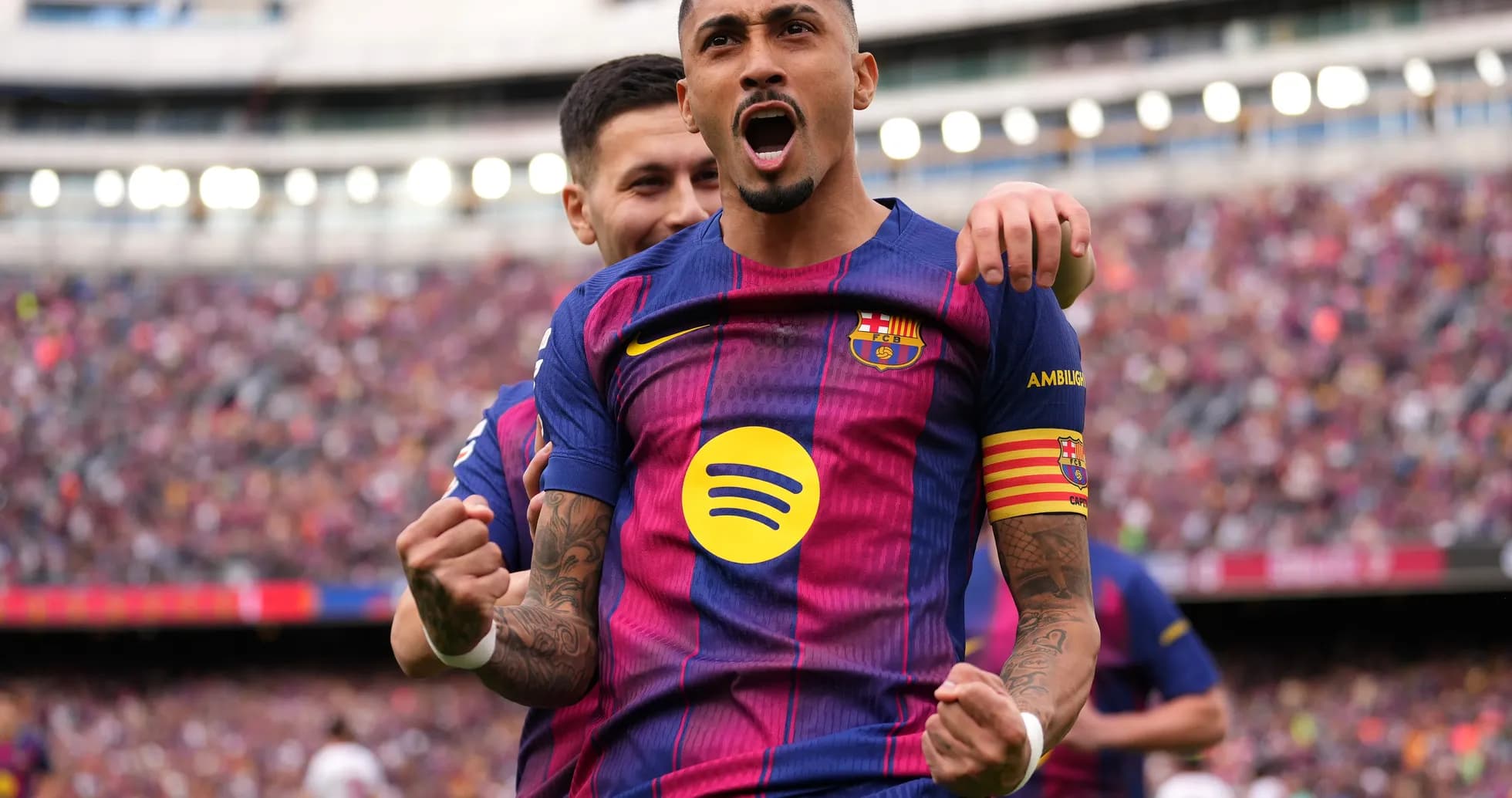
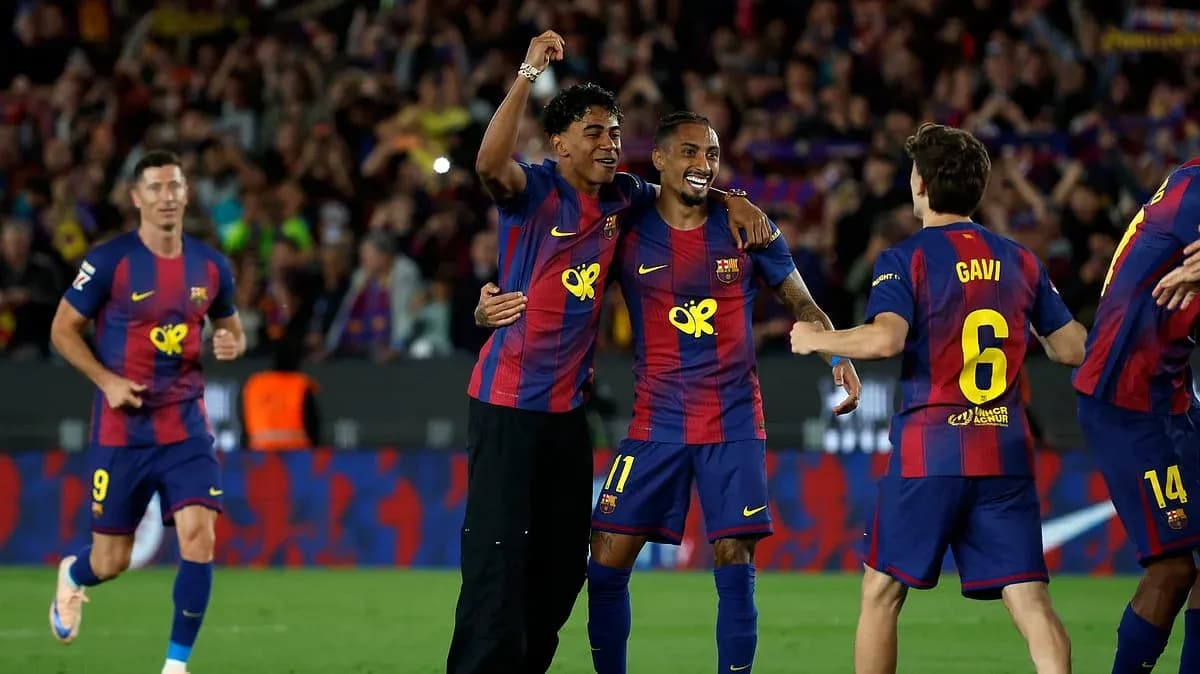
The Camp Nou lights had barely cooled by the time the table told the full story. Following this result, Barcelona’s 2–0 victory over Real Madrid in La Liga’s Round 35 felt less like a single clásico and more like a confirmation of an entire season’s power shift.
I. The Big Picture – Champions’ stride vs challenger’s ceiling
This was first against second, but the gap in the standings already framed the night. Heading into this game, Barcelona sat top of La Liga with 91 points from 35 matches, a stunning record built on 30 wins, 1 draw and just 4 defeats overall. Their goal difference of 60 was the pure arithmetic of an attacking machine: 91 goals for, 31 against.
Real Madrid arrived as the only side vaguely within reach, second with 77 points from 35 matches. Their overall goal difference of 37 (70 scored, 33 conceded) spoke of quality and depth, but also of a team that had not quite matched Barcelona’s relentless domestic tempo.
The match itself, finished 2–0 with both goals coming before half-time, mirrored those season-long dynamics. Barcelona, at home, extended what had already been a perfect league campaign at Camp Nou: 18 home matches played, 18 wins, 54 goals scored and only 9 conceded. Real Madrid, who had been strong on their travels with 10 away wins from 18 and 31 goals scored, were suffocated by a structure tailored to this fixture.
Both coaches leaned into a mirrored 4-2-3-1, but the interpretations were very different. Hansi Flick’s Barcelona used the shape as a platform for positional rotations and vertical surges; Álvaro Arbeloa’s Madrid used it as a compromise between control and damage limitation, and were punished for the hesitation.
II. Tactical Voids – The absences that bent the game’s shape
The team sheets told their own story of what was missing. Barcelona were without A. Christensen and Lamine Yamal, both listed as “Missing Fixture” through injury. Christensen’s absence pushed Flick towards a centre-back pairing of P. Cubarsi and E. Garcia, a duo more progressive than imposing, while Yamal’s unavailability removed Barcelona’s most explosive one-v-one outlet on the right.
Yet Flick responded by loading the half-spaces with creativity. Gavi and Pedri sat as the double pivot, giving structure and press resistance, while the line of three – M. Rashford, Dani Olmo and Fermín – constantly rotated around F. Torres as the lone forward. The 4-2-3-1 on paper became a 2-3-5 in possession, with J. Cancelo stepping inside and G. Martin holding width.
For Real Madrid, the voids were cavernous. D. Carvajal, Eder Militao, A. Güler, K. Mbappé, F. Mendy, Rodrygo and F. Valverde were all absent, a list that stripped Arbeloa of his first-choice right-back, his most dominant centre-back, his leading scorer, his primary left-back, a key wide forward and his most complete box-to-box midfielder. On a purely tactical level, Madrid lost vertical thrust, recovery pace and late box arrivals.
In their place, Arbeloa fielded a back four of T. Alexander-Arnold, R. Asencio, A. Rudiger and F. Garcia in front of T. Courtois. E. Camavinga and A. Tchouameni formed the double pivot, with B. Diaz, J. Bellingham and Vinicius Junior behind G. Garcia. It was a line-up heavy on technical quality, but light on the raw power and direct running that usually stretch Barcelona.
Disciplinary patterns across the season hinted at how both sides might ride the emotional waves of a clásico. Barcelona’s yellow-card profile peaks in the 46–60 minute window with 27.59% of their cautions, and again at 76–90 with 20.69%, underlining how their intensity can spill over when protecting or chasing a result. Madrid’s bookings are more evenly spread, but with 22.06% between 61–75 and 17.65% from 76–90, they are prone to late-game frustration too. In a match where Barcelona scored twice before the break and then managed territory, that tendency played into Flick’s hands: his side could foul cynically in the second half knowing Madrid’s own discipline historically frays as they chase.
III. Key Matchups – Hunter vs Shield, Engine vs Enforcer
Hunter vs Shield
The season’s headline hunter was not on the pitch. Kylian Mbappé, La Liga’s top scorer with 24 goals and 8 penalties scored but 1 missed, was ruled out through muscle injury. His absence forced Madrid to lean more heavily on Vinicius Junior, who has 15 league goals and 5 assists. Vinicius’s dribbling volume – 189 attempts with 86 successful – normally makes him the chaos agent that breaks structured blocks.
But against a Barcelona side conceding just 0.5 goals on average at home and 9 in total at Camp Nou all season, the shield held. Cubarsi and E. Garcia could defend higher, knowing there was no Mbappé darting in behind, and Cancelo’s aggressive positioning was less risky without Madrid’s full battery of runners. Barcelona’s clean-sheet profile – 10 at home, 15 overall – aligned perfectly with this scenario: a controlled game state, a lead to protect, and an opponent stripped of its most clinical finisher.
On the other side, Barcelona’s attacking trident of F. Torres, Rashford and Dani Olmo posed a different kind of question. Torres, with 16 league goals and 56 shots (36 on target), attacks the box with timing rather than brute force. Rashford brings 8 goals and 7 assists, thriving in transition and half-space carries. Olmo, with 7 goals and 8 assists, is the connector: 1,114 passes at 85% accuracy, 45 key passes, and the intelligence to find pockets between Madrid’s lines.
They were facing a Madrid defence that, while solid overall – just 33 goals conceded across 35 matches, an average of 0.9 per game – had to improvise. Without Militao and Mendy, and with Carvajal missing, the back four lacked its usual balance of aggression and recovery speed. Arbeloa’s choice of Alexander-Arnold and F. Garcia as full-backs brought ball progression but left space behind, exactly the channels Rashford and Olmo love to exploit.
Engine Room – Playmaker vs Enforcer
In midfield, the game’s narrative was written by the contrast between Barcelona’s creators and Madrid’s stoppers. Pedri, with 8 assists and a passing accuracy of 91% across 1,908 passes, is La Liga’s metronome. He does not just circulate; he advances the ball with 59 key passes and 53 dribble attempts, 36 successful, constantly breaking lines.
Alongside him, Gavi added bite and verticality, while Fermín – 9 assists, 6 goals, and 864 passes at 87% accuracy – drifted between lines as a hybrid interior and second striker. Their interplay turned Barcelona’s 4-2-3-1 into a fluid box midfield, overloading the central zones where Madrid’s double pivot usually thrives.
For Madrid, A. Tchouameni and E. Camavinga were tasked with being both shield and springboard. Tchouameni’s natural role as an enforcer, breaking up play and covering space, was stretched by the need to step out to Pedri and Dani Olmo between the lines. Camavinga, meanwhile, was pulled wide and deep to help F. Garcia deal with Rashford and Cancelo’s overlapping/underlapping movements. That constant lateral shuttling diluted Madrid’s ability to launch their own counters through the centre.
J. Bellingham, notionally the “10” in Madrid’s 4-2-3-1, was often forced to drop into a third-midfielder role just to give his side a foothold. In doing so, he vacated the pockets where he usually hurts opponents, leaving G. Garcia isolated against a back line that could focus on his runs rather than worrying about multiple central threats.
IV. Statistical Prognosis – Why this result fit the numbers
Strip away the emotion of a clásico, and the numbers had been pointing here for weeks. Heading into this game, Barcelona’s home attack was averaging 3.0 goals per match, with 54 scored in 18 at Camp Nou. Their home defence, at 0.5 conceded on average, made them a statistical outlier: a side that not only scores freely but almost never allows a foothold.
Real Madrid, by contrast, travelled well – 1.7 goals scored on average away, 31 in 18 – but their away defence, conceding 1.1 per game (19 in total), was always likely to be stressed by this Barcelona. Without Mbappé, Rodrygo and Valverde, their xG ceiling in a match of this intensity was inevitably lower than usual, while their defensive xG against was likely to spike given the volume and quality of Barcelona’s creative profiles.
Penalty data underscored the margins. Barcelona had taken 7 penalties in total this season and scored all 7, a perfect 100.00% conversion with no misses. Real Madrid had earned 12 penalties and scored all 12, also at 100.00%, but their top scorer Mbappé had personally missed 1 spot-kick in league play despite 8 scored. In a fixture where set-pieces and penalties often decide the story, the absence of Madrid’s primary penalty taker subtly shifted the risk-reward balance: Barcelona could defend more aggressively in the box, knowing the psychological weight of a Madrid penalty was slightly reduced without him.
From a tactical lens, the critical intersection lay in the timing of intensity and discipline. Barcelona’s yellow-card peaks in the 46–60 and 76–90 windows align with periods where they are often defending a lead or closing a game. Against a Madrid side whose own bookings cluster between 61–75 and 76–90, the probability of late-game chaos was high – but only if the scoreline demanded it. By going 2–0 up before the interval, Barcelona turned the second half into a controlled exercise in risk management, never needing to overextend or open the contest to the kind of end-to-end exchanges that favour Vinicius.
In total this campaign, Barcelona’s all-competition league form string – “WWDWWWWLWLWWWWWWWWWLWWWLWWWWWWWWWWW” – reads like a code for inevitability. Madrid’s, impressive but more volatile, features clusters of draws and the occasional loss that hint at a side still searching for its final tactical identity.
Following this result, the tactical verdict is clear. Barcelona’s 4-2-3-1, anchored by Pedri’s orchestration and amplified by the rotations of Rashford, Dani Olmo and Fermín, has become the league’s reference model for controlled aggression. Real Madrid, stripped of key vertical threats and forced into a more cautious, possession-based approach, could not generate the xG volume or the transitional chaos needed to crack a defence conceding just 0.9 goals per match overall.
The clásico at Camp Nou did not just separate first from second on the night; it crystallised the season’s underlying truth. Barcelona are the fully formed project, their numbers and structure in sync. Real Madrid, even with stars to return, remain the pursuers – dangerous, talented, but still a few tactical steps behind the champions they chased and could not catch.