.svg&w=384&q=75 "Naijagoal logo")

Budapest Awaits: Arsenal's Champions League Final Against PSG
Budapest on the horizon, protests on the pitch, and a World Cup edging closer under a cloud. Football rarely does quiet build‑ups anymore.
Protest and pressure in Dublin
Qatar’s 1-0 defeat to Ireland in Dublin on Wednesday was never just about the scoreline. The football kept stopping, not for VAR checks or injuries, but for tennis balls.
Several times in the first half, bright green balls rained down from the stands, each stamped with the same blunt demand: “stop the game”. They were aimed not at Qatar, but at Ireland’s own calendar – specifically the Nations League fixtures against Israel, and the home match pencilled in for 4 October in Dublin.
The symbolism was obvious. The match became a stage, the players unwilling actors in a political drama written far above their heads.
Seamus Coleman had already voiced what many inside the camp were feeling. The veteran defender warned that head coach Heimir Hallgrimsson and his squad had been left exposed, placed squarely in the firing line while decisions were being taken elsewhere. Midfielder Jamie McGrath echoed the sentiment, admitting the situation is difficult for those simply trying to play football.
Hallgrimsson did not duck the issue.
“Seamus spoke really well about it the other day. We all don’t agree with what’s going on,” he said. “Ideally it’s not in our hands. It’s not a nice situation to be put into. Like I said, personally, none of us agree with what’s going on.”
Ireland won the game. The bigger battle, the one that will return when Israel are due in town, is only just beginning.
Volpato’s late World Cup swerve
On another front, the World Cup has thrown up a striking twist in allegiance.
Cristian Volpato, the Sassuolo playmaker and a 22-year-old who has represented Italy at youth level, is set to switch to Australia – the country of his birth – in time for the tournament, four years after turning down the chance to go to Qatar with the Socceroos.
It is a late decision, and a dramatic one. Football Australia is waiting on Fifa to rubber-stamp the change before Tony Popovic names his 26-man squad by 1 June. The clock is ticking. If the paperwork lands in time, Popovic gains a technically gifted midfielder with Serie A experience and a point to prove. If it doesn’t, Australia will be left wondering what might have been.
Pulisic, Pochettino and a stalled ascent
Christian Pulisic’s story feels different but carries the same theme: expectation colliding with reality.
Now 27, the American forward still carries the tag of “the coming man”, even as the years stack up. Mauricio Pochettino made no attempt to hide his frustration over Pulisic’s absence from the Gold Cup and his omission from two recent friendlies against Switzerland and Turkey.
“I was disappointed with him [for missing the Gold Cup],” Pochettino said in a briefing with reporters. “I am transparent about that. He was disappointed with our decision not to include him in the two friendly games.”
The relationship is clearly complicated. Pochettino has spoken of wanting more from Pulisic, even floating the idea that a single goal might be a realistic target in the short term. For a player once heralded as the face of US football, that is a sobering benchmark. The talent is still there. The question now is whether time and opportunity will align again.
Havertz and Arsenal’s Budapest gamble
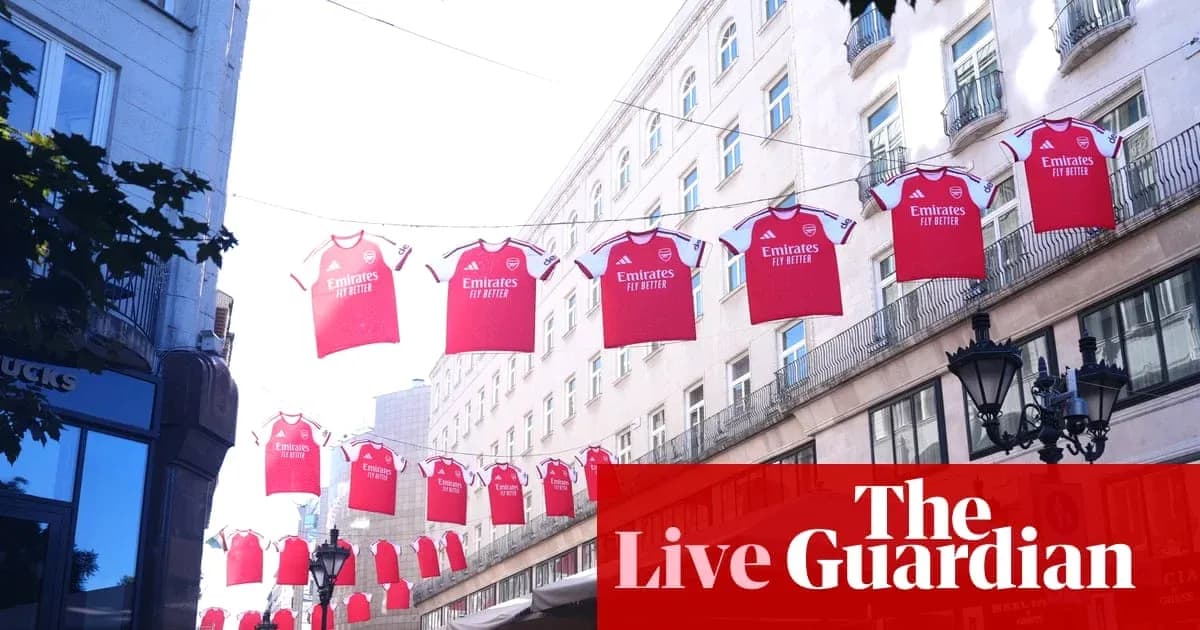
While individual careers twist and turn, Arsenal’s season has narrowed to one sharp point: a Champions League final against Paris Saint-Germain in Budapest on Saturday.
Kai Havertz has been here before. Few gave Chelsea much hope against Manchester City in Porto when Thomas Tuchel’s side arrived as clear underdogs against Pep Guardiola’s Premier League juggernaut. City had finished 12 points clear at the top; Chelsea, fourth and seven points further back, looked outgunned. Havertz scored the only goal and walked away with the trophy.
“Havertz is looking ahead to Arsenal’s final against Paris Saint-Germain in Budapest on Saturday, when not many give them a chance of winning,” he said in an interview. The echoes of 2021 are hard to ignore.
“We were the underdogs on that day, for sure,” Havertz recalls. “We hadn’t had the best season. But now it is completely different.”
Different, but familiar. Arsenal again face a side built for this stage, again lean on Havertz’s knack for finding the decisive moment when the stakes are highest.
Arsenal’s tightrope: set pieces and the counter
The tactical battle has been dissected in forensic detail. Jonathan Wilson drew on Agincourt to frame it, which tells you the kind of siege Arsenal may face.
PSG have outscored Arsenal from non-penalty set plays in this Champions League campaign, eight goals to five, but dead balls might still be Arsenal’s clearest route to a breakthrough. Corners and free-kicks offer structure, repeatable patterns, a way to trouble a side that rarely looks uncomfortable in open play.
The real danger lies elsewhere. PSG thrive in transition. In Ligue 1, opponents tend to sit deep and accept long spells without the ball. In Europe, when Chelsea, Liverpool and Bayern Munich dared to attack, Luis Enrique’s side showed their true menace: lightning counters, ruthless finishing, and wide players who turn space into panic.
Arsenal cannot let Desiré Doué or Khvicha Kvaratskhelia square up to their full-backs with grass to run into. Both are rapid, fearless dribblers, relentlessly direct. That would be a problem for any defence. For Arsenal, it is a particular concern.
Ben White is out with a knee injury. Jurriën Timber is doubtful after a groin problem picked up against Everton in mid-March. The right side of Arsenal’s back line looks vulnerable on paper. PSG will see it as an open invitation.
Fresh legs, heavy stakes
If there is a physical edge to be found, it probably belongs to PSG.
Luis Enrique has treated Ligue 1 like a laboratory, rotating heavily and protecting his stars from the grind. Many of his headline players have barely touched half the available minutes domestically.
- Ballon d’Or winner Ousmane Dembélé started only 11 of 34 league games.
- Neves, Mendes and Fabián Ruiz each managed 13 starts.
- Kvaratskhelia had 18, Doué and Achraf Hakimi 16, Marquinhos 11.
They have not exactly been super-subs either; most have spent long stretches watching from the bench, banked for nights like Budapest.
The idea is simple: arrive at the final with fresh legs and sharp minds, even after a long season. Arsenal, by contrast, have had to squeeze every drop from their core group in a Premier League title race and a deep European run.
A World Cup under a shadow
All of this unfolds with the World Cup less than two weeks away and another fixture overshadowed by geopolitics.
Since the US and Israel attacked Iran on 28 February, the scheduled World Cup match between the United States and Iran in Los Angeles has been wrapped in uncertainty. Doubts have swirled over whether Iran would allow its national team to travel to the home of one of its attackers, and whether the US would welcome Team Melli.
For now, the game is expected to go ahead. The tension will not simply evaporate at kick-off.
Los Angeles, with its vast Iranian diaspora in “Tehrangeles” – many of whom left after the 1979 revolution – is braced for protests and displays of defiance. The players, again, may find themselves carrying far more than their country’s footballing hopes.
Budapest calling
So the sport moves forward, one eye on Budapest, another on Dublin, Los Angeles and the looming World Cup.
Saturday in Hungary brings Arsenal, PSG and a final that could redefine seasons and careers in 90 frantic minutes. Fresh legs against set-piece threat, transition against structure, Havertz chasing another defining goal on the biggest stage.
The stage is set. Now it’s down to who can still think clearly when the noise hits its peak.