.svg&w=384&q=75 "Naijagoal logo")

Anfield's Emotional Farewell as Season Ends
They tried to sing themselves into believing it. “Every little thing is gonna be alright…” rolled down from The Kop, a defiant soundtrack to a season that has been anything but.
Liverpool’s 1-1 draw with Brentford closed the book on 2025/26 with Champions League qualification mathematically secured, yet the mood was unmistakable: this felt like the end of something, not the start.
Two more pillars of the most successful Liverpool side in a generation walked away. Mo Salah and Andy Robertson joined the exodus from a squad that, only two years ago, Arne Slot inherited with expectations of evolution, not disintegration. Half of that group has now gone. More are likely to follow.
For supporters who remember the 1990s, the parallels are uncomfortable. Graeme Souness once tore through Kenny Dalglish’s ageing but title-winning squad, dismantling a dynasty faster than he could rebuild it. He was sacked; mediocrity followed. The fear is that Liverpool are again walking that tightrope.
Salah’s parting words made it clear he feels it too.
A Season That Cannot Be Dressed Up
Strip away the emotion and the numbers are brutal. Sixty points. Fifth place. Seventeen league wins. Liverpool’s lowest win percentage in a decade.
This is not a plucky rebuilding year. It is a failed campaign.
In each of the previous three seasons, 60 points would not even have been enough for Europe. Ninth last year. Seventh the year before that. Ninth again three years ago. This time, the bar for Champions League football dropped to its lowest since 2003/04, when Gerard Houllier’s tenure ended with a handshake and a photoshoot on the Anfield turf.
The late-season form was that of a side drifting, not one gearing up for a new era. Fourteen games in all competitions brought just four wins. Liverpool failed to win any of their last four league matches. The draw with Brentford secured the money and prestige of Europe’s top competition, but not the belief that this team is remotely close to competing for it.
On the pitch, the team limped. Off it, the optics were no better.
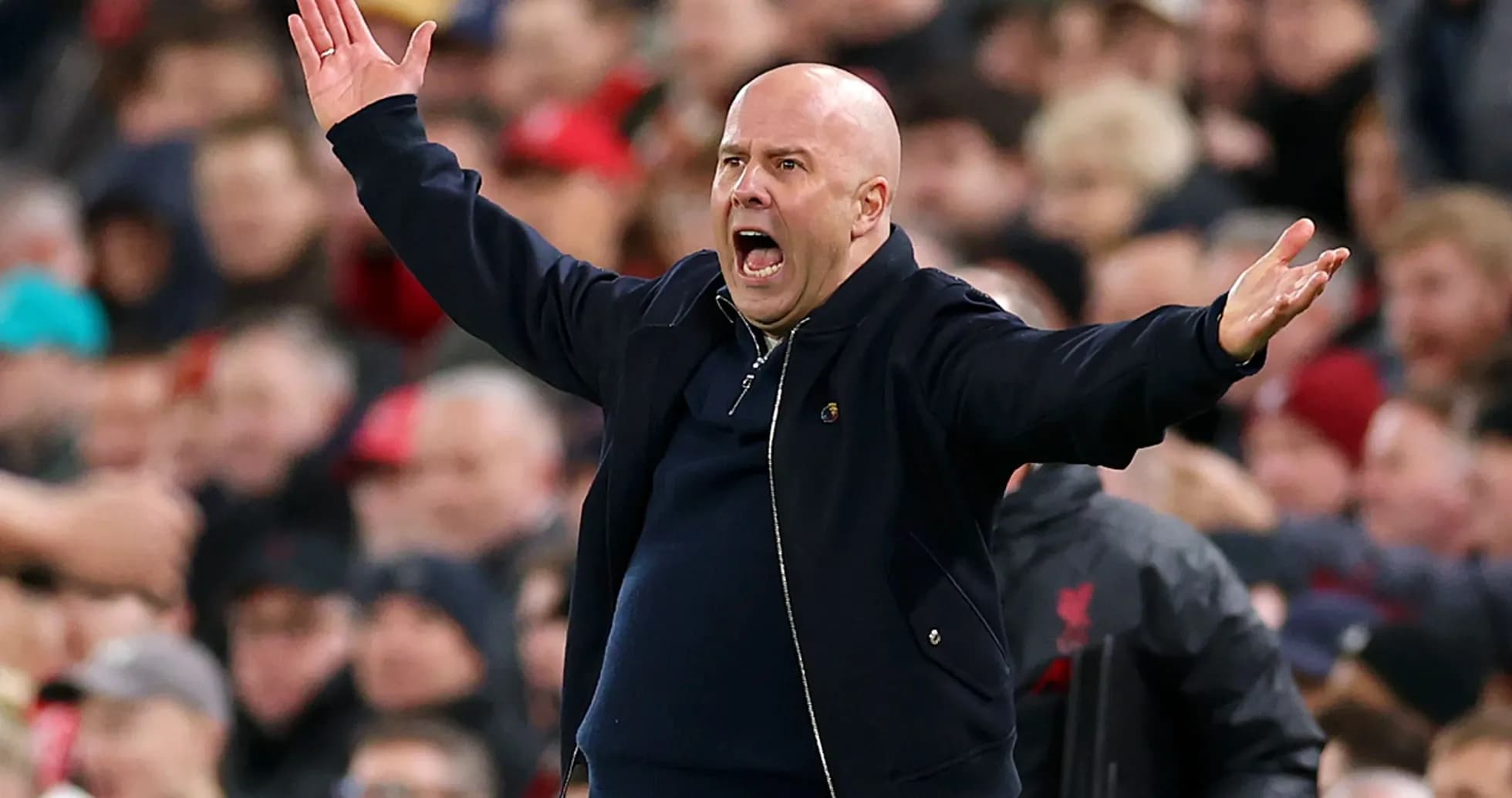
Slot stayed seated on the bench during the post-match lap of appreciation, his face set, his mood apparently introspective. The players circled the stadium, saying goodbye, saying thank you, soaking up one last ovation. Their head coach stayed apart.
Maybe it was nothing more than a man lost in thought. It looked like distance. On a day that cried out for connection, he chose solitude.
Salah, by contrast, understood the assignment to the last. “They [the fans] don’t care that much about the result as long as you sweat and give your blood here, they’ll love you forever,” he told Sky Sports.
That is the Liverpool contract, in one sentence. Show up. Give everything. Walk through the storm together. This club has known real tragedy this season, with Diogo Jota’s death in pre-season casting a shadow over everything. The demand from the stands was never perfection. It was commitment, togetherness, visible fight.
Too often, they saw a side and a staff searching for explanations instead.
Injuries, a Small Squad and a Big Question
Slot summed up his season in one word: “injury.”
On the surface, it sounds reasonable. Liverpool have carried absentees all year, felt the strain of midweek and weekend football, watched legs tire and leads slip. But the context matters.
Back in October, Slot was crystal clear about the size of his squad: “This is a decision we have made together, I completely believe in this, because if you have 25 [players] it’s very hard to manage your squad.”
He cannot have it both ways. You cannot publicly back a small group, then spend months lamenting the impact of injuries, the lack of options from the bench, the toll of the calendar. Not when you knew the Champions League was expanding and the Premier League would demand maximum intensity.
If you go into a season aware that new signings cannot yet handle two games a week for 90 minutes, the decision to keep the squad thin becomes a calculated risk. Liverpool paid for it.
And then there is how that already small group was actually used.
Trey Nyoni, a highly rated midfielder who debuted under Jurgen Klopp at 16, finished the league season with 21 minutes. Federico Chiesa, marginalised again, managed 318 league minutes. Wataru Endo played just 170. Kieran Morrison, Under-21s captain and player of the season, made the bench 13 times and stepped onto the pitch once – for five minutes in an FA Cup tie at Wolves.
On paper, Liverpool had depth. In practice, Slot trusted a far smaller core than he needed to. The Harvey Elliott situation underlined the confusion. With the squad crying out for quality from the bench in the second half of the season, there was no agreement in place to bring him back to Anfield in January. A known asset, a proven contributor, left out of reach by planning that simply did not hold up under pressure.
Injury may be the word Slot chose. Accountability has to be the next one.
Heavy Defeats, High Standards
Slot has pointed out that Liverpool’s heavy cup exits – 4-0 to Manchester City in the FA Cup, 4-0 to PSG in the Champions League – came against the eventual winners. PSG have not lost a two-legged European tie in two seasons. City are City.
That argument will not survive long on Merseyside.
Liverpool supporters have spent the last decade watching their club stand toe-to-toe with the best in Europe. They have seen their team beat City to titles, push Real Madrid to the limit, lift every major trophy available. The badge now carries a different weight. Being brushed aside 4-0, twice, in the same season does not sit comfortably with that reality.
It does not sit well with the dressing room either. Virgil van Dijk, Robertson, Salah and Curtis Jones have all been clear: this season has fallen short of Liverpool standards.
Salah’s message to the squad on his final day at the AXA Training Centre was telling: “Being in Liverpool, winning something for Liverpool and winning games is the best thing that could happen to you all.”
Winning something. Winning games. Not just qualifying. Not just being “there or thereabouts.”
Slot described Champions League qualification as “our lowest base,” then pointed to Chelsea and Tottenham as examples of big clubs missing out entirely. Some supporters heard that and bristled. Liverpool’s internal bar cannot be set by the struggles of others. It has been set, very recently, by their own excellence.
The numbers behind the “unbeaten run” tell their own story. After a 4-1 home defeat to PSV – arguably the nadir of the campaign – Liverpool went 13 games without losing. It sounded impressive. The reality was draws with Leeds (twice), Burnley and Fulham, and a run of seven wins that included Barnsley in the FA Cup and a West Ham side that ended up relegated.
The veneer of momentum never quite covered the cracks.
Transition Again, or Something Deeper?
The word “transition” has hung over Anfield for two summers now. It returns again, heavier than before.
Slot has one year left on his contract. So do Richard Hughes and Michael Edwards, the key decision-makers behind the football operation. Uncertainty in the dugout and the boardroom bleeds onto the pitch. Players and agents can read a contract length as clearly as any fan.
The squad itself could be ripped open.
Up to nine first-team players may move on: Salah, Robertson, Ibrahima Konate, Chiesa, Endo, Jones, Alisson, Joe Gomez and Alexis Mac Allister are all in varying states of jeopardy, whether through expiring deals, serious interest from abroad or the club’s willingness to listen to offers. Some are near the end of their contracts, some are coveted, some simply no longer central to the plan.
If even a portion of those departures materialise, “a little transition” – Slot’s phrase – will not cover it. This will be major surgery. Liverpool will start next season with Cody Gakpo as their leading current scorer for the club. Van Dijk, a centre-back, is next on that list. That is not a platform; it is a warning light.
And yet, this is Liverpool. The stadium still sings when the storm closes in. The Kop still believes that one good summer, one smart reset, can change everything.
As the last notes of Bob Marley faded and the stands emptied, the message was clear enough. The fans might sing about not worrying, but this summer, they will. The only question now is whether the people in charge can turn that anxiety into a new beginning, or whether Anfield is about to learn, again, how long an era of mediocrity can last.