.svg&w=384&q=75 "Naijagoal logo")

AC Milan's Dominance Over Lecce: A Tactical Analysis
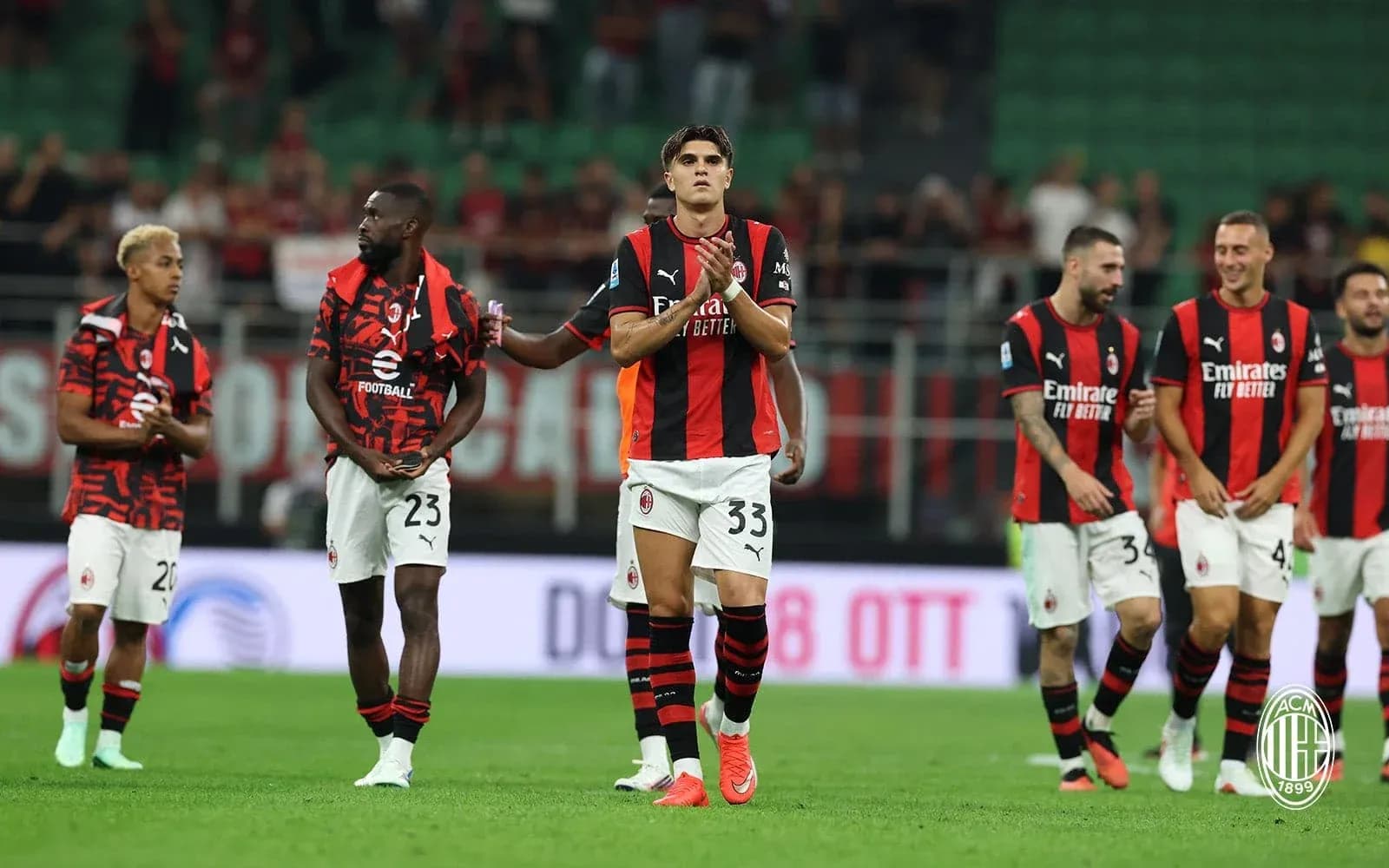
The lights have long since dimmed over San Siro, but this fixture between AC Milan and Lecce will linger as a clear statement of intent from Ruben Amorim’s side. In a Serie A landscape that often rewards pragmatism, Milan’s 3-0 home win in Round 5 felt like a manifesto: high structure, controlled aggression, and a squad built to suffocate opponents without losing its attacking edge.
I. The Big Picture – Milan’s evolving identity
Heading into this game, Milan were already shaping a distinctive seasonal profile. Fifth in Serie A with 11 points from 5 matches, they were unbeaten overall, with 3 wins and 2 draws. The goal difference told its own story: 10 goals scored and 4 conceded overall, a positive swing of +6. At home, the numbers were even more emphatic. Across 2 league fixtures at San Siro, Milan had scored 5 and conceded 0, an attacking average of 2.5 goals per home game and a defensive record that had yet to be breached.
Amorim’s commitment to the 3-4-2-1 is total; Milan have used that shape in all 5 league matches. Against Lecce, the structure was clear: Mike Maignan behind a back three of M. Gila, K. De Winter and S. Pavlovic, with P. Estupinan and S. Chukwueze stretching the pitch as wing‑backs, and a central axis of L. Modric and A. Rabiot feeding a fluid front trio of C. Pulisic, A. Saelemaekers and G. Ramos.
Lecce arrived as an altogether different proposition. Twelfth in the table with 6 points from 5 games, they had lived on a knife edge: 2 wins, 3 defeats, 5 goals scored and 10 conceded overall, giving them a negative goal difference of -5. Away from home, their profile was fragile: 3 matches on their travels had brought 1 win and 2 losses, with 2 goals scored and 4 conceded, an away average of just 0.7 goals for and 1.3 against. Eusebio Di Francesco’s choice of a 4-3-3 at San Siro was bold but came with risk against Milan’s well-drilled front press.
II. Tactical Voids – Absences and discipline
Lecce’s squad was stretched before a ball was kicked. M. Berisha, O. Gandelman, W. Geubbels and Tiago Gabriel were all listed as missing this fixture, through a mix of injury, ankle problems, inactivity and lacking match fitness. None are in the matchday squad, and their absence stripped Di Francesco of rotation options and late-game disruption tools, particularly in attacking areas.
Disciplinary trends painted a worrying picture for Lecce. Danilo Veiga arrived as one of Serie A’s most card-prone defenders, with 3 yellow cards already and also featuring among the league’s red-card leaders. Over the season, Lecce’s yellows have been spread but with a notable late‑game spike: 20.00% of their bookings coming between 76-90 minutes and another 20.00% between 91-105. That pattern hints at a side that frays under sustained pressure.
Milan, by contrast, have been disciplined but not passive. Their yellow-card distribution is concentrated in the second half: 25.00% between 46-60, 25.00% from 61-75, another 25.00% in 76-90 and 25.00% in 91-105. It suggests a team that embraces controlled aggression in the key phases where matches are decided. Importantly, neither side has missed a penalty this season; both have taken none, so spot kicks were never likely to be a narrative thread here.
III. Key Matchups – Hunters and shields
The most intriguing duel was always going to be between Milan’s creative core and Lecce’s defensive spine.
On Milan’s side, A. Rabiot and S. Chukwueze formed the “engine room” in possession. Rabiot’s Serie A campaign to this point has been quietly decisive: 2 goals and 2 assists overall, with 209 passes at 88% accuracy and 4 key passes. He is both a carrier and a connector, and in Amorim’s 3-4-2-1 he often steps into the left half-space to overload opposition midfields.
Chukwueze, listed as a midfielder but functioning as an aggressive wide outlet, has already provided 2 assists and created 10 key passes, with 14 dribble attempts and 8 successes. Against Lecce’s right side, that pitted him directly against Danilo Veiga. Veiga’s numbers underline the paradox: 15 tackles, 2 blocked shots and 4 interceptions show a defender who relishes duels, but 8 fouls committed and 3 yellows point to someone who can be drawn into risky challenges. Milan’s plan was obvious: isolate Chukwueze against Veiga, force repeated 1v1s, and let the winger’s pace and dribbling test Lecce’s discipline.
Further inside, S. Pavlovic embodied Milan’s “shield”. The Serbian centre-back has been one of Serie A’s standout defenders: 13 tackles, 2 successful blocks and 1 interception, with 374 passes at 92% accuracy. He is not just a stopper; he is the first playmaker. Against Lecce’s front line of L. Coulibaly, N. Stulic and J. Monteiro, Pavlovic’s timing in stepping out of the line was crucial to prevent Lecce’s counters from ever fully forming.
On the Lecce side, the “hunter” was L. Coulibaly. Officially listed as a forward in this match, his season data screams all‑action midfielder: 2 goals, 1 assist, 5 shots on target, 171 passes at 83% accuracy, 7 tackles and 50 duels contested, winning 27. Coulibaly is Lecce’s chaos generator, the player who can turn second balls into immediate threat. But against a Milan side that had kept 2 clean sheets at home and conceded 0.0 goals per game at San Siro, his influence was always going to be constrained by supply.
IV. Statistical Prognosis – Why 3-0 felt inevitable
When you align the numbers, the 3-0 scoreline is less a surprise than a logical conclusion.
Overall, Milan entered this fixture with an attacking average of 2.0 goals per game and a defensive average of 0.8 conceded. At home, they were even more ruthless: 2.5 goals scored per game and none conceded. Lecce, on their travels, were averaging just 0.7 goals for and 1.3 against, and had already suffered a 3-0 away defeat in their heaviest road loss.
Clean sheets tell the same story. Milan had 2 clean sheets in total, both at home; Lecce had failed to score in 3 of their 5 league matches overall and twice away. In other words, the most statistically likely pattern was Milan scoring multiple times while shutting Lecce out.
Tactically, the intersection was brutal for Lecce. Their tendency to pick up a late surge of yellows between 76-90 and beyond met a Milan side whose aggression and control actually intensify after the break, as shown by their even spread of second-half bookings. Once Milan established control of territory and tempo, Lecce’s 4-3-3 was stretched horizontally, leaving I. Ilic and Y. Maleh chasing shadows between Rabiot’s surges and Modric’s orchestration.
Even the bench profiles underlined the gap. Milan could turn to Diego Moreira, already on 3 league goals with a 7.8 average rating, as a high-impact attacking substitute, as well as options like R. Loftus-Cheek and Y. Musah to either reinforce midfield control or add verticality. Lecce’s bench, depleted by absences, lacked a comparable game-changer.
In the end, the 3-0 full-time score at San Siro was less about individual brilliance than about a squad built and drilled for dominance. Milan’s structure, depth and statistical trends all converged on a single outcome: a clean sheet, multiple goals, and a performance that confirmed their status as one of Serie A’s most balanced and dangerous sides heading deeper into the season.