.svg&w=384&q=75 "Naijagoal logo")

2026 World Cup Schedule: Every Match and Venue Across North America
The wait is over. The 2026 World Cup — the biggest in history at 48 teams and 104 matches — now has its full roadmap. Every kick, every city, every stadium across the USA, Canada and Mexico is locked in from June 11 to July 19.
From the opening roar at Estadio Azteca to a final staged in the New York/New Jersey area, the tournament is no longer an abstract idea. It’s a travel itinerary, a TV schedule, and a month‑long test of depth, stamina and nerve.
A World Cup spread across a continent
Sixteen stadiums will share the load. The curtain lifts on Thursday, June 11, in Mexico City, where Mexico open Group A against South Africa at Estadio Azteca at 3pm ET. Later that night, Guadalajara gets its first taste as South Korea face Czechia at Estadio Akron at 10pm.
From there, the group stage becomes a crisscrossing journey over three nations.
Canada’s first World Cup on home soil begins in Toronto on Friday, June 12, when they face Bosnia and Herzegovina at BMO Field at 3pm ET in Group B. The same group sends Qatar to Levi’s Stadium in the San Francisco Bay Area on June 13 to meet Switzerland, while Vancouver’s BC Place hosts Canada twice — against Qatar on June 18 and Switzerland on June 24.
The USA’s path starts in Hollywood lights. Group D opens for them at SoFi Stadium in Los Angeles on Friday, June 12, against Paraguay at 9pm ET. They then head north to Lumen Field in Seattle to meet Australia on June 19, before returning to SoFi for a marquee clash with Turkiye on June 25 at 10pm.
The giants are scattered across the map. Brazil begin Group C at MetLife Stadium against Morocco on Saturday, June 13 at 6pm ET, then swing through Philadelphia and Miami. Germany launch Group E in Houston against Curacao on June 14, then move to Toronto and New York/New Jersey. The Netherlands kick off Group F in Dallas against Japan, with Sweden, Tunisia and Monterrey in the mix.
Spain open in Atlanta against Cape Verde on June 15, while Uruguay start in Miami against Saudi Arabia the same day in Group H. France headline Group I, beginning at MetLife against Senegal on June 16. Argentina step into Group J on June 16 at Arrowhead Stadium in Kansas City against Algeria, then shift to Dallas and back to Kansas City before finishing in Dallas again versus Jordan.
England’s route in Group L feels familiar and new all at once. They begin against Croatia at AT&T Stadium in Dallas on June 17, face Ghana in Boston on June 23, and then close their group at MetLife against Panama on June 27 — a schedule that mixes heat, travel and high stakes.
Portugal, in Group K, open in Houston against the Democratic Republic of Congo on June 17, then play Uzbekistan again in Houston before a heavyweight meeting with Colombia in Miami on June 27. Colombia’s own journey starts at Estadio Azteca against Uzbekistan, then Guadalajara, then that Miami showdown.
Across all 12 groups, the pattern is clear: the tournament will demand not just tactical clarity but logistical resilience. Teams will move through time zones, climates and atmospheres, from the altitude of Mexico to the humidity of Miami and the noise of NFL‑sized cathedrals.
Every match, every day, everywhere
From June 11 through the group finales on June 27, there is barely a quiet day. Kickoffs stretch from early afternoon on the East Coast to late‑night drama in Monterrey, Vancouver or the Bay Area.
Telemundo and Universo will carry the action on TV in Spanish, with Peacock showing all 104 games in Spanish via streaming. Telemundo will broadcast 92 matches, Universo 12. In the US, fans looking for English coverage on Fox alongside Spanish coverage on Telemundo can bundle it through Xfinity’s World Soccer Ticket, which also folds in Peacock Premium and access to top leagues year‑round.
This World Cup isn’t just bigger in teams and games. It’s bigger in screens, platforms and ways to watch.
Group stage highlights by section
Group A lives in Mexico and the southern US. Mexico play all three group games on home soil: South Africa at Estadio Azteca (June 11), South Korea in Guadalajara (June 18), and Czechia back at Azteca (June 24). Czechia and South Africa also visit Atlanta and Monterrey, spreading the group’s drama across three nations.
Group B is anchored in Canada and the Pacific Northwest, with Toronto and Vancouver central to Canada’s campaign. Seattle and the Bay Area add West Coast flavor, with Bosnia and Herzegovina, Switzerland and Qatar all sharing the stage.
Group C leans into the East Coast and the South. Brazil and Scotland both appear at Gillette Stadium and Hard Rock Stadium, while Morocco and Haiti travel through New York/New Jersey, Boston, Philadelphia, Atlanta and Miami.
Group D is a North American tour in itself: USA in Los Angeles and Seattle, Turkiye bouncing between Vancouver and the Bay Area, Paraguay and Australia splitting their time between LA, Seattle and San Francisco.
Germany’s Group E carries them from Houston to Toronto to MetLife, with Ivory Coast and Ecuador moving through Philadelphia, Kansas City and New York/New Jersey. Curacao’s World Cup story runs through Houston, Kansas City and Philadelphia.
The Netherlands and Japan share Dallas and Houston in Group F, while Sweden and Tunisia are based heavily in Monterrey and Kansas City. Group G sends Belgium to Seattle and Los Angeles, Iran to LA and Seattle, and Egypt and New Zealand to Vancouver and Seattle.
Spain’s Group H is a two‑city story until the final day: Atlanta and Miami host the first four games, then Houston and Guadalajara step in for the decisive fixtures, including Uruguay vs Spain at Estadio Akron on June 26.
France’s Group I is built around MetLife, Boston, Philadelphia and Toronto. Argentina’s Group J is spread between Kansas City, Dallas and the Bay Area. Group K rotates Portugal and Colombia through Houston, Mexico City, Guadalajara, Miami and Atlanta. Group L tracks England, Croatia, Ghana and Panama through Dallas, Toronto, Boston, New York/New Jersey and Philadelphia.
By June 27, when the last group games are played, the map will be fully drawn. Then comes the cut.
Knockout football on a giant canvas
The Round of 32 begins almost immediately. On Sunday, June 28, the runners‑up from Groups A and B open the knockout phase at SoFi Stadium at 3pm ET. Over the next six days, the bracket fills out in waves, with matches staged in Los Angeles, Boston, Monterrey, Dallas, New York/New Jersey, Mexico City, Atlanta, Seattle, Toronto, Vancouver, Miami, Kansas City and Houston.
Group winners will face a mix of runners‑up and third‑place finishers, a new dynamic in this expanded format. Mexico City’s Estadio Azteca hosts the Group A winner’s first knockout test on June 30. MetLife Stadium hosts the Group I winner the same day. AT&T Stadium, Lumen Field, BC Place and others all carry their share of the Round of 32 load.
By July 4, the field shrinks again. The Round of 16 runs from July 4 to July 7, with Houston, Philadelphia, New York/New Jersey, Mexico City, Dallas, Seattle, Atlanta and Vancouver staging the eight ties. The stakes rise, the travel narrows, and the venues grow ever more familiar to viewers.
The quarterfinals take over four major stadiums in four days: Boston’s Gillette Stadium on July 9, SoFi Stadium on July 10, then Hard Rock Stadium in Miami and Arrowhead Stadium in Kansas City on July 11. Each game pairs winners from the previous rounds, with no second chances left.
From there, it becomes a straight line to history.
AT&T Stadium in Dallas hosts the first semifinal on Tuesday, July 14, between the winners of quarterfinals 97 and 98. Mercedes‑Benz Stadium in Atlanta stages the second semifinal on Wednesday, July 15, between the winners of quarterfinals 99 and 100.
The losers meet in Miami’s Hard Rock Stadium on Saturday, July 18, in the third‑place game.
The champions will be crowned the next day.
MetLife takes center stage
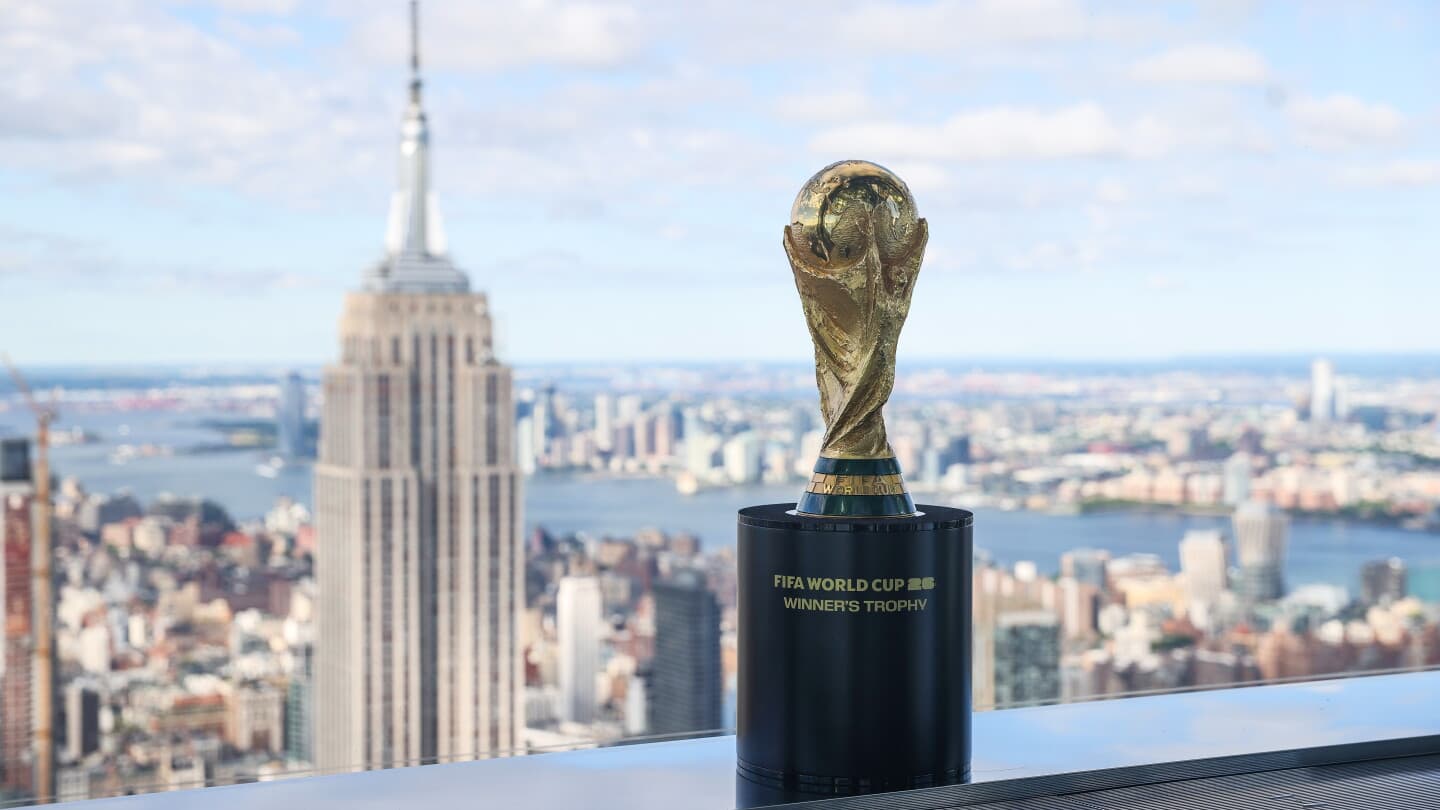
On Sunday, July 19, at 3pm ET, MetLife Stadium in the New York/New Jersey area becomes the center of the football world. Match 104 — Winner Match 101 vs Winner Match 102 — will decide the first 48‑team world champion, the climax of a tournament that has crossed borders, time zones and climates for more than five weeks.
By then, Mexico City will have seen the opener, Dallas and Atlanta the semifinals, Miami the consolation, and a continent will have carried the weight of the sport’s biggest event.
The schedule is set. The routes are clear. Now the question belongs to the teams: who can navigate this sprawling, unforgiving map and still have enough left to climb the final step in New York/New Jersey?