.svg&w=384&q=75 "Naijagoal logo")

World Cup Stars Ready to Shine in the Premier League 2026-27
The World Cup is over, the medals handed out, the songs already fading. Now comes the real test: can the stars of the summer bend the Premier League to their will in 2026-27?
From serial winners to fresh arrivals, here are 10 World Cup standouts poised to light up England’s top flight.
10. Pedro Porro (Tottenham Hotspur)
Spain’s World Cup win had plenty of headline acts, but Pedro Porro’s tournament at right back quietly crackled with quality. He defended with edge, attacked with conviction and looked completely at home on the biggest stage.
At Spurs, he now has something he’s craved for years: a manager and a system built for his instincts. Roberto De Zerbi wants his full backs high, aggressive and brave on the ball. That is Porro’s natural habitat. Expect him to raid the flank, rack up chances, and finally turn promise into ruthless end product.
9. Elliot Anderson (Manchester City)
Elliot Anderson has taken the long road. Nottingham Forest gave him a platform, the World Cup with England gave him a spotlight, and now Manchester City have handed him the keys to something far bigger.
Enzo Maresca values players who see the game two steps ahead, and Anderson does exactly that. He reads danger, wins the ball back, and then plays with a calm authority that belies his age. England’s third-place finish owed plenty to his work as the heartbeat in midfield. At City, surrounded by elite movement and structure, he won’t just keep things ticking. He’ll run the show.
8. Martin Ødegaard (Arsenal)
Last season with Arsenal felt like a grind for Martin Ødegaard. Injuries, dips in form, the rhythm never quite clicked. Then came the World Cup, and the Norway captain looked reborn.
He orchestrated their magical run with the elegance and sharpness that once made him Europe’s great prodigy. Now he returns to north London with energy in his legs and a point to prove. He’ll need both. Arsenal have landed Bruno Guimarães, and that transfer changes the dynamic in midfield. Ødegaard is no longer an automatic pick. He has to fight for his place. That competitive edge could be exactly what drags him back to his peak.
7. Florian Wirtz (Liverpool)
Germany’s early exit pushed plenty of performances into the shadows. Florian Wirtz’s shouldn’t be one of them. He was bright, incisive, always looking to break lines and create.
That form has carried straight into Liverpool’s preseason. Playing as the No. 10 under Andoni Iraola, Wirtz looks perfectly suited to a high-pressing, high-tempo system that keeps him constantly involved around the box. He’ll receive the ball in dangerous pockets, turn, and drive at retreating defenses. Forgotten by some after Germany’s stumble, he looks ready to remind the Premier League exactly how good he is in his second season.
6. Youri Tielemans (Manchester United)
Youri Tielemans has flirted with a move of this magnitude for years. Now he has it. After powering Belgium to the quarterfinals with big moments and bigger performances, he has swapped Aston Villa for Manchester United.
He brings personality as much as quality. Tielemans presses, tackles, covers ground, and then arrives late in the box to score the goals that swing seasons. United need that blend of grit and guile in midfield. Old Trafford can be an unforgiving place, but he looks like exactly the kind of character who won’t shrink from the stage.
5. Bukayo Saka (Arsenal)
Bukayo Saka’s World Cup was a lesson in resilience. Managed through injury, denied a place in England’s semifinal defeat to Argentina, he still found ways to leave his mark.
The assist against Mexico. A hat trick in the third-place game against France. Impactful cameos off the bench when his body allowed it. Every time he stepped on the pitch, he reminded everyone of his ceiling. Back at Arsenal, nothing changes: he remains the focal point of their attack. If his fitness holds, he’ll again be the man Mikel Arteta turns to when the game starts to fray and a moment of clarity is needed.
4. Lisandro Martínez (Manchester United)
Manchester United’s defense looks different when Lisandro Martínez plays. Sharper. Meaner. More sure of itself.
Argentina’s run to the World Cup final underlined his importance. He snapped into duels, set the line, and brought a snarling authority to their back line. When he went off with a minor injury in the final, it felt like a turning point. That’s the level of influence he carries. United’s attempted resurgence rests heavily on his shoulders. If he stays fit, he doesn’t just anchor their defense. He leads it.
3. Bruno Guimarães (Arsenal)
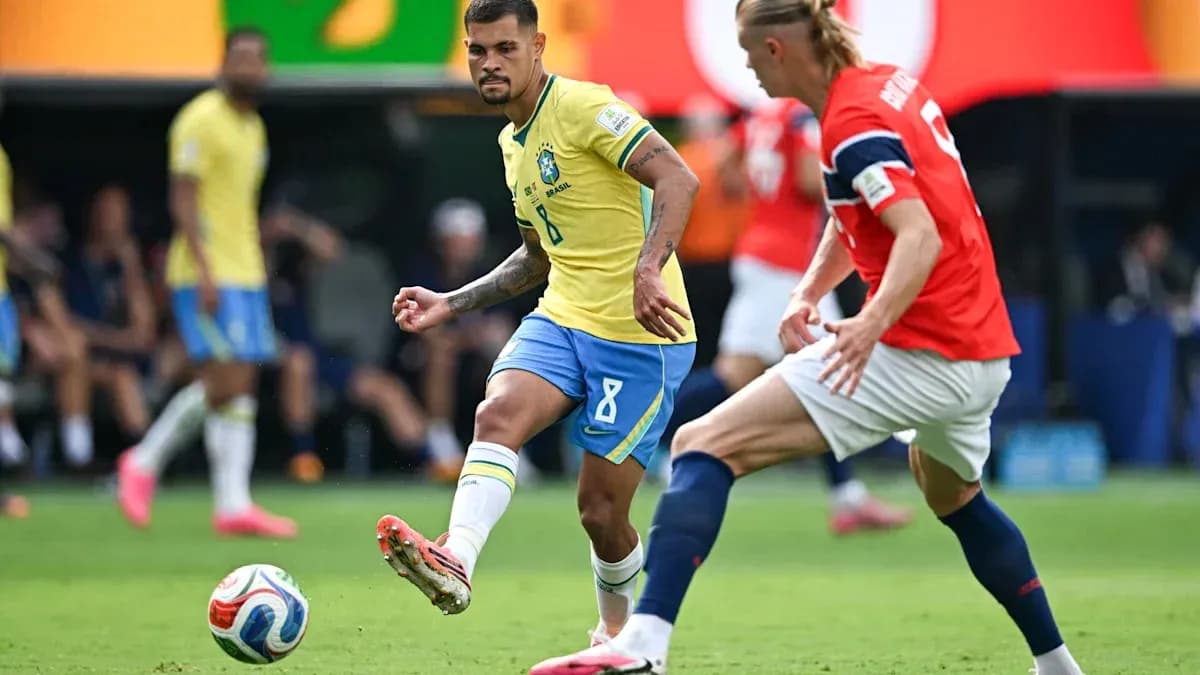
Four assists for Brazil at the World Cup. Only Michael Olise managed more in the entire tournament. That alone tells you where Bruno Guimarães sits in the creative hierarchy.
His move from Newcastle United to Arsenal is more than a transfer; it’s a statement. At $101 million, he arrives as a cornerstone, not a luxury. Arsenal get a midfielder who stitches play together, snaps into tackles, and demands the ball in tight spaces. He brings hunger, leadership and a relentless drive that fits a team chasing sustained dominance. He will change the tone of their midfield from his first touch.
2. Declan Rice (Arsenal)
When Declan Rice isn’t fully fit, you feel it. Arsenal feel it. England feel it. Games become looser, less controlled, more chaotic.
At the World Cup, he still delivered a strong tournament despite managing illness and injury spells. He screened, he pressed, he dictated. That’s his job: set the press, set the tempo, set the standard. Arsenal’s entire structure leans heavily on his ability to cover ground and make the right decisions at the right time. If they’re serious about winning back-to-back titles, Rice’s form and fitness are non-negotiable.
1. Erling Haaland (Manchester City)
Of course he’s here. Where else would Erling Haaland be but at the top of a list like this?
Seven goals at the World Cup. Norway into the quarterfinals. A global profile that somehow grew even larger, on and off the pitch. Everyone already knows what he is in the Premier League: a goal machine with a terrifying sense of inevitability.
Under Enzo Maresca, City are expected to spring forward with pace, slicing teams open on the counter. That means space, and Haaland waiting at the end of every move. Another 30-goal league season feels less like a prediction and more like a scheduling note. The only real question is how many defenders he drags into crisis along the way.