.svg&w=384&q=75 "Naijagoal logo")

World Cup 2023: A Tournament Built on Excess
The World Cup that wouldn’t stop growing is finally here.
In less than 12 hours, Mexico and South Africa will walk out for the opening game of a tournament that will stretch to 104 matches, sprawl across weeks, and test the patience of even the most devoted fan. It could be the boldest World Cup ever staged. It could also be the most bloated.
A Tournament Built on Excess
Mexico v South Africa at 8pm is the starting pistol, but it’s the scale that dominates the conversation. Forty-eight teams. Twelve groups. A round of 32. A format designed to keep the heavyweights safe and the sponsors happy.
Two-thirds of the field will reach the knockouts: the top two from each group plus the eight best third-placed sides. Jeopardy, the lifeblood of classic group stages, has been diluted. Teams can lose twice and still squeeze through. The early weeks risk feeling like an extended warm-up act, a slow burn before the real drama.
Some of the fixtures underline the imbalance. Germany against Curaçao on Sunday. Spain against Cape Verde on Monday. On paper, those have all the makings of mismatches rather than must-watch football. Qatar v Switzerland and Uzbekistan v Colombia are unlikely to set pulses racing beyond the borders of the nations involved.
For all the noise about global growth, this is a World Cup asking a lot: time, energy, late nights, and the willingness to sit through a fair amount of filler in the hope of a spectacular finale.
Heat, Hydration Breaks and Survival
The football itself won’t be the only test. The weather will bite.
Matches in cities like Miami, Houston, Guadalajara and Mexico City will be played against a backdrop of oppressive heat. June and July in those regions are unforgiving, and FIFA has already moved to mitigate the worst of it. Hydration breaks are mandated at the 22nd and 67th minutes of every match, no matter the conditions. Daytime kick-offs have been steered towards air-conditioned stadiums.
Even with that, players will be pushed. Eight games for the finalists in that kind of climate is a punishing schedule. Squads will need to be rotated, stars wrapped in cotton wool, minutes carefully rationed.
On paper, the conditions should favour those who know heat intimately: Spain, Brazil, Argentina, Mexico. But tournaments are rarely won on paper.
Spain Lead the Pack
Spain arrive as bookmakers’ favourites and reigning European champions. They carry the deepest, most balanced squad in the competition, anchored by a midfield that most nations would happily build a decade around.
Their one concern is a big one. Lamine Yamal, the prodigy around whom so much of their attacking imagination now flows, is nursing a hamstring injury. His involvement in the group stage is uncertain. Spain, though, have the luxury of time and depth. They can ease him in, manage his minutes and still expect to win their group.
If they hit their stride, they have the tools to control games in suffocating heat, to turn matches into long, draining exercises in chasing shadows.
France, the Final Push for Deschamps
France stand as the most obvious threat to Spanish supremacy. If both nations top their groups, they can only collide in the semi-finals. That potential clash already feels like the axis on which this World Cup might turn.
Didier Deschamps enters his final tournament in charge of Les Bleus with a squad stacked with attacking power. Kylian Mbappé remains the spearhead, supported by the flair and pace of Ousmane Dembélé, the craft of Michael Olise and the emerging talent of Désiré Doué. Across the pitch, there is enough quality to beat anyone.
Having lost the last World Cup final, France are not coming to make up the numbers. This is a group that knows the route to the latter stages and expects to be there again.
England Rip Up the Script
England arrive in a familiar emotional state: hope laced with scar tissue. They were beaten 2-1 by Spain in the Euro 2024 final, another near miss, another summer of what-ifs.
This time, though, the mood music is different. Gareth Southgate’s cautious, safety-first approach has been replaced by Thomas Tuchel’s more aggressive, high-intensity style. The German has not tiptoed into the job. He has stamped his authority all over the squad.
Phil Foden, Cole Palmer and Trent Alexander-Arnold have all been left at home. Big names, big decisions. Tuchel has chosen players who fit his system rather than those who sell shirts. If it works, he will be hailed as the man who finally cut through decades of English angst. If it fails, those omissions will be thrown back at him from every direction.
For now, though, England travel with something they have rarely had in recent tournaments: a tactical identity that feels built for the modern game rather than for not losing.
The Old Powers with New Doubts
Brazil and Argentina, the traditional pillars of World Cup lore, arrive with questions hanging over them.
Carlo Ancelotti has taken charge of Brazil, and his calm authority will help. There is real quality in key areas: Vinícius Júnior and Raphinha in attack, Marquinhos marshalling the defence. Yet the midfield remains a concern and qualification was far from serene. This is still Brazil, still the Seleção, but they no longer stride into tournaments with the same inevitability.
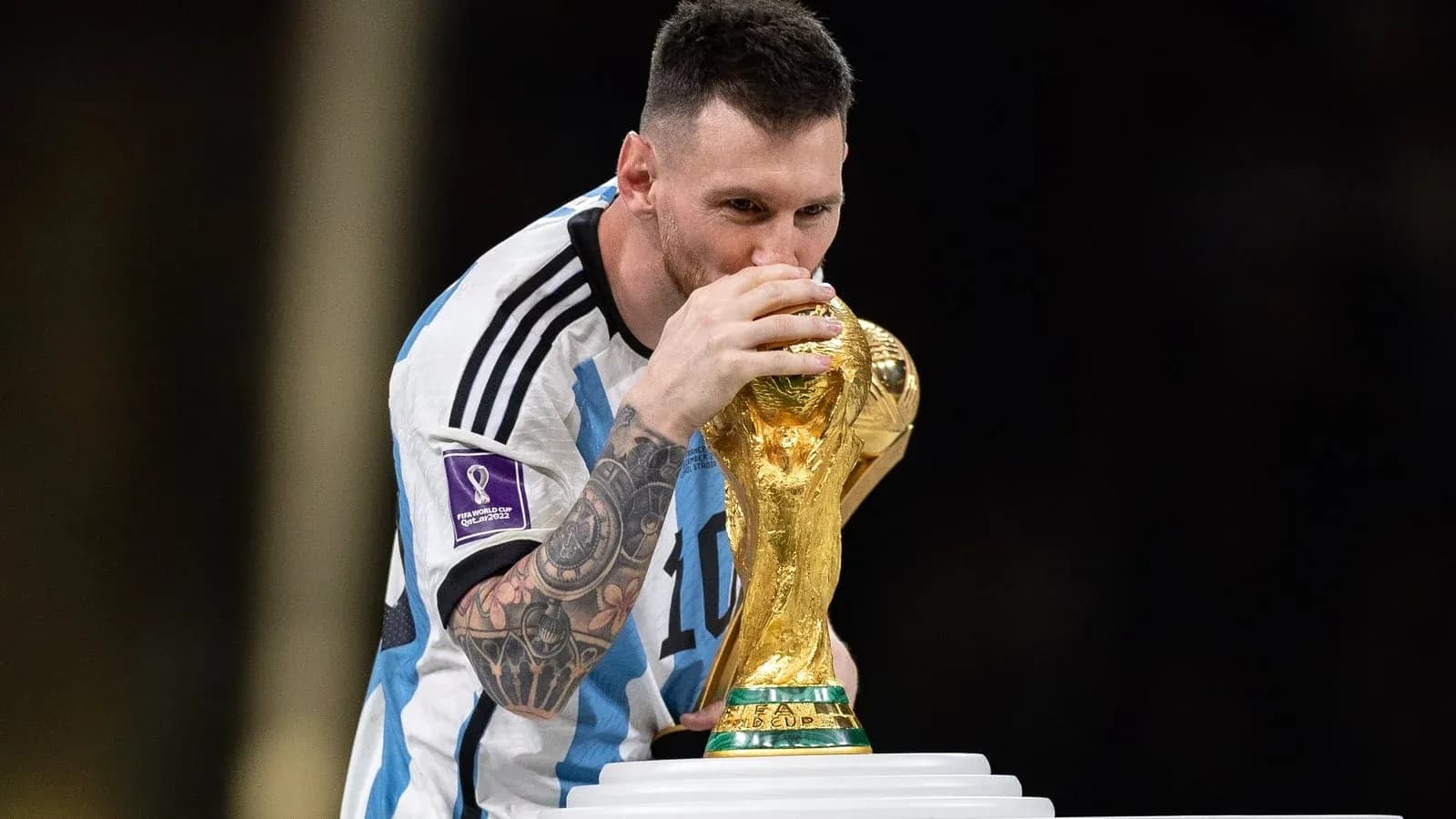
Argentina are chasing history. No team has retained the World Cup since Brazil in 1962. Lionel Messi, now 38, leads the attempt to change that. The reigning champions are again built around him, again dependent on his ability to conjure one more tournament of genius.
How often can he turn back the clock? That is the question that will hang over every Argentinian performance.
Ronaldo’s Last Roll, Germany’s Quiet Threat
For Portugal, this World Cup doubles as Cristiano Ronaldo’s last tilt at the one major trophy missing from his collection. The narrative is irresistible: one of the greatest players of all time, one final shot at the summit.
Whether that sideshow galvanises or distracts Portugal is another matter. The spotlight will be relentless. The balance between honouring his legacy and building the sharpest possible team for 2026 will be delicate.
Then there is Germany. The old line about never writing them off still holds weight, especially under Julian Nagelsmann. The squad is evolving, the football more dynamic, and in a tournament where many big names are managing fatigue and form, Germany’s capacity to grow into the event should not be underestimated.
Around them, nations like Colombia, Senegal and Morocco lurk with intent. All three have the quality and tactical cohesion to bloody noses and bend the bracket out of shape.
Managing Minutes, Chasing Dreams
The expanded format and heavy schedule will change how this World Cup feels. The early rounds may resemble a prolonged prelude, a phase where the giants rotate heavily and focus on avoiding injuries rather than chasing statement wins.
Stars such as Messi, Neymar, Yamal, Bukayo Saka and Nico Williams are likely to see their minutes carefully managed in those opening fixtures. The teams that go deepest will play eight matches. That is a marathon, not a sprint, and the medical departments will be as important as the forwards.
For fans in certain time zones, the demands are just as real. Irish viewers, for instance, face brutal kick-off times. Brazil’s opener against Morocco is scheduled for 11pm on a Saturday night. Argentina begin at 2am on a Wednesday. Alarm clocks, late-night coffee and bleary-eyed mornings will become part of the routine.
Somewhere in the middle of all this, a record from Italia 90 may come under threat. Ireland famously reached the knockouts that year without winning a game. With this format and the safety net it provides, another team could easily repeat that trick.
A World Cup on Trial
This is a World Cup that stretches everything: geography, format, player welfare, and attention spans. It asks supporters to buy into 104 games, many of them lopsided, in the hope that the final weeks deliver something unforgettable.
The football at the sharp end should be outstanding. The cast is extraordinary. The conditions will be brutal. The stakes, as ever, will be enormous.
Whether all of that justifies the sheer size of this tournament is the question hanging over the next month. The answer will not come tonight with Mexico v South Africa, or even in the group stages.
It will arrive on 19 July, when one team lifts the trophy and the rest of the world decides if the journey was worth the grind.