.svg&w=384&q=75 "Naijagoal logo")
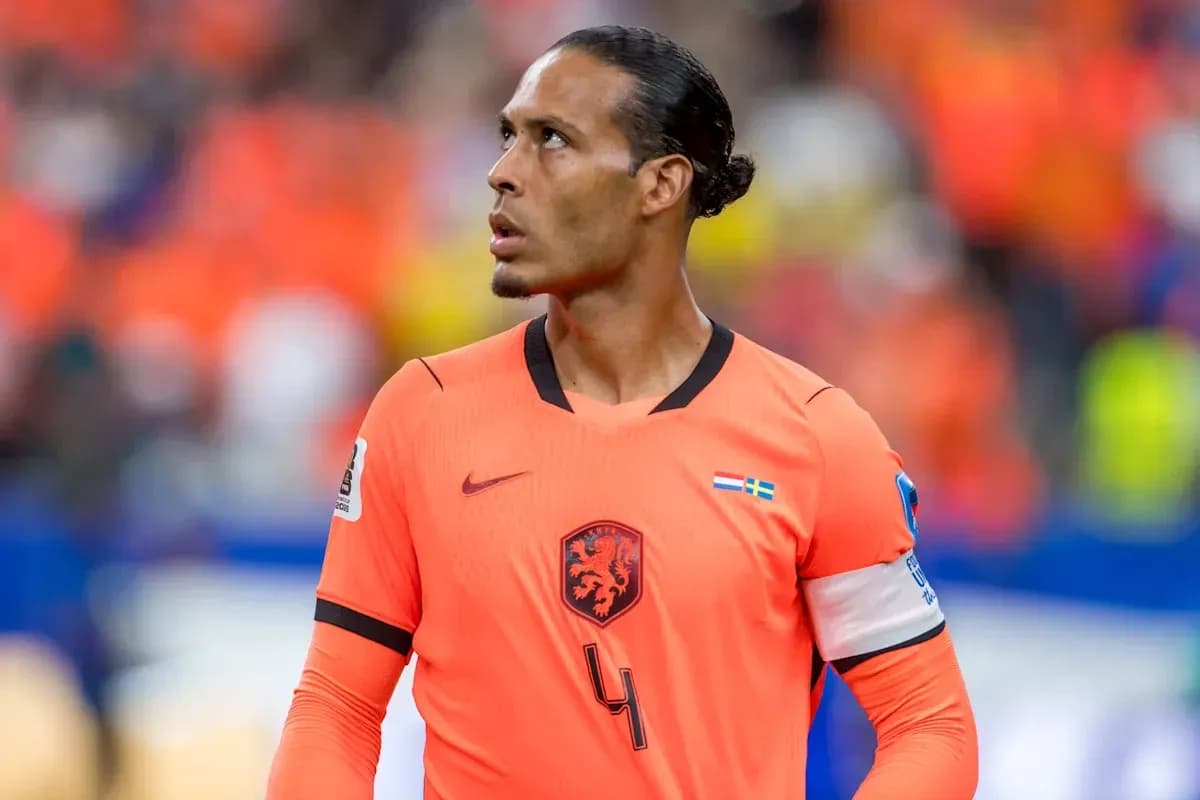

Virgil van Dijk Faces Criticism After Netherlands Exit to Morocco
Virgil van Dijk has rarely looked as exposed as he does now – not on the pitch, but in the court of opinion back home.
The Netherlands’ World Cup exit to Morocco on penalties has unleashed a wave of anger across the country, and at the centre of it stands their captain. A late equaliser, extra time, then the shootout. A campaign that had promised a deep run instead ended in familiar heartbreak, with one of the nation’s most decorated defenders carrying much of the blame.
In the days since, the criticism has hardened into something far more personal.
Driessen’s broadside
De Telegraaf columnist Valentijn Driessen did not bother with nuance. His column landed like a hammer blow.
“Ronald Koeman and Virgil van Dijk have betrayed everything our national team stands for,” he wrote, turning his fire on both the manager and his captain. For a country that still measures itself against the ideals of totaalvoetbal, the word “betrayed” cuts deep.
Driessen argued that the switch to a back three during the tournament was not tactical innovation but a concession to Van Dijk’s shortcomings, claiming the system was altered because the captain had failed to organise the defence properly in the group stage. In his view, the entire structure of the team had been bent around a leader no longer capable of justifying that privilege.
Then came the decisive moment against Morocco.
As stoppage time ticked away and the Dutch tried to see the game out, Morocco surged one last time. Van Dijk lost his man, the cross came in, and the equaliser followed. For Driessen, that was the final piece of evidence. He laid the goal squarely at the defender’s feet and finished with the stark verdict that Van Dijk’s “time is up.”
For a player who has captained Liverpool to the highest level and worn the armband of his country with such authority, it was a brutal, unflinching takedown – and it reflected the raw frustration of a nation that expected far more.
One lapse, huge consequences
Van Dijk will not need a columnist to remind him of the details. This is the kind of moment that stays with a defender.
Morocco, chasing the game in added time, threw numbers forward. The Dutch back line, which had held firm for long stretches, suddenly looked stretched. Van Dijk, usually so sharp in reading danger, allowed his opponent to slip free inside the box and could not recover in time before the cross was converted.
For a centre-back who has built a reputation on anticipation, positioning and an almost serene dominance of his area, it was a rare lapse at the worst possible time.
But to reduce the Netherlands’ exit to that single play is to ignore what came before. The Dutch had chances to close the game out, to turn a nervous finish into a routine win. They did not take them. Tournament football often swings on tiny details; one missed tackle, one failed clearance, one wasted opportunity.
Across much of the night, Van Dijk still looked like the anchor of the back line. He won his aerial duels, cleared danger when it came, and helped keep Morocco at arm’s length for long periods of normal time. That did not matter when the late goal went in. The narrative flipped in an instant.
Playing through pain
Only after the game did another layer emerge.
Ronald Koeman revealed that Van Dijk had been struggling physically during the closing stages. The defender’s calf had been “bothering him badly”, yet he stayed on, pushed through extra time and the shootout, and tried to drag his side over the line.
For any central defender, a calf problem is not a minor inconvenience. It affects acceleration, turning, recovery runs – the very things required when the game stretches and spaces open up. In a knockout tie, deep into extra time, those margins become brutal.
Van Dijk could have signalled to come off. He did not. He chose to remain on the pitch, limping through the final act of a World Cup quarter-final with the armband on his sleeve and the responsibility of a nation on his shoulders.
That does not erase the mistake. It does, however, frame it differently. A captain staying on despite obvious discomfort, gambling that his experience and presence would still serve the team better than a fresh pair of legs.
Legacy under the microscope
None of this will shield him from scrutiny. Captains always stand closest to the storm.
Van Dijk has spent more than a decade at the elite level, defining games with his calm, his timing, his leadership. He has anchored Champions League nights, title races, and major tournament campaigns. One painful evening in orange does not wipe that slate clean.
Yet international football is unforgiving. A World Cup exit reshapes conversations overnight. Where once there was talk of his stature among the great Dutch defenders, there is now a debate about whether he remains the man to lead the back line into the next cycle.
Koeman and his staff will soon start to piece together what comes next for the Netherlands. Systems will be reviewed, selections questioned, roles reassessed. The image of that equaliser, and Van Dijk’s part in it, will linger in every discussion.
For the defender himself, the immediate task is simpler: rest, recovery, and a return to full fitness before the new domestic season. The emotional toll of a World Cup exit and the physical strain of playing through injury will take time to clear.
When he does pull on the Oranje shirt again, the spotlight will be harsher than ever. Driessen’s words have ensured that. The question now is not what went wrong in those frantic final minutes against Morocco, but how Virgil van Dijk responds the next time the stakes are just as high and the margins just as thin.