.svg&w=384&q=75 "Naijagoal logo")
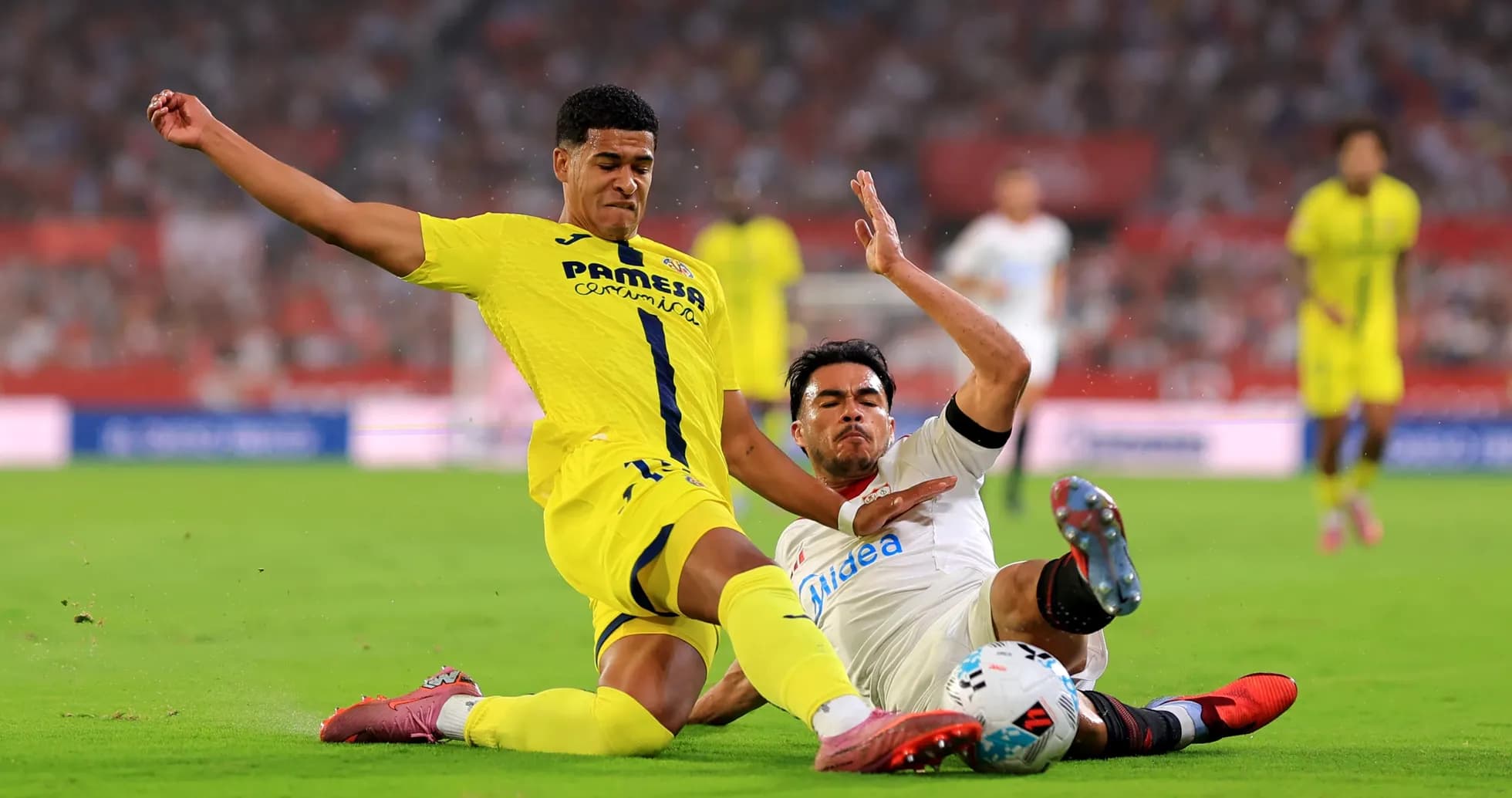
Villarreal vs Sevilla: High-Stakes La Liga Clash Preview
Estadio de la Ceramica stages a high‑stakes La Liga clash on 13 May 2026 as third‑placed Villarreal host Sevilla in Round 36 of the regular season. With Villarreal chasing Champions League qualification and Sevilla still not mathematically clear of danger in mid‑table, the context gives this fixture real edge despite the gap in the standings.
Stakes and league context
In the league, Villarreal arrive in an excellent position: 3rd with 69 points, a +25 goal difference and a clear cushion inside the Champions League places. Their overall record of 21 wins, 6 draws and 8 defeats from 35 matches underlines a side that has married attacking ambition (65 goals for) with sufficient defensive solidity (40 against).
Crucially, Estadio de la Ceramica has become a fortress. Villarreal’s home record in the league reads 14 wins, 1 draw and just 2 defeats from 17 games, with 41 goals scored and only 15 conceded. No side travelling here can ignore those numbers.
Sevilla, by contrast, sit 13th on 40 points with a goal difference of -13. Their league record of 11 wins, 7 draws and 17 defeats (43 scored, 56 conceded) paints the picture of an inconsistent campaign. Away from home they have struggled: 4 wins, 3 draws and 10 losses in 17 away fixtures, conceding 32 goals and scoring 19.
Form lines tell a similar story. Villarreal’s league form is “DWWDW” in the standings table, part of a longer season run of “WWDLWWWLDWWWWWWLWWLLDWLWWLWDWLWDWW” across all phases – a sequence that shows frequent winning bursts and the ability to respond quickly to setbacks. Sevilla’s form string “WWLLW” in the league is more volatile and fits into a broader pattern of inconsistency: “LLWDWLWWLLLWLLDWLLLDWLDDWDDLLLWLLWW”.
With three games left, Villarreal are playing for position and momentum at the top end; Sevilla are playing for a calmer finish to a turbulent season.
Tactical outlook: Villarreal’s structure vs Sevilla’s flexibility
Across all phases, Villarreal’s season statistics reveal a clear identity. They have used a 4‑4‑2 formation in 33 matches and 4‑3‑3 only once, underlining a preference for a two‑striker or dual‑threat front line with strong wide support. The numbers back up an attacking approach:
- Goals for: 64 in 34 matches across all phases (41 at home, 23 away).
- Average goals scored: 2.4 per home game, 1.4 away (1.9 overall).
- Goals against: 39 total (15 at home, 24 away), averaging 0.9 conceded at home.
At Estadio de la Ceramica, Villarreal are both prolific and relatively secure. Five home clean sheets and only two home defeats across all phases add weight to the idea that they can control games here. Their biggest home win is 5‑0, and their heaviest home defeat only 0‑2, suggesting that when they lose, they rarely collapse.
Discipline could be a subplot. Villarreal’s yellow cards are heavily clustered in the final half‑hour, with 17 bookings between 61‑75 minutes and 19 between 76‑90. Late‑game intensity is high, and managing that edge without drifting into rash challenges will matter, especially if the match is tight.
Sevilla’s tactical profile is the opposite of settled. They have deployed nine different formations across the season:
- Most used: 4‑2‑3‑1 (11 matches), then 3‑4‑2‑1 (6), 5‑3‑2 (5), 4‑4‑2 (4), plus sporadic uses of 3‑4‑3, 5‑4‑1, 3‑5‑2, 4‑1‑4‑1 and 3‑4‑1‑2.
This flexibility can be read as adaptability or as tactical searching. Their numbers lean towards the latter:
- Goals for: 43 (24 at home, 19 away) at an average of 1.1 goals per away game.
- Goals against: 56 (32 away), conceding 1.9 per away match.
They have three away clean sheets across all phases, but 10 away defeats in the league underlines fragility on the road. Their heaviest away loss (5‑2) hints at the risk of games getting away from them when they open up.
Card data suggests Sevilla can become stretched and ill‑disciplined late on: yellow cards rise steadily through the match and peak from 76‑90 minutes (19 bookings) and 91‑105 minutes (20 bookings). They also have multiple red cards across different time ranges, including between 16‑30, 31‑45, 61‑75 and 76‑90 minutes. Against a Villarreal side that tends to keep pressing, that could be a decisive weakness.
Key players and attacking threats
Villarreal’s attacking threat is spearheaded by Georges Mikautadze, one of La Liga’s more productive forwards this season. In the league he has:
- 11 goals and 5 assists in 30 appearances.
- 50 shots, 28 on target.
- A healthy involvement in build‑up: 361 passes with 25 key passes and 74% accuracy.
- Strong dribbling volume (64 attempts, 31 successful) and a high number of fouls drawn (45).
Mikautadze is not just a finisher; he is a focal point who stretches defences, links play and wins free‑kicks in dangerous areas. Sevilla’s centre‑backs and holding midfielders will need to manage his movement between the lines and into the channels.
Behind him, Alberto Moleiro offers a second line of scoring and creativity from midfield:
- 10 goals and 4 assists in 34 league appearances.
- 700 passes with 35 key passes at 78% accuracy.
- 38 shots (19 on target) and 60 dribble attempts (31 successful).
Moleiro’s ability to arrive from deeper positions, combine in tight spaces and carry the ball through midfield complements Villarreal’s 4‑4‑2 structure. His output suggests he can both create and finish, making him a major threat between Sevilla’s midfield and back line.
From the spot, both teams have been reliable at team level this season: Villarreal have scored 5 of 5 penalties, Sevilla 5 of 5, with no misses recorded in the team penalty data. Individual penalty data for Mikautadze and Moleiro shows no goals from the spot, so neither can be described as a penalty specialist, but if a shootout‑style moment arrives during the match, both sides have reason to be confident in their designated takers.
Injuries and selection issues
Both managers have selection puzzles to solve.
For Villarreal, J. Foyth is ruled out with an Achilles tendon injury, removing a versatile defensive option who can operate at right‑back or in central defence. A. Perez is listed as questionable with an injury, which could affect Villarreal’s attacking rotation and bench depth if he is not passed fit.
Sevilla will definitely be without Marcao due to a wrist injury, weakening their central defensive pool. M. Bueno (knee injury) and I. Romero (injury) are both questionable, potentially limiting options in midfield or attack depending on their roles. For a side already conceding heavily away from home, the absence of a senior centre‑back like Marcao is particularly significant.
Head‑to‑head: recent competitive meetings
The last five competitive La Liga meetings between these sides, all from 2023 onwards, show Villarreal with a clear edge:
- 23 September 2025, Estadio Ramon Sanchez Pizjuan: Sevilla 1‑2 Villarreal – Villarreal away win.
- 25 May 2025, Estadio de la Ceramica: Villarreal 4‑2 Sevilla – Villarreal home win.
- 23 August 2024, Estadio Ramon Sanchez Pizjuan: Sevilla 1‑2 Villarreal – Villarreal away win.
- 11 May 2024, Estadio de la Ceramica: Villarreal 3‑2 Sevilla – Villarreal home win.
- 3 December 2023, Estadio Ramon Sanchez Pizjuan: Sevilla 1‑1 Villarreal – draw.
Over these five league fixtures, Villarreal have 4 wins, Sevilla have 0, with 1 draw. The pattern is consistent: Villarreal have found ways to win both home and away, while Sevilla have not managed a victory in this sequence.
The verdict
All available data points towards Villarreal entering this match as strong favourites.
- League position and form: Villarreal are 3rd with a positive “DWWDW” league form, Sevilla 13th and inconsistent.
- Home vs away: Villarreal’s 14‑1‑2 home league record with 41 goals scored contrasts sharply with Sevilla’s 4‑3‑10 away record and 32 conceded.
- Tactical clarity: Villarreal’s stable 4‑4‑2 structure and clear attacking patterns contrast with Sevilla’s constant formation changes.
- Key players: Mikautadze and Moleiro provide Villarreal with a double‑figure goal threat from attack and midfield, while Sevilla’s season numbers suggest they lack comparable firepower and defensive stability on the road.
- Head‑to‑head: Villarreal have won 4 of the last 5 league meetings, with Sevilla failing to beat them in that run.
Sevilla’s best route into the contest may be to sit deeper in one of their more conservative shapes (such as 5‑3‑2 or 5‑4‑1), try to limit space for Mikautadze and Moleiro, and target transitional moments against a Villarreal side that commits numbers forward. However, given Sevilla’s away defensive record and Villarreal’s home scoring rate, the data leans strongly towards a high‑impact Villarreal performance.
Expect Villarreal to dominate territory and chances at Estadio de la Ceramica, with the hosts well placed to extend their impressive home record and tighten their grip on a top‑three finish.