.svg&w=384&q=75 "Naijagoal logo")

Tuchel's Midfield Dilemma: Bellingham vs Rice for England
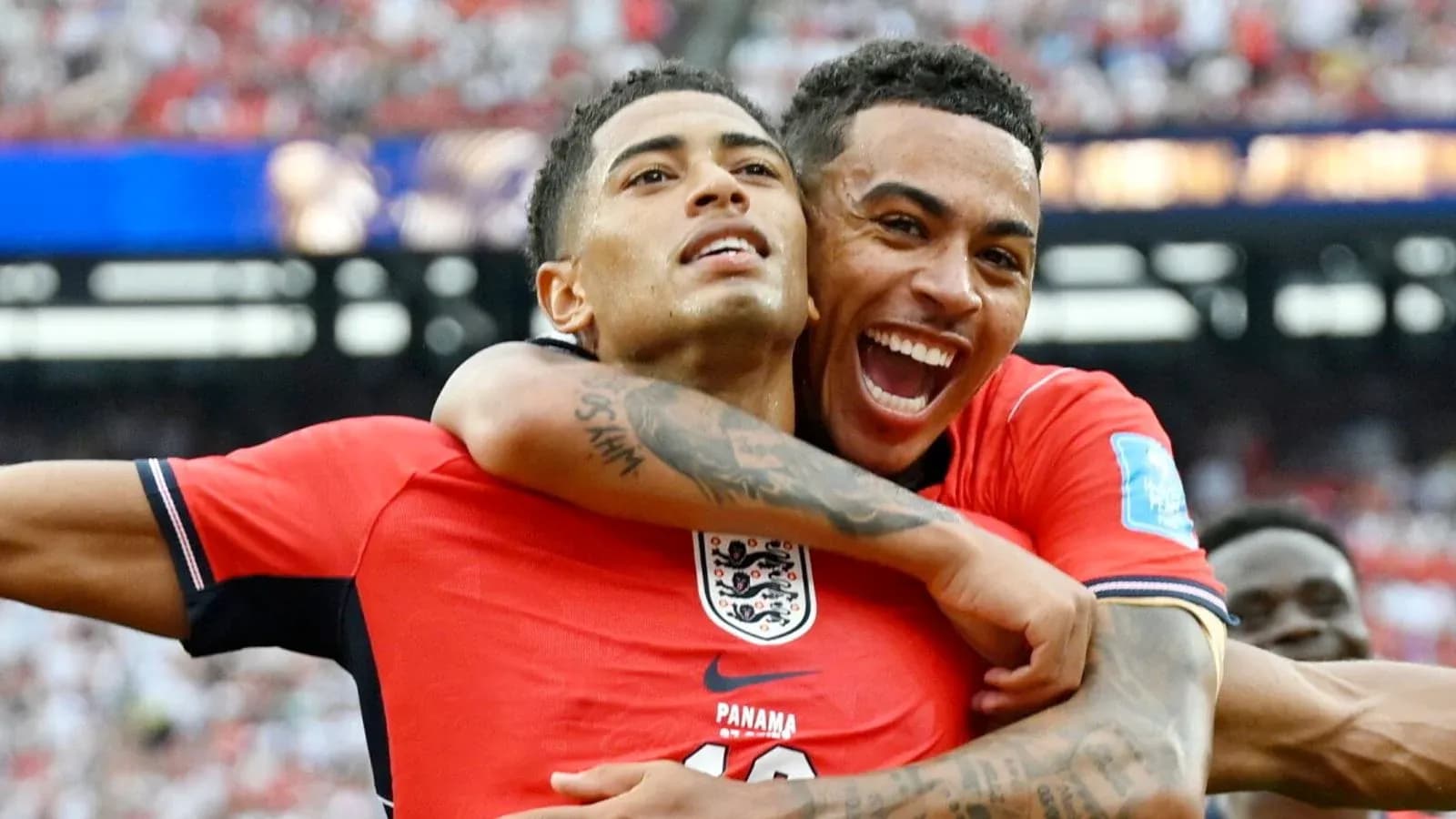
Thomas Tuchel walked away from England’s 2-0 win over Panama with the result he wanted and a brand-new problem he didn’t: Jude Blingham has just ripped up his midfield plan.
The 21-year-old started deeper, alongside Elliot Anderson, and ran the game. A goal, an assist, constant movement, constant menace. It was the kind of all-court performance that forces a manager to rethink everything on the eve of the knockout rounds.
And now Declan Rice is coming back.
Tuchel’s Midfield Puzzle
Rice, if fit, starts. That’s not really a debate inside the England camp or outside it. He anchors, he screens, he gives the side balance against elite opposition. As Paul Merson puts it, when the bigger nations arrive, you need Rice on the pitch.
But Bellingham, operating from deep against Panama, gave England something different – and something awkward for Tuchel to ignore. From that starting position, he arrived late, burst beyond lines, and became almost impossible to pick up. Panama couldn’t get near him.
That contrast matters. Against Ghana, Bellingham worked higher up as a No 10 and barely influenced the game. Ghana sat deep, shut down the pockets, and the space vanished. On Sunday, Morgan Rogers wore the No 10 tag and suffered the same fate. He hardly had a touch.
The area behind Harry Kane is clogged. Defenders sit in, the lines compress, and creative players get suffocated. From deeper, Bellingham can run past people instead of trying to wriggle between them. That’s the tension Tuchel has to solve.
Rice plays. So where does that leave everyone else?
Rice, Bellingham… and Then What?
Tuchel can pair Rice and Bellingham. That seems the obvious solution on paper. But football matches aren’t played on paper, and Anderson would be the one to miss out. The bigger tactical question then appears just ahead of them.
Who plays as the No 10? And more importantly, how do England actually get that player on the ball?
Rogers struggled badly in that role against Panama. Bellingham, when used there against Ghana, barely saw it either. The problem isn’t just the identity of the playmaker; it’s the supply line into that zone. England are not feeding their creator quickly enough or bravely enough.
That’s where Bellingham’s deeper role becomes tempting. He wants the ball, demands it, hunts it down. He plays with the relentless hunger of a school kid who never stops asking for another touch. Merson sees shades of Wayne Rooney in that mentality – always involved, always central to the story.
From deeper, Bellingham can dictate. From higher, he can disappear if England don’t take risks on the ball.
England’s Messi Lesson
Merson makes a sharp comparison. He’s not putting Bellingham in Lionel Messi’s bracket, but he points to Argentina’s approach: when Messi shows, they give him the ball. Even in tight spaces. Especially in tight spaces.
England don’t do that yet with Bellingham. Against Ghana, he was constantly available, constantly showing, but the ball went elsewhere. Safer. Wider. Backwards.
Bellingham isn’t scared of tight areas. He’ll take it under pressure, he’ll turn, he’ll drive. The challenge is psychological as much as tactical: teammates need the conviction to find him early and often, even when opponents swarm.
That’s critical against DR Congo. They will sit deep. They will put bodies behind the ball. If Tuchel pushes Bellingham back up to No 10, he risks a repeat of Ghana: his most influential midfielder starved of service, waving his arms in traffic.
A Wider Problem in Wide Areas
The congestion isn’t limited to the middle. Out wide, England are hitting a ceiling too.
Against Panama, every time an England player received the ball, two or three defenders closed in. The ball went wide quickly, but the wingers found themselves doubled up on, isolated, and forced back.
Marcus Rashford saw plenty of the ball in the first half. The impact? Minimal. There was no real end product, despite the clamour for him to start ahead of Anthony Gordon.
On the other flank, Bukayo Saka looks short of his usual spark. Maybe he’s nursing a knock, maybe it’s just form, but he doesn’t look at full throttle. Even so, Merson can’t envisage a serious England knockout game without Saka in the XI. Tuchel trusts him. So does the dressing room.
What England do have is potential. Four wingers, none of them really firing yet. That can feel frustrating in the moment, but it also leaves room for lift-off. So far, they’ve been six out of 10. If they climb even a couple of notches, they become match-winners. The margins in a World Cup knock-out tie are that thin.
Spreading the Load
One thing Tuchel will quietly like: England are not leaning on a single star.
Harry Kane has his goals. The defence held up against Ghana. Bellingham took charge against Panama. Different games, different heroes.
This is not a one-man operation where everything collapses if Kane has an off day. In tournament football, that matters. You need variety in your threat. You need games where someone unexpected drags you through.
England haven’t hit their ceiling yet. They don’t need to. Not now. This is the stage where rhythm matters more than perfection. Build, don’t burn out.
Seven Out of Ten – and Still Alive
Merson gives England a seven out of 10 for the group stage. Job done against Croatia, Ghana, and Panama, but with enough warning signs to keep everyone honest.
They’ve had reality checks – Ghana’s deep block, Panama’s stubbornness. Those are not just footnotes; they are reminders that England still have gears to find and problems to fix. Chief among them: how to progress the ball centrally under pressure and how to unlock low blocks without relying on moments of individual brilliance.
Look around the tournament and the picture sharpens. France look devastating going forward. Spain control games but don’t always kill them. Colombia, with their pace and energy, have impressed and know these conditions well.
There is no runaway favourite. There are just very good teams with very dangerous players. On any given day, anyone can hurt you.
That’s the beauty – and the brutality – of this World Cup.
The Road Ahead
For England, the equation is simple and unforgiving. They must improve. You can’t just flick a switch in the quarter-finals and expect to become a different side. The growth has to be gradual, match by match, starting with DR Congo in the last 32.
Tuchel’s first big call comes in midfield. Rice returns. Bellingham has made a compelling case to stay deeper. The No 10 role remains unsolved. The wingers are waiting to ignite.
Somewhere inside that mix is England’s best version of themselves.
They’ve shown it in flashes – most clearly against Croatia. If they can rediscover that level and then stretch it over 90 minutes, over knockout ties, over the sharp end of a World Cup, they have a genuine shot.
While they’re in the tournament, they’re in the conversation. The question now is whether Tuchel’s midfield gamble, whichever way he jumps, becomes the decision that defines England’s World Cup.