.svg&w=384&q=75 "Naijagoal logo")

Tottenham's Survival and the Road Ahead Under Vinai Venkatesham
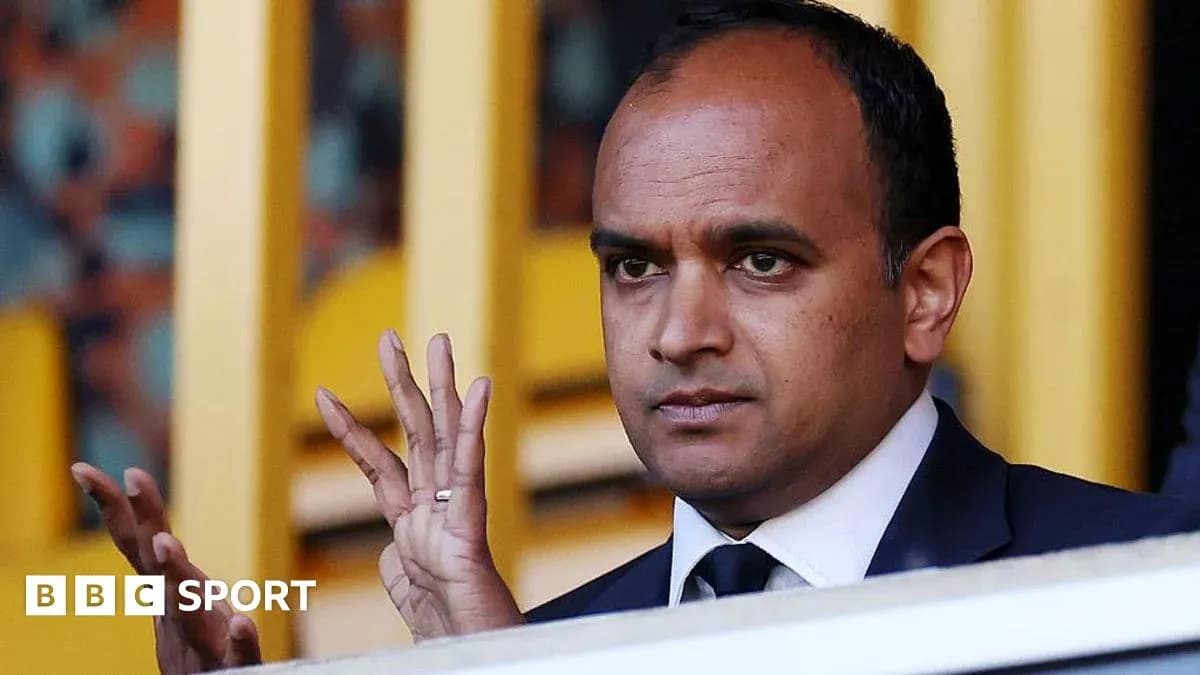
Vinai Venkatesham walked into Tottenham Hotspur last June talking about Europe. He ended his first season clinging to the Premier League trapdoor and talking about survival, reset and scars.
The final-day win over Everton brought noise, tears and, above all, relief. It also brought a blunt admission from the chief executive: this is not remotely the standard Tottenham should accept.
“It was just a huge outpouring of relief,” he said after safety was secured in the closing minutes of the campaign. Relief, not joy. Relief, not pride. For a club that lifted the Europa League only a year ago, that contrast tells its own story.
From European dreams to a brutal reality check
When Venkatesham officially started on 1 June, his internal target for the men’s first team was clear: compete for European places. The logic seemed sound. Tottenham had just finished 17th under Ange Postecoglou, but they had finally ended a trophy drought stretching back to 2008, and the squad contained hardened internationals.
A few months inside the building changed his view.
“If you'd have asked me a few months after I joined, when I was no longer an outsider, I would have told you the club was in a significantly worse state in some places than I thought,” he admitted. What he found was not a gentle course correction. It was, in his words, “a complete reset”.
Off the pitch, he saw strength. Stadium operations. Commercial power. The infrastructure of a modern super-club. On the football side, the picture alarmed him.
Across five years, Premier League rivals had accelerated. Tottenham, he felt, had not kept pace.
“When you look at where Tottenham were in many of those areas, compared to where I believe other Premier League clubs are, there was a significant gap. In some areas really quite worryingly so.
“I don't think that there was what I would call a relentless obsession with football success.”
The training centre, he noted, is “one of the best, if not the best in the world” – but it looks too much like a five-star hotel, not enough like a ruthless performance environment. That will change this summer. Expertise will be added. Comfort will make way for edge.
Frank, delay and a decision that came too late
On the pitch, the first major call of his tenure was Thomas Frank. The Dane’s reign, on paper, began reasonably. Just one defeat in the opening 10 matches in all competitions hinted at stability.
That illusion did not last. Performances dipped, results followed, and by the time Frank was sacked in February, most of the fanbase wondered why it had taken so long.
Venkatesham and sporting director Johan Lange were hammered for that delay. He rejects the idea that the club simply sat on their hands.
“There's been plenty of coverage that the club was passive during this period. And that's absolutely not true,” he insisted.
Inside the boardroom, they weighed everything: results, the likelihood Frank could reverse the slide, the disruption of changing managers in January, the fixture list, and the limited options in the interim market. The calculation dragged on. The season did not wait.
The De Zerbi pursuit and the Tudor misstep
Once Frank had gone, Tottenham went hunting. The first choice was clear. They moved for Roberto de Zerbi, leaving Marseille and available, in theory, to step straight in.
He said no. At least, not then. The Italian was unwilling to take the job mid-season. That refusal pushed Tottenham towards a gamble that quickly blew up in their faces.
Enter Igor Tudor.
Thrown into a relegation fight without Premier League experience, the Croatian lasted just seven games before leaving by mutual consent. The logic behind his appointment sounded reasonable on paper.
“We were then, in the interim market, which is generally not the broadest,” Venkatesham explained. Tudor had worked in “very high-profile and high-pressure environments”. He was seen as a coach who could make an “immediate impact”, someone with a different personality to Frank who would not wilt under scrutiny.
But he was a risk. And the risk did not pay off.
Asked if it was a mistake, Venkatesham did not bother to dress it up. “It didn't work out. I think it's very clear it didn't work out. And I don't think that is in question. I don't think anybody would argue anything else.”
A new lightning rod after Levy
For a quarter of a century, Daniel Levy absorbed the anger. As executive chairman, he became the symbol of fan frustration, the face on every protest banner.
Levy’s departure in September left a vacuum. Venkatesham has stepped straight into it.
This is now two consecutive 17th-place finishes. That statistic alone fuels fury. The new chief executive understands why.
“It's clearly not good enough,” he said. “I think that is rational, normal, sensible, and is what we would expect from supporters.”
He talks about “serious challenges” on the football side, issues that have built up “over many years” and cannot be erased overnight. He believes in the plan. He knows supporters are tired of hearing about plans.
“So I have complete confidence in what we're doing, how we're doing it. But supporters are rightly impatient. So I have to weather that storm.”
The storm has become personal. Abuse has crossed the line, as it so often does in modern football. Venkatesham, who spent 15 years in the game before arriving at Tottenham, including a long spell at Arsenal, leans on that experience.
“You have to develop a thick skin,” he said. Criticism, he accepts. Personal attacks, he does not. “The challenge in football is that that criticism frequently goes way past the line for players, referees, executives.”
Relegation, he stressed, would not have triggered redundancies. The club had planned to protect its staff. That detail underlines the scale of the threat they felt – and the human cost they were desperate to avoid.
De Zerbi’s jolt of electricity
Behind the scenes, one name now dominates every conversation: Roberto de Zerbi.
Tottenham finally got their man late in the season. This time, the timing suited both sides. The impact has been instant.
On the surface, the numbers are simple: 11 points from seven games, enough to drag Spurs over the line and keep them in the Premier League. Inside the dressing room, the change runs deeper.
“I think he has made an extraordinary impact so far,” Venkatesham said. The word “extraordinary” is not one he throws around lightly.
The scale of the task De Zerbi inherited was, in his boss’s eyes, huge. A club drained by back-to-back relegation battles. A squad short of balance, short of belief. Yet in a matter of weeks, the Italian has altered the mood and the tempo.
“It's hard to describe what a significant impact he has had in the dressing room with all the players,” Venkatesham said. He sees an “excellent coach” playing a style of football that both Tottenham supporters and neutrals want to watch.
De Zerbi will not just coach the players. He will help choose them.
Recruitment, wages and a critical summer
This summer, Tottenham do not hide from the scale of the rebuild. They embrace it. De Zerbi is expected to be fully involved in recruitment. Talks have already taken place with former Borussia Dortmund sporting director Sebastian Kehl as the club reshape their football department.
One key lever has already been pulled: the wage ceiling has been raised. Tottenham want to fish in a different pond now, to attract players who might previously have looked elsewhere.
“The squad needs work and the squad hasn't got the right balance,” Venkatesham said. They want experience. Leadership. Physical robustness to cope with what he calls “the most demanding league that exists”.
This will not be a one-window fix. He knows that. Supporters know it too, even if patience is in short supply. But he is clear: this particular transfer window is “going to be critical”.
The reset he spoke about in those first bruising months is no longer an internal diagnosis. It is the public blueprint. Tottenham have survived. Now they have to prove that survival was the start of something, not the ceiling.