.svg&w=384&q=75 "Naijagoal logo")

StubHub Faces Class Action for Cancelled World Cup Tickets
Mark Gallagher did everything right. Bought early. Paid big. Waited for the dream.
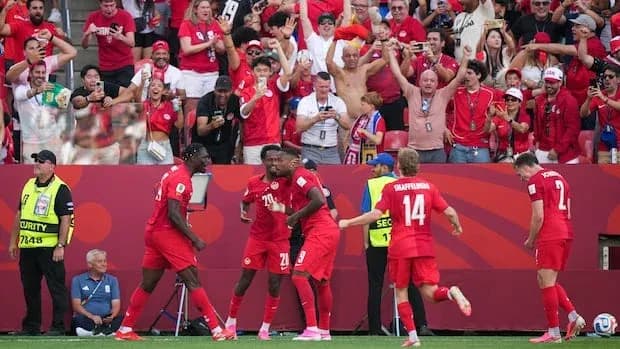
He still watched Canada’s World Cup game against Qatar from his couch in Vancouver — without the $11,407 pair of prime seats he’d secured back in February.
Hours before kick-off on June 18, StubHub cancelled his tickets.
Now he’s taking them to court.
The Vancouver resident has filed a proposed class action on behalf of Canadian ticket buyers after thousands of World Cup tickets sold through StubHub were cancelled. He isn’t just asking for his money back — he already got that. He’s asking for punishment.
Gallagher alleges a “conspiracy of deception,” accusing StubHub of advertising and selling tickets “which they knew would not or could not be honoured.” The lawsuit, filed Wednesday in Vancouver, is the first class action of its kind in Canada, following similar legal actions in New York and California. None of the claims have been tested in court.
For Gallagher, the refund doesn’t even begin to cover the loss.
“Missing the event — that outcome isn't measured in dollars,” he told CBC News. “You never get to see it again, even though you had the full intent and followed whatever the rules were to get there. So what I hope to get out of this is change.”
StubHub, which touts a “FanProtect Guarantee” promising refunds or replacement tickets “within 5 business days,” now faces a wave of furious customers who say they’ve run into delays, denials and dead ends trying to get compensated.
Asked detailed questions about its refund and dispute practices, the company declined to engage point by point. Instead, it sent a short statement.
“Our goal is to get every fan into their event, every time, and if something goes wrong, we always want to find them replacement tickets. We never want to give a refund and no fan wants to receive one — we want you to get to your event.”
For many fans, that promise has already collapsed.
Travel costs? You’re on your own
For some, the ticket price wasn’t even the biggest hit.
From Barrie, Ont., Kelly Mongillo loaded her elderly father into the car and drove 10 hours to New Jersey for a June 13 World Cup match. She spent about $1,800 on tickets through StubHub and another $2,500 on hotels, gas and food.
They arrived at the stadium. They waited at the gates.
StubHub cancelled that day.
Mongillo says the company’s FanProtect Guarantee gave her “a false sense of security,” pointing to repeated assurances she’d get replacement tickets if anything went wrong. When the tickets vanished, she asked StubHub to cover her travel costs. She says they refused.
The company’s “Global User Agreement” includes a waiver designed to block Canadian and U.S. customers from suing for anything beyond a ticket refund — no travel, no hotels, no legal fees tied to a cancellation.
When Mongillo went public in June, StubHub relented partially. It offered a refund and replacement tickets to another World Cup match in Toronto. She accepted the tickets, but says the company has since backed away from the cash refund.
The refund clock starts faster when lawyers get involved
Some fans wait. Others escalate.
Jennifer Hale of Toronto paid nearly $3,000 for tickets to a Team Canada match on June 12. StubHub cancelled. She immediately asked for a refund.
More than a month later, she was still waiting.
Hale says she has spent hours on the phone being told, over and over, to “wait 72 hours.” On her last call, she was told it could take up to 45 days. The money hasn’t arrived. Neither has any clear explanation.
Denis Radetic, from Georgetown, Ont., ran into the same wall. After a month of delays, he changed tactics. He hired a U.S. lawyer who has been contacted by hundreds of StubHub customers in similar situations.
In a legal letter accusing StubHub of “potential fraud … negligent misrepresentation, breach of contract,” Radetic demanded a refund for his cancelled tickets and $3,000 US in legal fees.
He believes StubHub is testing people’s resolve.
“I'm sure a lot of people are hesitant about hiring a lawyer,” he said. “I feel like StubHub is kind of taking advantage and seeing who will really push them to get the money back versus who will just kind of let it go with time and perhaps not get their money back.”
Once the lawyer stepped in, StubHub contacted Radetic. His credit card has now been refunded.
The company would not explain why customers who hire lawyers or go to the media seem to get faster attention. After all that, StubHub sent Radetic a survey asking how he had enjoyed the game.
He never saw a minute of it.
A maze called arbitration
StubHub’s official playbook for unhappy customers is simple on paper: if you don’t like the refund decision, file a “notice of dispute” and head into a U.S.-based arbitration process.
In practice, fans and lawyers say, it’s anything but simple.
Brad Clements, a Menlo Park, Calif.-based lawyer, represents Radetic and hundreds of other StubHub buyers and sellers from both sides of the border. He argues the arbitration system is built to deter, not resolve.
“They're trying to make it look like they're going to do right by the consumer and they really care about the consumer,” he said. “But it's a total farce, because they have everything actually designed to intimidate you, delay you, deny you, if you do bring a dispute.”
Clements points to one telling detail: he says StubHub has changed the mailing address for certified “notices of dispute” seven times in the last 14 months.
On StubHub’s Canadian site, StubHub.ca, there is no clear guidance on where or how to file an official dispute at all.
StubHub declined to explain the address changes or the lack of dispute instructions for Canadian users.
“They don't want people bringing cases,” Clements said. “They want to make it so godawful for you that you don't go and tell your friends that you won your refund plus interest plus some amount for lost time plus punitive damages, right?”
When a cancelled ticket still turns a profit
The anger isn’t just about delays. It’s about who wins when a deal collapses.
Randy Nichols, a New York-based band manager, says StubHub can make money even when fans don’t get through the turnstiles.
Here’s how it works: when StubHub refunds a buyer for a ticket that never materializes, it then turns around and charges the seller the full ticket price as a penalty — despite never owning the ticket itself. The company says that policy is meant to deter fraudulent or unreliable listings.
Nichols sees another effect.
”The way StubHub is currently structured, they charge the seller a 100 per cent fine on every ticket that they don't deliver. Which means that StubHub makes money on every order that they don’t fulfill,” he said.
StubHub declined to comment on that characterization. Its seller policies are blunt: “If you dropped your sale, we will charge your payment method an amount equal to the greater of (i) 100% of the price of the ticket(s) sold or (ii) the full amount incurred by us to remedy the dropped sale.”
The fan loses the experience. The seller gets hit with a 100 per cent penalty. StubHub still collects.
The interest game
Even when refunds do come, some fans argue StubHub still walks away with something they never see: the interest on their money.
Jeff Ripley of Spokane, Wash., is taking the company to arbitration. His World Cup tickets, bought last December, were cancelled on game day. He wants more than face value back.
“They're sitting on that money, making interest on it. How many thousands of people has this happened to?” he asked.
StubHub reported earning $41 million in interest in its November 2025 earnings report for the previous year. The company, which facilitated the resale of $9.2 billion in tickets globally last year, declined to discuss the interest it earns on customer funds.
Ripley says the whole operation looks less like a marketplace and more like a financial institution using fans as a free credit line.
“There's something wrong,” he said. “They almost work like a financial institution in that I deposited money in a savings or checking account and they got interest.”
“There has to be some accountability for companies that are taking money, earning interest on it and then not providing a product.”
Gallagher’s lawsuit in Vancouver aims to force that accountability into a courtroom, under oath, with documents on the table. If a judge certifies the class action, StubHub won’t just be answering to one angry fan who missed Canada vs. Qatar.
It will be answering to an entire section of the stadium.