.svg&w=384&q=75 "Naijagoal logo")

Spain Triumphs Over France in World Cup Semi-finals
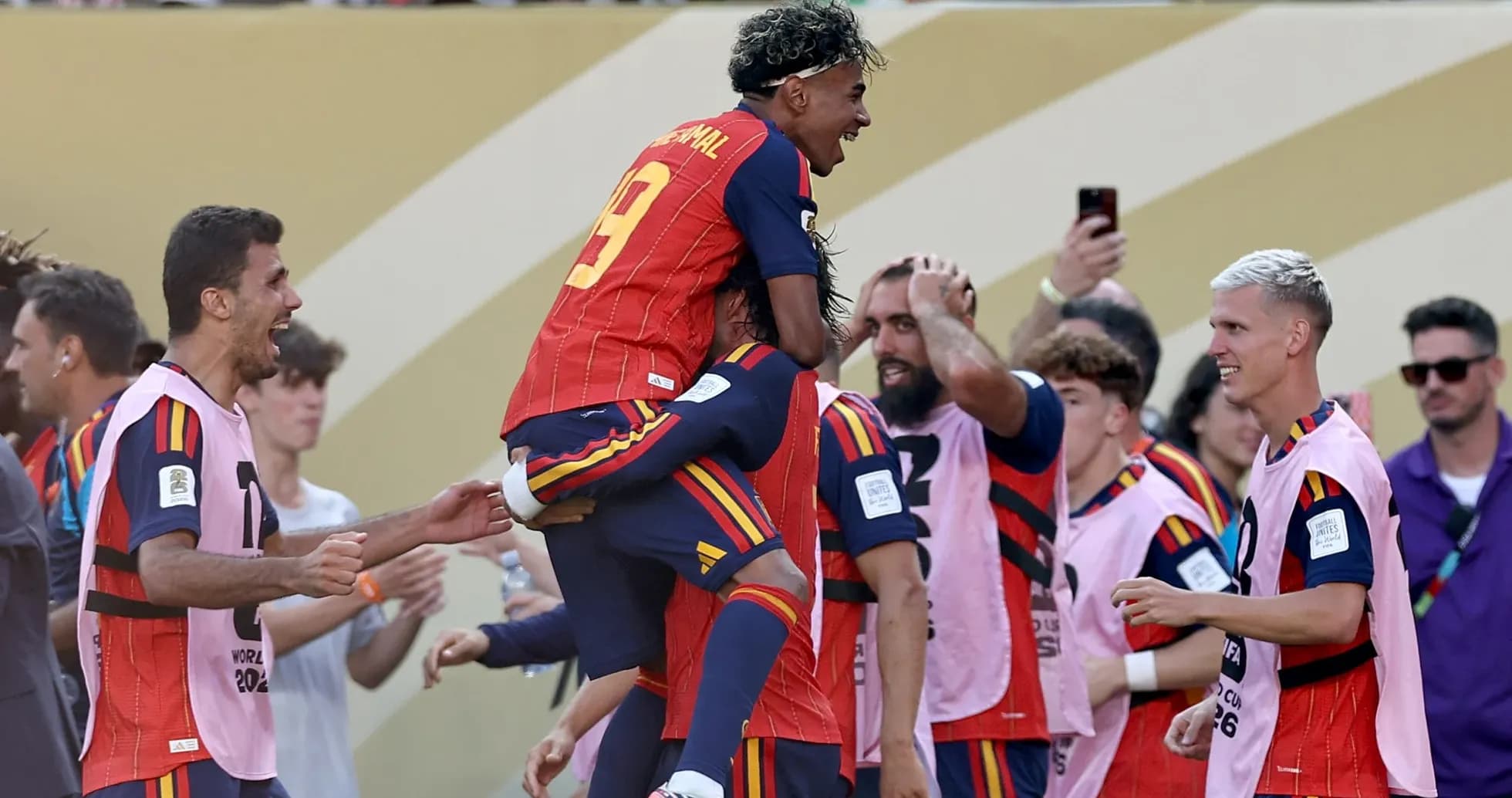
The lights of Dallas Stadium have already told the story: Spain 2, France 0, a World Cup Semi-finals decided in the spaces between two elite structures. Yet to understand how this tie tilted Spain’s way, you have to start with the season-long identities each side carried into Arlington.
France arrived as the tournament’s most ruthless front‑foot machine. Overall this campaign they had played 7 matches, winning 6 and losing only 1, with no draws. In total this campaign they scored 16 goals and conceded 4, a goal difference of +12, built on heavy home dominance: at home they averaged 2.2 goals for and just 0.6 against, while on their travels they were even more explosive going forward at 2.5 goals per game. Spain, though, were something different: an almost hermetically sealed unit. Overall this campaign they were unbeaten across 7 matches, with 6 wins and 1 draw, scoring 13 and conceding only 1, for a goal difference of +12 that matched France’s efficiency but with a far more ascetic defensive edge. At home they averaged 2.3 goals scored and just 0.3 conceded; away, 1.3 scored and 0.0 conceded, a perfect defensive record on their travels.
That clash of profiles framed the Semi-finals: France’s high‑octane 4‑2‑3‑1, which had bulldozed Group I (10 scored, 2 conceded in 3 matches, rank 1), against Spain’s possession‑driven 4‑1‑2‑3, which had calmly topped Group H (5 scored, 0 conceded in 3 matches, rank 1). It was always likely to be decided in the narrowest of margins.
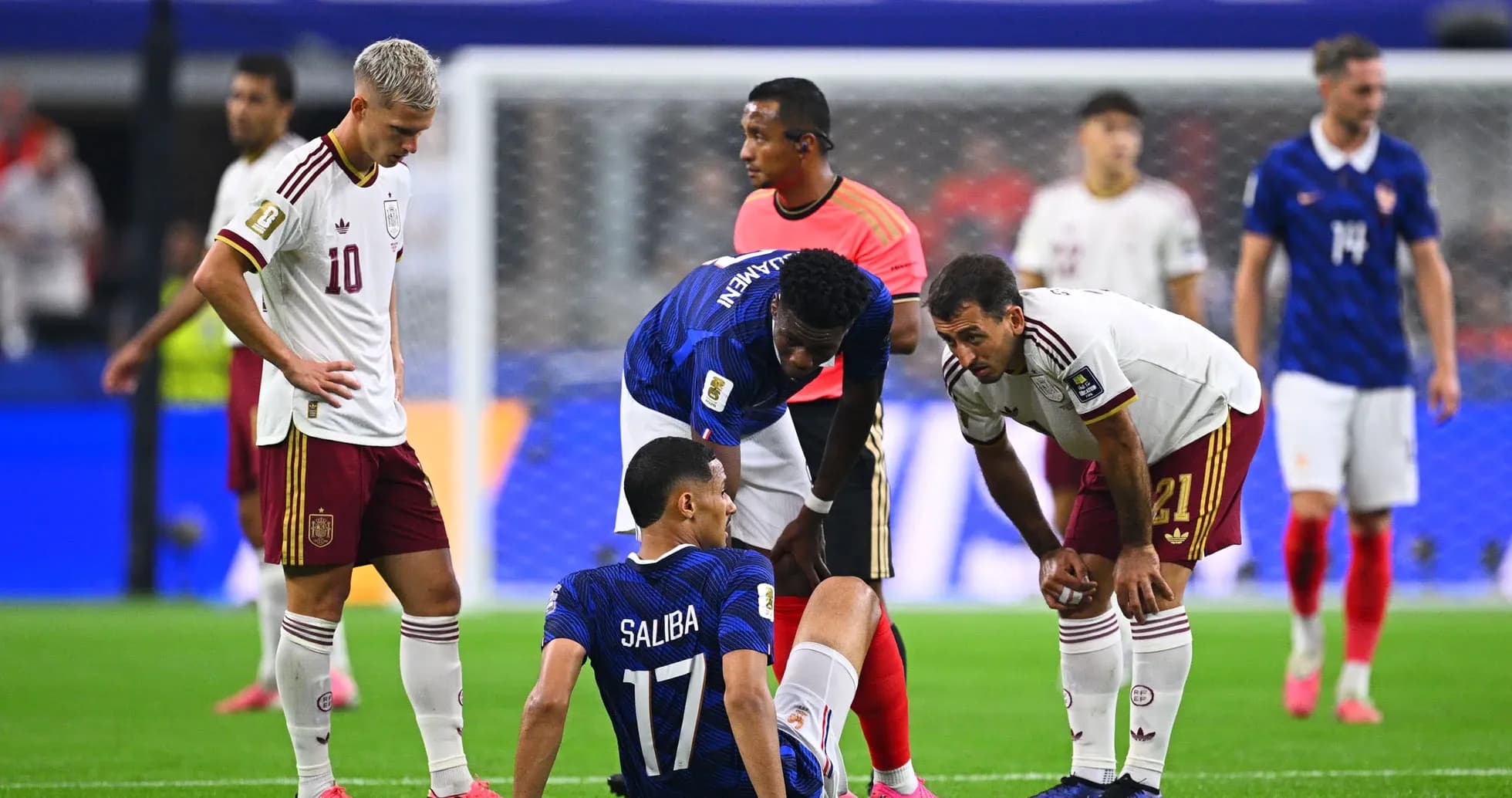
Didier Deschamps doubled down on his blueprint. Mike Maignan started behind a back four of Jules Koundé, Dayot Upamecano, William Saliba and Lucas Digne. Aurélien Tchouaméni and Adrien Rabiot formed the double pivot, freeing an aggressive three of Ousmane Dembélé, Michael Olise and Bradley Barcola behind Kylian Mbappé. This was the same 4‑2‑3‑1 that France had used in all 7 matches of their campaign, a system built to give Mbappé and Dembélé early ball and space to accelerate into.
Luis de la Fuente answered with Spain’s most trusted shape: a 4‑1‑2‑3 that blurred into a 2‑3‑5 in possession. Unai Simón marshalled a back line of Pedro Porro, Pau Cubarsí Paredes, Aymeric Laporte and Marc Cucurella. Rodri anchored, with Fabián Ruiz and Dani Olmo as dual interiors, and a front three of Lamine Yamal, Mikel Oyarzabal and Álex Baena stretching France horizontally. Five of Spain’s 7 matches this campaign had used this 4‑1‑2‑3; it was the tactical language the squad spoke most fluently.
The tactical voids in this contest were less about missing personnel and more about structural risk. France’s season numbers hinted at a side comfortable living on the edge. Overall this campaign they had kept 4 clean sheets, but they had also failed to score once, and their penalty record was telling: 2 penalties in total, 1 scored and 1 missed, a 50.00% conversion rate that underlined a slight fragility in the most high‑leverage moments. Spain, by contrast, had kept 6 clean sheets overall, including 3 at home and 3 away, and had not lost a single match. Their lone penalty of the campaign had been converted, a 100.00% return that mirrored their broader efficiency.
Discipline and tempo management were another subtle hinge. France’s yellow cards skewed late: 33.33% of their cautions came in the 76–90 minute window, with another 16.67% between 91–105 minutes. Spain’s bookings clustered differently, with 33.33% arriving between 31–45 minutes and a striking 50.00% between 91–105 minutes. In a knockout Semi-finals, that meant France were more prone to losing composure as legs tired, while Spain tended to absorb early friction and then flirt with the line in extra time. Over 90 minutes in Dallas, that composure edge mattered.
Individually, this was billed as a duel of hunters and shields. Mbappé entered as one of the tournament’s most devastating finishers: 8 goals and 3 assists overall this campaign, from 30 shots with 19 on target, plus 16 key passes at an 85% pass accuracy. He had even lived the full penalty arc, winning one and both scoring and missing from the spot. Dembélé, with 5 goals and 2 assists from 13 shots (8 on target) and 16 key passes of his own, offered a second cutting edge. Behind them, Olise had quietly been France’s creative metronome: 5 assists, 13 key passes, 355 total passes at 86% accuracy, and a surprisingly robust defensive contribution with 10 tackles and 3 interceptions.
Spain’s answer was collective, but Oyarzabal gave it a face. With 5 goals and 1 assist, 20 shots and 11 on target, plus 6 key passes, he was their penalty‑box reference point. Around him, Rodri’s presence as a lone pivot allowed Spain to keep their rest‑defence compact, protecting a unit that had conceded just 1 goal in 7 matches overall. Pau Cubarsí Paredes and Laporte, shielded by that structure, rarely had to defend in the open spaces that Mbappé usually feasts on.
In the engine room, the contrast was stark. Tchouaméni and Rabiot were tasked with compressing central zones, tracking the half‑space runs of Olmo and Fabián Ruiz while also screening passing lanes into Oyarzabal’s feet. Spain’s midfield triangle, by contrast, was designed to overload those very channels, trusting Rodri’s positioning to snuff out French transitions at source. With Olise often dropping into the right half‑space to help progression, France risked leaving Tchouaméni exposed when possession turned over.
The match itself, ending 2–0 to Spain, reflected the statistical undercurrents. Spain’s defensive record on their travels — 0.0 goals conceded per game — held firm against the most explosive attack they had faced. France’s season‑long attacking average of 2.3 goals per match overall was reduced to zero in the one game they could least afford a misfire. The French front four were pushed into wider, less dangerous zones; Mbappé’s usual vertical channels were crowded by Rodri dropping between Cubarsí and Laporte, while Cucurella and Porro stepped aggressively onto Dembélé and Barcola.
From a statistical prognosis standpoint, Spain’s progression to the final feels like the logical extension of their campaign. An unbeaten side with a +12 goal difference overall, conceding just 0.1 goals per game, imposed their control on a France team that had lived by volatility. France’s own +12 goal difference and 2.3 goals scored per match overall were not enough to override Spain’s defensive solidity and structured press. In Dallas, the more balanced squad — with the tighter back line, the calmer midfield, and the more reliable penalty and game‑management profile — ultimately dictated the story of the Semi-finals.