.svg&w=384&q=75 "Naijagoal logo")

Spain Coach Luis de la Fuente Prioritizes National Team Over Clubs
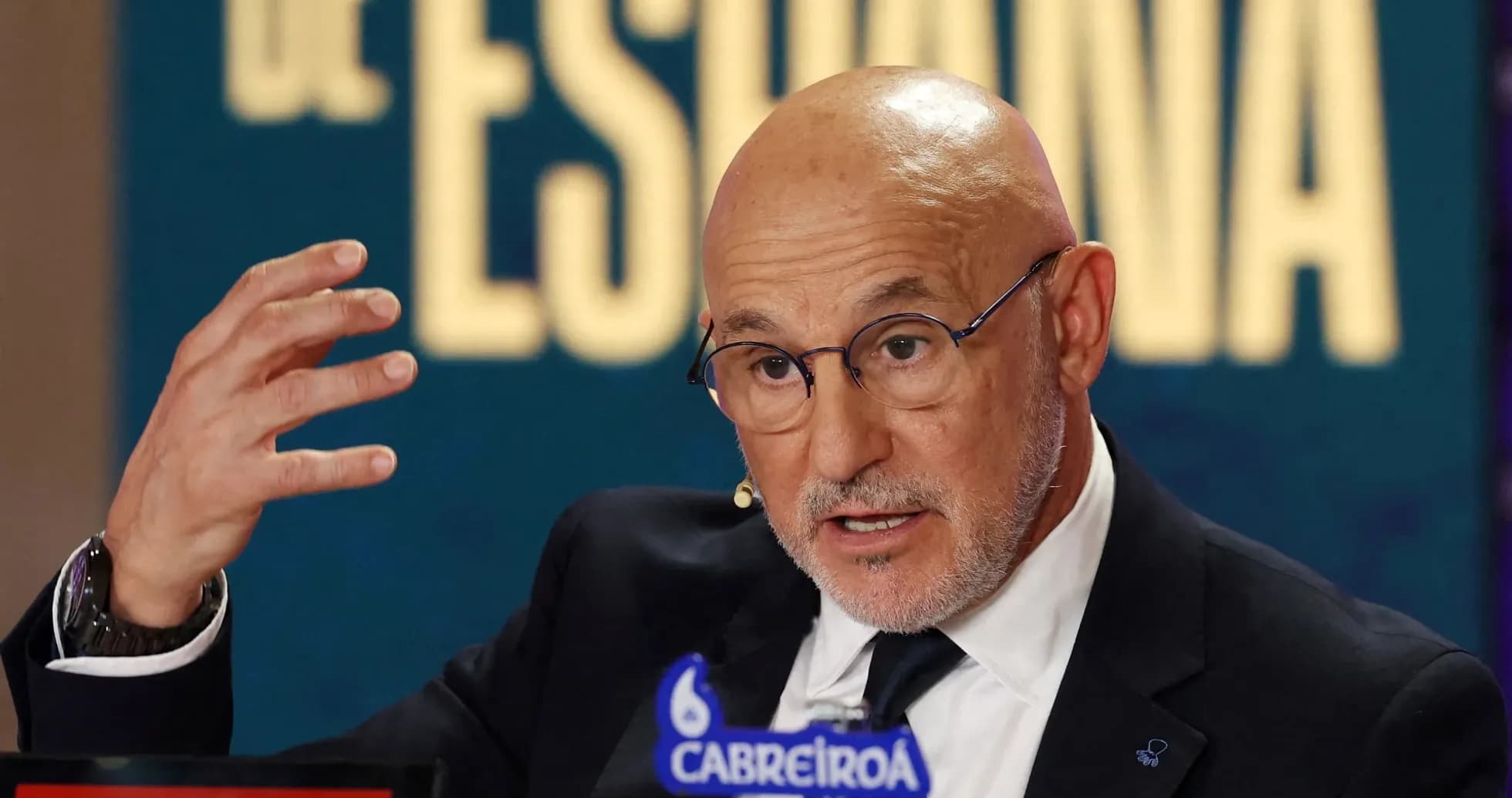
Spain head coach Luis de la Fuente walked into World Cup month with a message as sharp as his squad list: no club, no crest, no giant of European football sits above the national team.
Not even Real Madrid.
For the first time in history, Spain will go to a World Cup without a single Real Madrid player. Not one. The European champions, among the favourites for the title, will instead lean heavily on a Barcelona core: eight players from the Catalan club, none from the Bernabeu. El Clasico has slipped from La Liga into the national conversation.
De la Fuente is unmoved.
“For me, the greatest team there is – the very greatest – is the Spanish national team,” he told reporters at a media breakfast organised by RTVE and EFE, batting away any suggestion that he risks alienating Madridistas with his choices.
He insisted he does not see club colours, only the red of Spain.
“I don’t look at where players come from or their background. What matters are Spanish players who are proud to represent their country’s national team and to be part of a united nation.”
The omissions were striking. Defenders Dean Huijsen and Dani Carvajal were among the Real Madrid names left out of the 26-man squad, a group built to chase Spain’s second World Cup crown after their 2010 triumph in South Africa. Debate over the balance of the list will rage, as it always does, but De la Fuente framed his decisions in bluntly professional terms.
He said sporting criteria alone dictated the call-ups, even if any squad inevitably reflects a coach’s personal judgement.
“The day I make a mistake, fail to make the right choice, or act in a way that might be beneficial just to get a result, I’m putting my job on the line,” he said.
Barcelona’s influence is unmistakable. Joan Garcia, Pau Cubarsi, Eric Garcia, Gavi, Pedri, Dani Olmo, Lamine Yamal and Ferran Torres form the largest club bloc in the group, while seven other players come from the Premier League. It is a squad built on youth, technique and positional flexibility, with a clear nod to the possession-heavy style that has long defined Spain at their best.
Spain will open Group H against Cape Verde before facing Saudi Arabia and Uruguay. The calendar looks manageable on paper. The fitness bulletin does not.
Lamine Yamal, Nico Williams and Mikel Merino all arrive with recent injury concerns. De la Fuente, though, sounded relaxed about their condition.
“We’re in contact with all the clubs,” he said. “We know that these players are in good physical shape; each one is making good progress in their recovery process. I’m very optimistic; I think they’ll be available for the first match.”
Then came the caveat. The staff are thinking beyond the first whistle in Group H.
“If we have to take a risk, mate, we’ll take it in a World Cup,” he said. “But… our view goes beyond the first match and also the second. So, if we have to wait a little longer, we’ll wait.”
The tightrope is obvious: protect key players now, or unleash them early and trust their bodies to hold. No decision will be scrutinised more closely than the handling of Lamine Yamal.
At 18, the Barcelona winger is expected to shoulder a heavy share of Spain’s attacking threat. He is the fresh face on the posters, the name on the back of the new shirts, the player many expect to light up the tournament. De la Fuente, though, painted a picture of a teenager ready for the weight.
“Yamal is absolutely thrilled and raring to go,” he said. “He’s a very young lad, just 18, but he has a remarkable sense of maturity and knows that this is his moment.
“You have to seize the moment. And he knows this is his moment.”
The badge on his chest will matter more than the one on his club shirt. In De la Fuente’s Spain, that is the only hierarchy that counts.