.svg&w=384&q=75 "Naijagoal logo")

South Africa's Frustration in World Cup Tune-Up Against Nicaragua
South Africa wanted rhythm. They left with doubt.
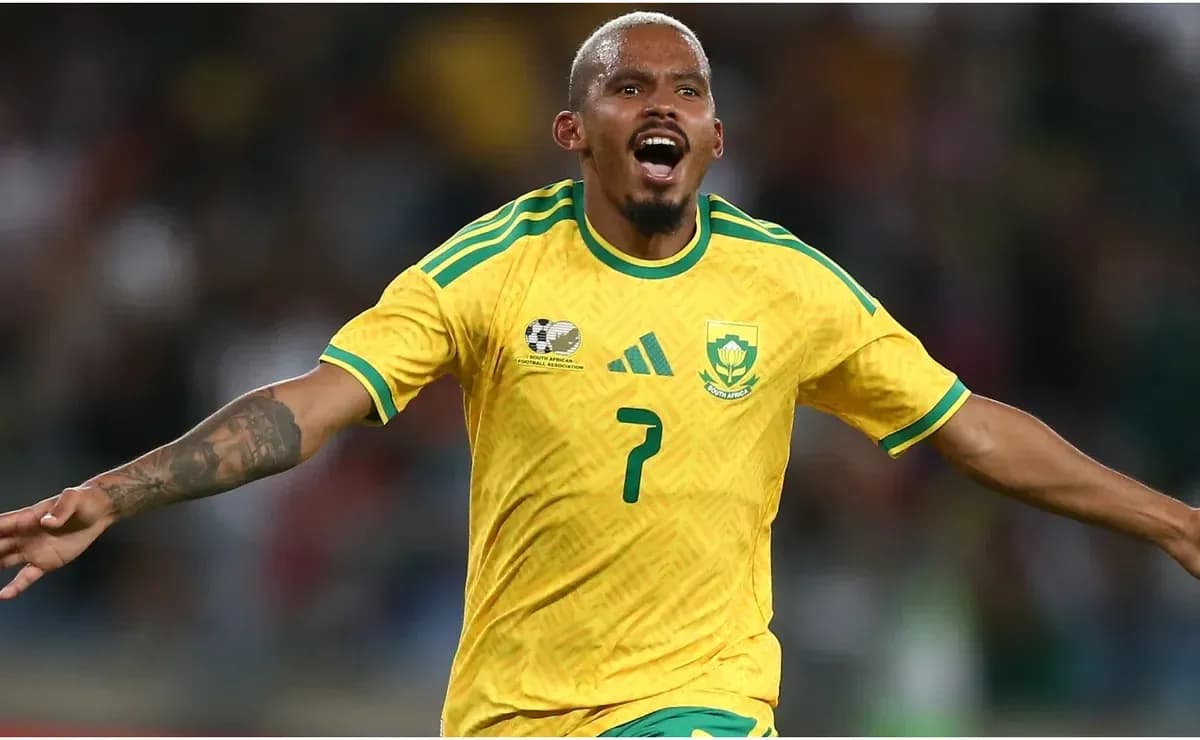
In their final stretch of preparation for the 2026 World Cup, Bafana Bafana dominated Nicaragua in Orlando but failed to land a single decisive blow, stumbling to a 0-0 draw that felt far more damaging than the scoreline suggested.
The World Cup ticket is already stamped. Group A awaits, with Mexico, Czechia and South Korea looming. This was supposed to be a confidence-builder. Instead, it turned into a 90-minute reminder of how cruel football can be when control is not matched by conviction.
Pineda’s night, South Africa’s frustration
From the opening whistle, the pattern was clear. South Africa pushed, Nicaragua retreated. Within five minutes, Ricardo Goss and his back four were camped almost at halfway, squeezing the game and probing for gaps.
The first real warning came on 16 minutes. Kamogelo Sebelebele carved open the right flank and whipped in a cross that begged for a touch, but Themba Zwane couldn’t steer it on target. It would become a theme: promising build-up, wasteful finishing.
Nicaragua’s response was sporadic. A Moncada effort after a corner flew wide on 12 minutes, Raheem Cole tried his luck from distance around the half-hour mark, but both attempts drifted high and harmless. The Central Americans were hanging in, not threatening.
South Africa, though, kept letting them off the hook. A free kick in a dangerous area on 34 minutes was launched into the stands. Sebelebele then spurned a huge opening when Nicaragua’s defence switched off, only for a last-ditch recovery to smother the danger.
Then came the moment that should have broken the deadlock – and didn’t.
Foster’s missed penalty shifts the mood
On 42 minutes, Sebelebele went down in the box and the referee pointed to the spot. Nicaragua protested furiously, sensing a soft call, but the decision stood. It was a golden chance for Lyle Foster to put a nervous first half to bed.
He hit the post.
His run-up looked hesitant, the strike straight into the woodwork. The ball cannoned away, and with it went the clearest opportunity of the night. South Africa trudged into the dressing room at half-time having been superior in every area except the one that counts.
Nicaragua, usually overwhelmed on the international stage, had survived. And they had a goalkeeper who was just getting started.
Appollis ignites, Pineda refuses to yield
The restart brought changes. South Africa rolled the dice, with Oswin Appollis, Thapelo Maseko, Iqraam Rayners, Relebohile Mofokeng and Sipho Chaine all introduced. The impact was immediate.
Appollis, in particular, transformed the tempo. Within minutes he was isolating defenders, driving at them, stretching the game with pace and direct dribbling that South Africa had badly missed in the first half. On 49 minutes, he twice forced Adonis Pineda into action, the Nicaraguan goalkeeper standing firm on both occasions.
The pressure built. A deflected shot on 54 minutes almost looped over Pineda, who recovered to claw it under control. Maseko cut inside and unleashed another dangerous effort on 61 minutes, again repelled by the man in green.
By then, one truth was obvious: Pineda was the reason the scoreboard still read 0-0.
Nicaragua offered almost nothing going forward. Their threat dwindled to the odd foray, a reminder they were still there rather than a genuine attempt to steal the game. Their entire plan hinged on defensive discipline and a goalkeeper having the game of his life. It worked.
Misses pile up, doubts creep in
As the clock ticked into the final 20 minutes, the match sagged into what felt like a grey zone. South Africa still had the ball, still camped in Nicaraguan territory, but the sharpness had gone. Attacks slowed, passes went sideways, the earlier urgency dulled by frustration.
Then the chances came again – and went again.
Mofokeng swung and missed completely at a teasing cross from Appollis on 57 minutes. Later, he dragged a low shot wide with the goal in sight on 84 minutes. Each miss drew a deeper sigh from the stands and a louder roar from Nicaragua’s bench.
The defining sequence arrived on 81 minutes. A header was deflected goalwards, Pineda reacted, then sprang up to smother the rebound in a superb double save. It summed up the night: South Africa hammering on the door, Pineda refusing to open it.
Six minutes of added time felt like a final invitation to salvage the result. South Africa threw bodies forward, but the pattern never changed. Nicaragua blocked, cleared, scrambled and survived.
When the whistle finally blew, their players celebrated a historic draw. For a nation that “usually gets trumped on the world stage,” this was a statement of resilience, built on a rock-solid defensive performance and a goalkeeper who owned the evening.
A warning before Group A
For South Africa, the emotions were very different. They had the better squad. They were faster, stronger, more inventive. They controlled territory, created chances from the right wing, then again through Appollis and Maseko after the break.
They still could not score.
That lack of punch, already evident in the first half, now looms over their World Cup campaign. Mexico, Czechia and South Korea will not allow as many looks at goal as Nicaragua did. They will not be as timid in attack, either.
The structure is there. The energy is there. The defensive platform looked comfortable. But in a sport decided in the penalty area, South Africa left the Orlando Amstel Arena with a nagging question hanging over them.
When the World Cup starts, and the chances are this good, will they finally take them?