.svg&w=384&q=75 "Naijagoal logo")
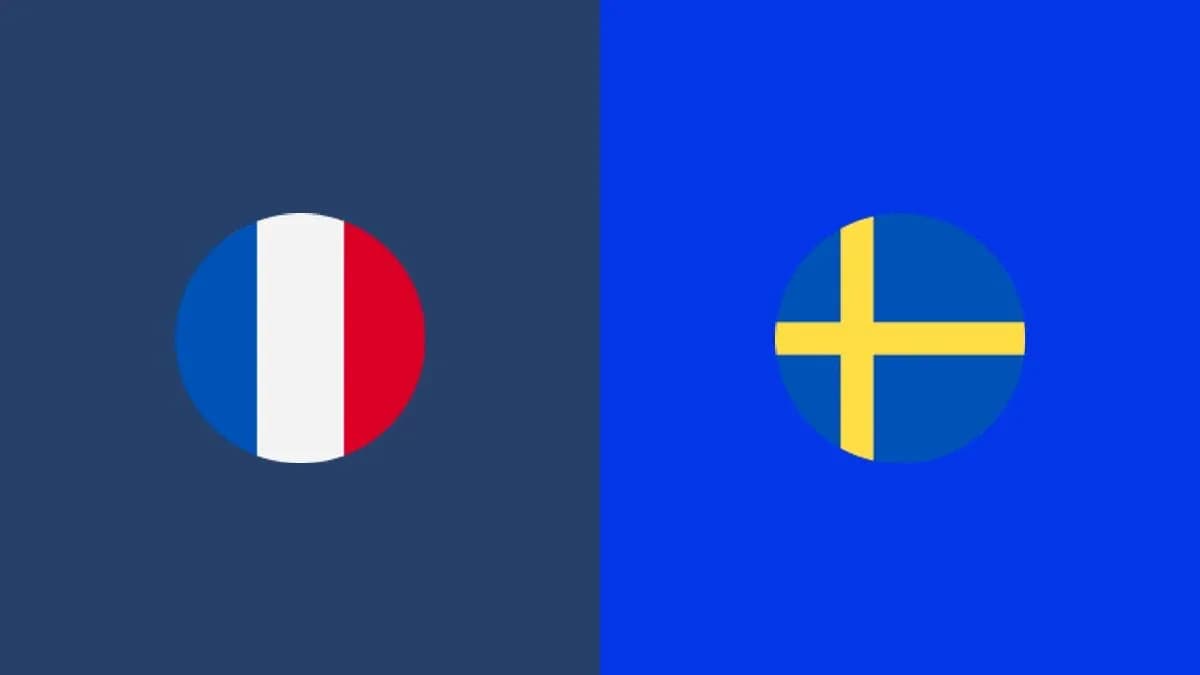

France vs Sweden: Deschamps’ Last Dance in World Cup Knockouts
The World Cup knockout rounds open a new chapter at New York New Jersey Stadium on 30 June 2026, and France arrive as if they’ve read this script a hundred times before. Sweden turn up hoping to rip it up.
Kick-off is set for 21:00 GMT, 17:00 EST. The stakes are far later in the night than that.
Deschamps’ farewell charge
Two-time world champions, perfect in the group, and led by a coach who has already announced his goodbye. France are not just favourites; they are a fully formed machine rolling into the last 32 with momentum and menace.
Didier Deschamps has guided Les Bleus through another serene group stage: three wins from three, ten goals scored, two conceded. They eased past Senegal 3-1, handled Iraq 3-0, and then dismantled Norway 4-1 to close the section with a flourish.
That final game told its own story. Ousmane Dembélé, often a supporting act behind Kylian Mbappé, stepped into the spotlight with a hat-trick that underlined the depth of France’s attacking arsenal. Even when Mbappé is not the headline, the cast around him can tear opponents apart.
Deschamps’ side arrive in sharp form overall: four wins in their last five, the only blemish a pre-tournament friendly defeat to Ivory Coast. Since the World Cup began, they have looked like a team that knows exactly how these weeks are supposed to unfold.
For Deschamps, who has confirmed he will step down after this tournament, every knockout game now carries the feel of a farewell tour. He has no reported injuries or suspensions to cloud his thinking. This is his full hand, one last time.
Sweden: fragile, fearless, and still standing
Across the halfway line stands a very different story.
Sweden, under Graham Potter, slipped into the Round of 32 as one of the best third-placed finishers. Their route has been jagged, uneven, and occasionally chaotic. It has also been just good enough.
They opened with a brutal 5-1 defeat to the Netherlands that exposed a gulf to the elite. Then came the response: a 5-1 win over Tunisia that hinted at something more expansive, more dangerous. A 1-1 draw with Japan in their final group match nudged them over the line with four points and a perfect symmetry of seven goals scored and seven conceded.
That record sums them up. Potent going forward, porous at the back, and impossible to fully trust. Over their last five matches, Sweden have scored ten and shipped ten. When they attack, they can cut loose. When they defend, they can unravel.
Now they must face a French frontline that has barely needed second gear.
Potter’s problems are clearest in central defence. Isak Hien is out injured, ripping a hole in the back line. The solution is likely to be a reshuffle: Victor Lindelöf stepping back from midfield into central defence, with Tottenham’s teenage midfielder Lucas Bergvall pushed into the engine room to cover.
No suspensions, but one key absentee and a structure under strain. Sweden arrive as the underdogs, unstable but dangerous enough to worry anyone who lets them run.
Midfield control vs vertical chaos
The battle lines are clear.
France will look to suffocate the game with structure and quality. Deschamps’ preferred double pivot of Aurélien Tchouaméni and Adrien Rabiot gives him control in the centre, the platform from which everything else flows. With that base secure, the advanced creators can go to work.
Michael Olise and Désiré Doué drift into the half-spaces, knitting passes, dragging markers, and opening corridors for Mbappé to isolate full-backs on the flank. Dembélé, fresh from his hat-trick against Norway, attacks from the opposite side, either stretching the pitch or darting inside to shoot.
This is not a team reliant on one star. It is a wave of them.
Sweden will not try to out-pass France. Their threat lives in the spaces France leave behind. Potter’s plan leans on direct, vertical transitions – win the ball, turn quickly, and run hard into the gaps.
Anthony Elanga, boosted by a long-range strike against Japan, offers searing pace. Alexander Isak and Viktor Gyökeres bring movement, power, and finishing. If Sweden can break cleanly, those three can turn a French high line into a race they might actually win.
The risk is obvious. Lose the ball cheaply, and France come back in numbers, with quality in every lane. But if Sweden can survive long enough to spring two or three perfect counters, the tie changes complexion.
Fault lines at the back
For all France’s authority, there are questions at the heart of their defence.
William Saliba, outstanding for Arsenal, was rested against Norway with a back issue. He is expected to play through the discomfort here to reclaim his starting spot alongside Dayot Upamecano. Deschamps will want his first-choice back four in front of Mike Maignan, especially against Sweden’s runners.
When France lose focus without the ball, they can look oddly passive, slow to track runners and reactive rather than ruthless. Those moments have been rare in this tournament, but knockout football punishes lapses that group stages sometimes forgive.
Sweden’s issues are less subtle. With Hien sidelined, the entire defensive shape shifts. Lindelöf, long a mainstay at the back, returns to central defence, leaving Bergvall to shoulder responsibility in midfield. That change could ripple through the team: less experience in the middle, a retooled partnership at the back, and a goalkeeper who will be tested relentlessly.
Oliver Zetterström must own his penalty area. Dembélé and Olise will look to carve open the channels between full-back and centre-back; crosses, cut-backs, and low balls flashed across the six-yard box will demand decisive goalkeeping and immaculate positioning from defenders.
The Swedish full-backs cannot switch off. One misread overlap, one late recovery run, and Mbappé or Dembélé will be through.
Likely line-ups and key duels
France are expected to line up with something close to their strongest XI:
Maignan; Koundé, Upamecano, Saliba, Hernández; Tchouaméni, Rabiot, Olise, Dembélé, Doué; Mbappé.
Sweden’s likely response:
Zetterström; Lagerbielke, Lindelöf, Gudmundsson; Bernhardsson, Bergvall, Ayari, Stroud; Elanga, Gyökeres, Isak.
In midfield, Tchouaméni and Rabiot against Bergvall and Yasin Ayari feels like a mismatch on paper – experience, physicality, and rhythm in France’s favour. But if Bergvall settles early and Ayari can break lines with his passing, Sweden might find enough possession to launch those counters.
Up front, Mbappé versus Sweden’s right side will draw the spotlight, yet the game could just as easily tilt on the opposite flank, where Dembélé runs at defenders already worrying about the space behind them.
History and the weight of expectation
Recent history leans towards France. The last meeting, in November 2020, ended 4-2 to Les Bleus in the UEFA Nations League. Sweden did claim a 1-0 win in Stockholm earlier that year, and over the last five encounters France hold three victories to Sweden’s one, with another French win in a 2014 friendly.
They also split their World Cup qualifiers in 2016 and 2017, each winning on home soil. Sweden know what it is to bloody France’s nose. They also know how punishing France can be when the balance tips the other way.
France arrive as Group I winners, immaculate and imposing. Sweden slip in from third place in Group F, scarred but alive.
One side carries the burden of expectation, the other the freedom of having already defied it.
On a knockout night in New York New Jersey, with Deschamps chasing one last deep run and Potter trying to conjure an upset from an unsteady defence, something has to give. Will it be France’s grip on control, or Sweden’s grip on this tournament?