.svg&w=384&q=75 "Naijagoal logo")
Sevilla Edges Espanyol in Critical La Liga Clash
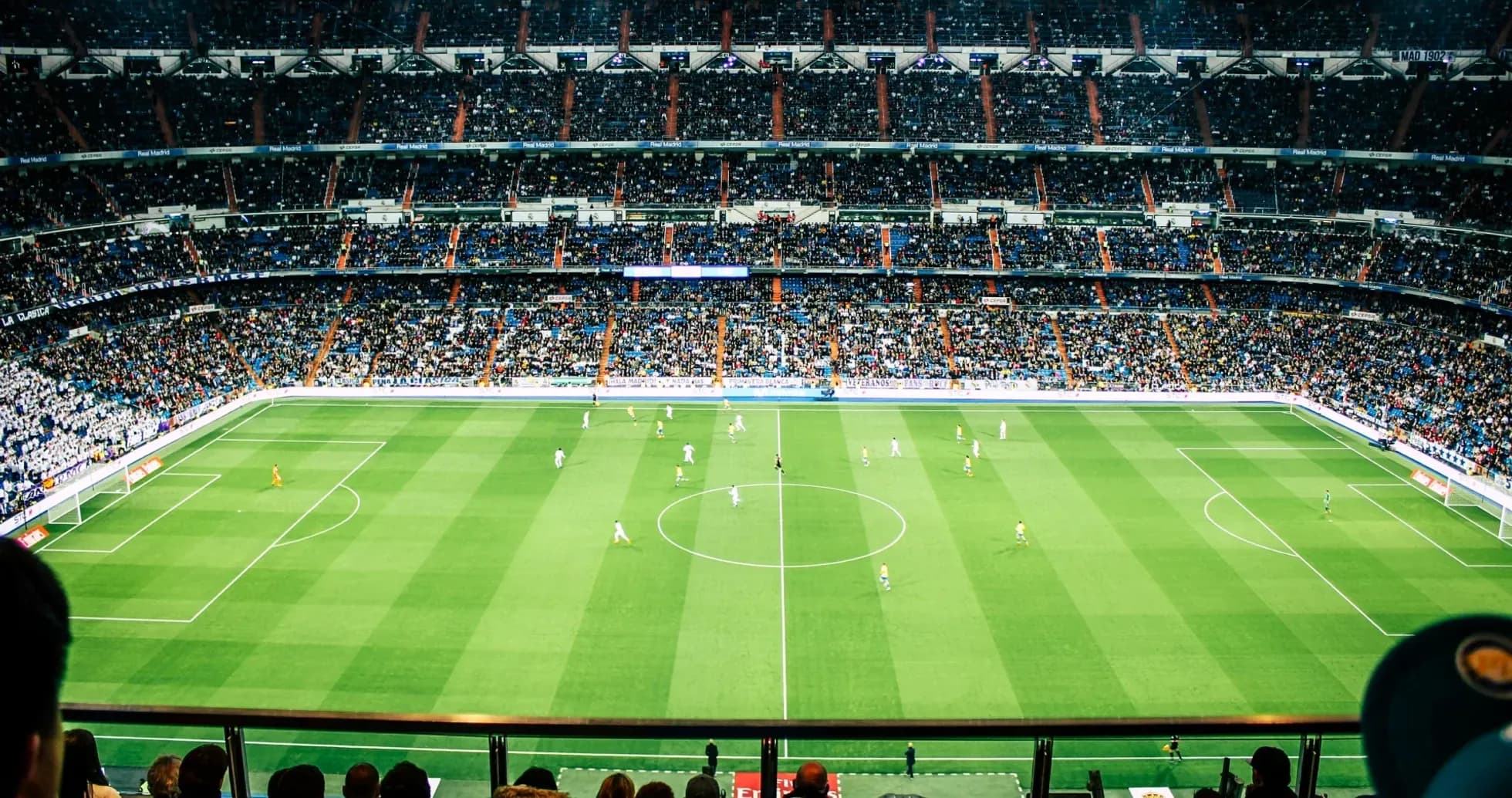
The Ramón Sánchez Pizjuán has seen its share of fraught run-ins with the relegation battle, but this one felt like a six-pointer disguised as a mid-table skirmish. Sevilla, 13th in La Liga heading into this game with 40 points and a goal difference of -13, edged Espanyol 2–1 in a contest that was as much about identity as it was about the scoreboard. The visitors arrived one rung below in 14th, on 39 points with a goal difference of -15, knowing that a result in Sevilla could flip the narrative of their season.
Luis Garcia Plaza set his side up in a 4-4-2 that looked, on paper, conservative. In reality, it was a statement of intent to reclaim a stadium where Sevilla have been erratic: at home this season they had played 18, winning 7, drawing 4 and losing 7, scoring 24 and conceding 24. Symmetry on the ledger, chaos in the performances. Opposite him, Manolo Gonzalez doubled down on Espanyol’s season-long backbone, the 4-2-3-1 that has been his most-used structure (17 times in total), designed to balance a modest attack with an often overworked back line that has shipped 53 goals overall.
The absences framed the tactical voids. Sevilla were without M. Bueno and Marcao, both listed as missing with injuries, stripping depth and left-footed balance from the defensive rotation. It nudged Garcia Plaza toward a back four of J. A. Carmona, Castrin, K. Salas and G. Suazo – a unit that had to lean on organisation rather than pure individual dominance. For Espanyol, the losses of C. Ngonge and J. Puado to knee injuries robbed Gonzalez of two vertical threats who might have stretched Sevilla’s high line and punished transitions.
Discipline was always going to be a hidden hinge. Across the season, Sevilla’s card profile shows a combustible edge late in games: their yellow cards peak between 91-105 minutes at 19.80%, with another 18.81% between 76-90. Espanyol, meanwhile, are even more volatile at the death, with 29.89% of their yellows coming between 76-90 minutes and a further 16.09% in added time. This was a match almost pre-programmed to fray in the final quarter.
Within that context, the personalities on the pitch mattered. J. A. Carmona, La Liga’s leading yellow-card collector this season with 12, patrolled the right side of Sevilla’s defence. His season numbers – 61 tackles, 7 blocked shots and 35 interceptions – speak to a defender who lives on the front foot, stepping into duels and taking risks. His duel volume (296 contested, 160 won) underlines why he is both a defensive asset and a disciplinary time bomb. On the other side, Espanyol’s right-back O. El Hilali brought similar edge: 68 tackles, 13 successful blocked shots and 38 interceptions, plus 9 yellows of his own. The flanks were less corridors and more collision zones.
In midfield, the engine rooms defined the rhythm. For Sevilla, L. Agoume anchored the central band of the 4-4-2. Over the campaign he has logged 2481 minutes, with 1219 passes at 80% accuracy and 62 tackles, a classic metronome-enforcer hybrid. His 47 interceptions and 54 fouls committed show a player who understands both the geometry and the dark arts of midfield control. Alongside him, N. Gudelj added positional discipline, allowing the wide players – R. Vargas and C. Ejuke – to push high and pin Espanyol’s full-backs.
Espanyol’s response was to lean heavily on Edu Expósito as their creative axis in the 4-2-3-1. Expósito has been one of La Liga’s most productive playmakers this season: 925 passes, 75 key passes and 6 assists, with a rating of 7.07. His 41 dribble attempts (30 successful) and 40 fouls drawn make him the natural “engine” in possession and the magnet for contact when Espanyol look to climb the pitch. Behind him, U. Gonzalez and Exposito (in the double pivot) had to screen transitions, but without the ball-winning volume of a pure destroyer, they were always at risk when Sevilla broke through the first line.
Up front, Sevilla’s choice of a front two – N. Maupay and Isaac Romero – was a deliberate “hunter” pairing against an Espanyol defence that has conceded 30 goals on their travels and 53 in total. Romero, who has 4 league goals and 30 shots this season, thrives on chaos in the box, while Maupay’s movement between the lines pulls centre-backs into uncomfortable zones. That dynamic targeted Espanyol’s central pairing of F. Calero and L. Cabrera, who have often looked more comfortable defending their own box than chasing runners into midfield.
On Espanyol’s side, R. Fernandez Jaen led the line, but much of the latent threat sat on the bench. Pere Milla, one of the league’s more combative forwards with 6 goals, 45 shots and a red card to his name, and C. Pickel, a high-impact, high-risk midfielder with both a straight red and a yellow-red this season, offered Gonzalez the option to tilt the game toward aerial bombardment and second-ball chaos. Their disciplinary records, though, made them double-edged weapons in a fixture already primed for late-card drama.
From a statistical prognosis, Sevilla’s marginally sharper attack and home environment always tilted the scales. Overall this campaign they average 1.2 goals for and 1.6 against, but at home the picture is cleaner: 1.3 scored and 1.3 conceded per match. Espanyol, by contrast, sit at 1.1 goals scored and 1.5 conceded overall, with their away profile (1.1 for, 1.7 against) underlining a side that tends to be outgunned on their travels.
Layer in penalties and margins become clearer. Sevilla have been perfect from the spot this season, scoring all 5 penalties with no misses. Espanyol also boast a 100.00% record from 3 penalties, but with fewer opportunities. In a match where xG would likely have tilted toward the home side – given Sevilla’s stronger home scoring rate and Espanyol’s softer away defence – that reliability from 11 metres was a quiet but significant edge.
Following this result, the 2–1 scoreline felt like a crystallisation of the season-long trends: Sevilla’s volatility channelled into just enough attacking clarity, Espanyol’s structural solidity undermined by lapses at the back and mounting late pressure. The hunters – Maupay and Romero – found just enough joy against a defence that bends too often, while the shields of Espanyol’s double pivot and back four could not quite hold. In a table defined by fine margins, this was a night where squad profiles, disciplinary histories and season-long numbers all converged on the same verdict.