.svg&w=384&q=75 "Naijagoal logo")

Scottish Football's Struggles: A Season of Discontent
Only the most deluded optimists could look at Scottish football right now and see a picture of health. A new domestic season usually brings that familiar twinge of anticipation. This year, it drags in a hangover.
The World Cup was supposed to be a landmark. It became an indictment. Scotland stumbled out, the campaign unravelled, and when the dust settled the people in charge said almost nothing. No roadmap, no reset, no admission of failure.
Mike Mulraney, the Scottish FA president, has vanished from view since he was spotted in the background of a Trump Tower photo op with Gianni Infantino and the US president. Ian Maxwell, the chief executive, surfaced briefly after Steve Clarke resigned, to rail against “hysterical commentary” about Scotland’s performance. This, from an organisation that had just handed Clarke a four-year contract before the squad even boarded the plane to the United States. Executives who chuckled at the idea that such a deal might be reckless now find themselves presiding over a vacuum.
Perhaps Mulraney and Maxwell are buried in the search for Clarke’s successor. They deserve the chance to appoint a coach capable of managing the unavoidable transition in an ageing squad. The problem lies beyond the dugout. The World Cup didn’t just expose tactical flaws; it dragged into the light a structural neglect the leading clubs have been happy to ignore.
The anger that followed Scotland’s limp exit has not dissipated. It has simply shifted focus as the Premiership restarts. The mood is brittle. It could turn poisonous.
Discontent in the stands
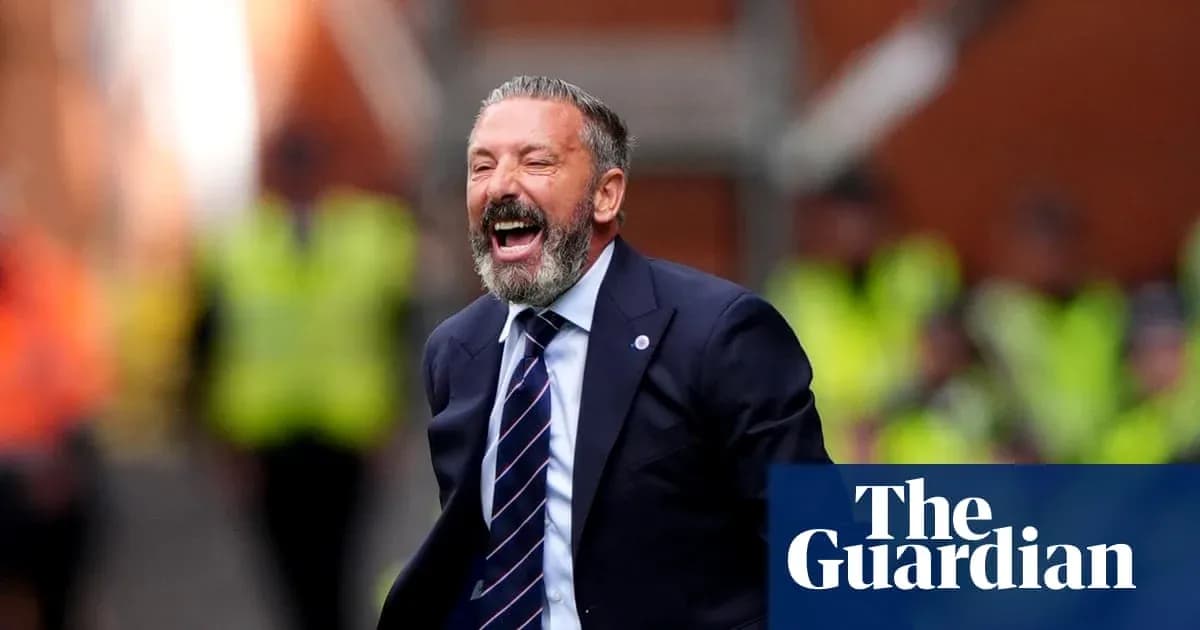
Celtic enter the season as champions and favourites, but their support is far from content. Many fans see a boardroom grown smug and distant, more in love with balance sheets than boldness. Across the city, Rangers have rolled the dice on Derek McInnes, a manager whose appointment was greeted with fury in the east end. His Ibrox credentials are strong; his popularity with Celtic fans is non-existent. That friction will not be slow to surface.
Then there is Hearts. Nobody connected with the Edinburgh club has had the emotional space to properly process what happened at the end of 2025‑26. Hearts were minutes from a first title in 66 years. It slipped through their fingers. The bitterness was inflamed on 11 June when the Scottish Professional Football League finally published disciplinary outcomes from the pitch invasion that forced the early end of Celtic’s title-clinching match against them.
The sanctions landed like a bad joke. Nestled among token punishments for Hamilton Academical, Inverness and Stenhousemuir was a modest fine for Celtic and a suspended, almost symbolic, ticket reduction. Hearts fans saw leniency; many saw confirmation that the system bends for the biggest.
Rangers supporters, never short of a grievance, had actually been relatively muted until McInnes was hit with a touchline ban for his criticism of a refereeing decision. The club has already taken issue with parts of an independent report into the mayhem that followed their Scottish Cup defeat to Celtic in March. Motherwell, meanwhile, are consulting lawyers after being fined by the Scottish FA over a social media video.
And that is before you get to the European embarrassment. Hibs’ 2-0 defeat in Kosovo in the first leg of their qualifier last week sent their hardcore into online meltdown. The result barely raised an eyebrow elsewhere. These days, Scottish clubs stumbling in early European rounds is a grimly familiar routine.
Celtic’s muscle, Rangers’ reset
Not every storyline is bleak. Celtic have at least offered their fans a glimpse of ambition. The signing of Kasper Høgh for a club-record fee was a rare moment of financial muscle-flexing that matched supporter expectations. It is also the most intriguing transfer of the summer.
The 25-year-old arrives with the usual caveat. Players leaving the cosseted, well-drilled world of Bodø/Glimt are often viewed with suspicion. Could they thrive outside that carefully constructed ecosystem? Had his fee been higher, or his profile more hyped, a Championship club might have taken him long ago. Instead, Celtic move first, betting on a forward whose physical presence and direct running should translate well to Scottish pitches and Scottish winters.
The challenge in Glasgow’s east end is not just recruitment but retention. Arne Engels and Alistair Johnston are obvious candidates to attract serious bids. If they go, Celtic must replace them without turning another hefty net profit that flatters the accounts but leaves the squad thinner. Høgh is a start, not a solution.
Across the city, Rangers have spent heavily and often in recent seasons, only to watch others parade the silverware. The money has gone, the trophies largely have not. The disconnect has fuelled an anger that an American ownership group has been oddly reluctant to confront head-on.
McInnes, though, feels like a course correction. Rangers open the league season at Dundee United on Friday with a manager who understands the club’s demands and scars better than most of his predecessors. His first significant addition, Vanja Dragojevic from Partizan Belgrade, looks a shrewd piece of business in midfield. McInnes has moved to stiffen the spine before chasing glamour further forward.
He has never lacked drive or stamina for the job he has long coveted. This Rangers side should be harder, more coherent, less fragile. Yet the cold logic of recent history still favours Celtic. They know how to navigate a title race. Rangers are trying to remember.
Hearts, hope and hard lessons
Back in Edinburgh, Hearts are still living with the aftershock of last season. Coming so close to a first title since the 1960s, only to see it wrenched away, leaves scars that do not heal in a single summer. McInnes’s exit for Ibrox, the arrival of Wouter Vrancken with a new philosophy, and the surge in expectation around Tynecastle have created a volatile mix.
Hearts’ rise came ahead of schedule. Suddenly, a club that had drifted in and out of national relevance is being discussed well beyond Scotland. Yet the step up in class was laid bare in Champions League qualifying, where Sturm Graz brushed them aside. Vrancken has work to do. Hearts will need patience as well as ambition if they are to turn last season’s near miss into something more sustainable.
Motherwell offer a different kind of template. Under Jens Berthel Askou and in the period that followed, they showed that clubs outside the Glasgow-Edinburgh axis do not have to cling on for survival. They played progressive football, filled seats and impressed observers beyond their traditional catchment. The multimillion-pound sales of Elijah Just and Elliot Watt vindicated a strategy that looks beyond the usual markets and tired ideas.
St Mirren are trying to follow a similar path, talking openly about blooding more young players and playing with more adventure. Kilmarnock hinted at that kind of evolution under Neil McCann at the tail end of last season. Aberdeen, with Stephen Robinson now properly bedded in, should be a more forceful presence.
There is even a small, symbolic victory: only one artificial pitch remains in the Premiership. For a league that prides itself on intensity and tradition, the return of more natural surfaces matters.
A game still searching for a cure
Strip away the noise and one truth remains. Football still grips Scotland. It fills conversations, dominates weekends, shapes identities. The obsession is intact. The health of the sport is not.
The new season should feel like a clean page. Instead it arrives like a medical chart, crowded with old symptoms and fresh warnings. Governance that ducks accountability. Clubs that think short term. Supporters who see through the spin and respond with fury.
There is still talent, still passion, still possibility. What is missing is the sense that those at the top are willing to think differently, to confront the flaws that the World Cup so brutally exposed.
A fresh campaign can only really excite if it carries the promise of fresh ideas. Will Scottish football finally find them, or simply brace itself for another year of the same arguments, the same mistakes, the same slow decline?