.svg&w=384&q=75 "Naijagoal logo")

Roshn League's World Cup Reflection: No Champions, Yet Significant Impact
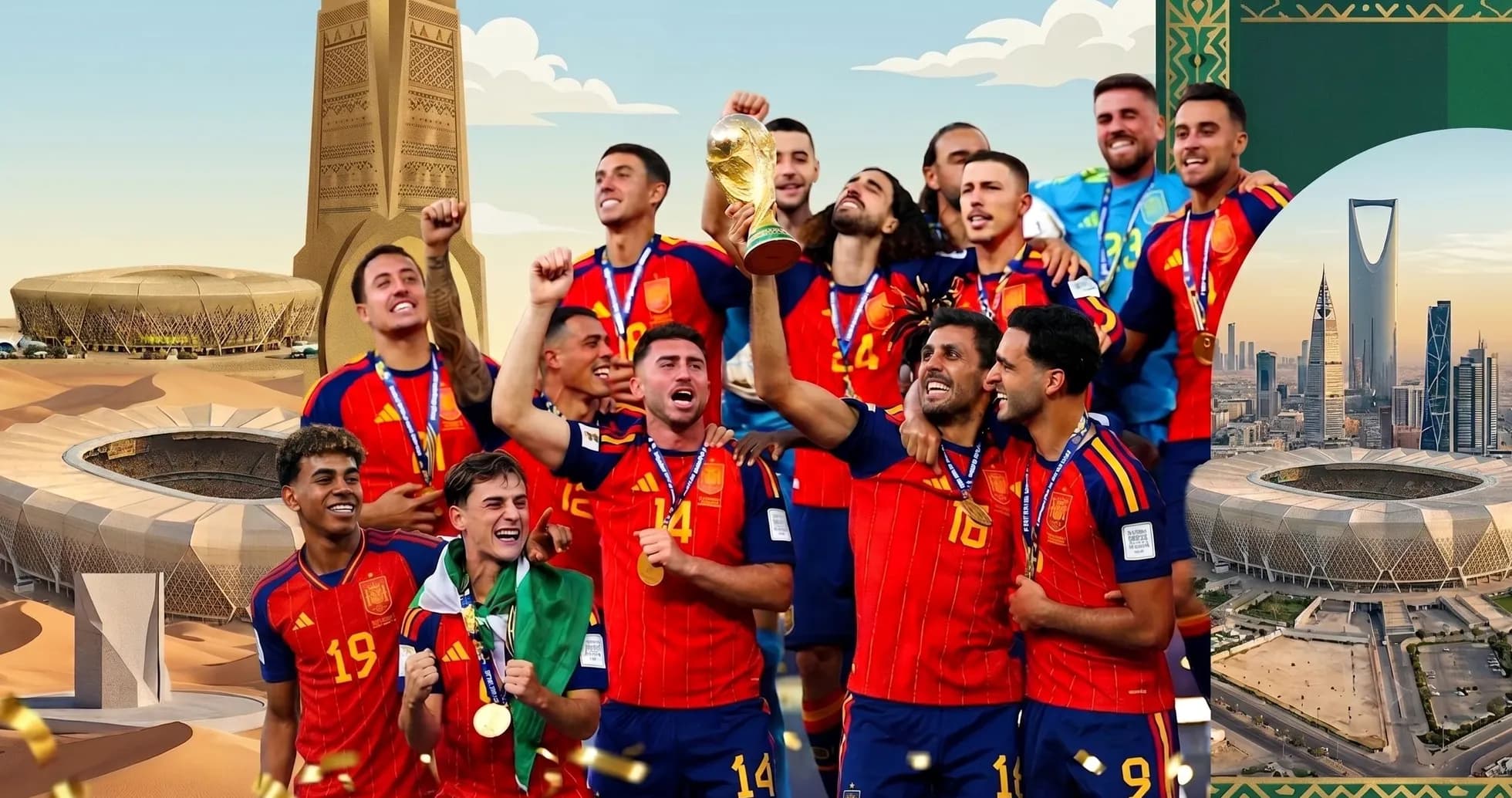
Two summers ago, the Saudi Roshn League could point at the podium and say: “Those are ours.” Euro 2024 ended with Spain on top of Europe and two of the league’s own, Nacho Fernandez and Aymeric Laporte, lifting the trophy.
This time, as Spain climbed the final step of the footballing mountain in 2026, the picture was brutally different.
Spain are world champions again, crowned after a tight, tactical final against Argentina settled by a single goal, a triumph built on control, discipline and a back line that barely flinched. The Roshn League is full of Spanish names now, yet not one of them made Luis de la Fuente’s squad. Not a single Saudi-based player stood in that guard of honour for the World Cup trophy.
For a competition that has invested heavily in European pedigree, that absence stings.
World champions that got away
The most striking case sits at the heart of Spain’s new golden generation. Aymeric Laporte, once paraded in Riyadh as the defensive pillar of Al-Nassr, is now a World Cup winner again with Athletic Bilbao.
He didn’t just take part. He anchored a defensive wall alongside Pau Cubarsi, shutting out elite attacks and giving Spain the platform to go all the way. The same Laporte who, only a season earlier, had walked away from Cristiano Ronaldo’s Al-Nassr after a sour ending under Italian coach Stefano Pioli.
Pioli sanctioned him, banished him from the group, made him train alone, and left him out of the run-in. Laporte later spoke openly about the “difficult” atmosphere at the club, a dressing room churned by constant changes in management and coaching staff. One year on, he is back in Bilbao, back at the top of the game, and back on the biggest stage with a medal around his neck.
For the Roshn League, it is a brutal reminder of what slipped through its fingers. Laporte is not alone. Spain’s World Cup-winning squad is dotted with players who flirted with Saudi moves, attracted interest, or were heavily linked, only for talks to stall and deals to collapse. Had just one or two of those transfers crossed the line, the league would now be able to boast a current world champion in its ranks.
Instead, the Saudi clubs watched from afar as others reaped the glory.
No world champions, but a different kind of victory
On paper, the Roshn League failed in one clear respect: not a single player from Spain’s triumphant squad plays in Saudi Arabia. On the balance sheet and on the pitch, though, the World Cup still delivered.
Forty-nine Roshn League players went to the 2026 tournament. That is a serious footprint, the kind of presence that signals a competition embedded in the global game rather than watching it on television.
And there was money on the table. According to French newspaper L’Equipe, FIFA’s club benefits programme paid out 4,300 euros per day for every player involved at the World Cup, covering the period from 1 June to 19 July 2026. The total pot: 305.3 million euros.
The pressure finally told in favour of Al-Hilal. No Saudi club sent more players than the Riyadh giants, who had 12 representatives at the tournament, the biggest contingent from the Kingdom. Every extra day their stars stayed in the competition meant more compensation, more visibility, more minutes at the highest level.
Among them, Theo Hernandez went deep with France, staying in the squad all the way to the third-place match. He left without the bronze medal, but with a full World Cup run behind him and Al-Hilal counting both the experience and the financial return.
Al-Ahli and Al-Nassr followed in the next tier. Al-Ahli matched Al-Nassr with nine players at the World Cup, underlining their own growing weight in the market. One of those nine, striker Ivan Toney, helped England write a small but meaningful slice of history by securing the bronze medal. For a club constantly trying to push its profile beyond the region, an England forward on a World Cup podium is a powerful statement.
Then there is Al-Qadsiah, who sent six players and came away with more than just appearance fees. Their Mexican forward Julian Quinones lit up the tournament, scoring four goals and adding a decisive assist in just five matches. He didn’t just show up; he imposed himself, the kind of performance that can transform a player’s reputation and, by extension, his club’s standing.
A league on the edge of its next step
So the Roshn League finds itself in a curious position. It can’t claim a single active world champion from Spain’s 2026 squad, even though its clubs circled many of those names. It watched a former player, Laporte, marshal a title-winning defence only a year after leaving Saudi soil under a cloud. It saw that elusive “final step” in the transfer market remain just out of reach.
Yet the World Cup still validated the project in a different way: 49 participants, millions in compensation, key roles for players from Al-Hilal, Al-Ahli, Al-Nassr and Al-Qadsiah, and breakout performances that will echo into future windows.
The question now is simple and sharp: next time football’s biggest prize is handed out, will the Roshn League still be applauding from a distance, or will one of its own be standing in the middle, medal on chest, as a world champion?