.svg&w=384&q=75 "Naijagoal logo")

The Return of the Fallen: European Football Clubs Resurrect Their Glory
The new season across Europe does not just bring fresh title races and familiar giants. It drags some old names – and a few improbable ones – back into the glare of the top flight, each carrying a different kind of history on their shoulders.
Some return with scars. Others with noise. All with a story.
Deportivo La Coruña: Ghosts of a Golden Age
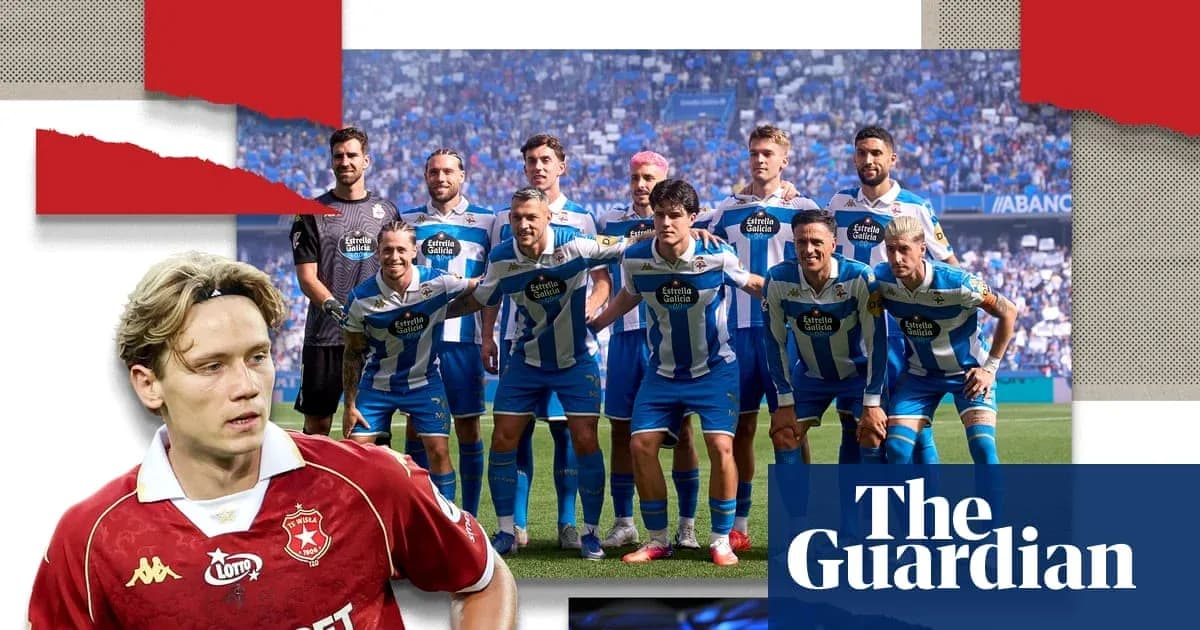
For a long time, Deportivo La Coruña were not just part of La Liga. They were a problem for its establishment.
From the early 1990s into the mid-2000s, Dépor lived in the rare air usually reserved for Barcelona and Real Madrid, with Valencia for company. Nine top-three finishes between 1993 and 2004. A league title in 1999. A Champions League semi-final in 2004, where only José Mourinho’s Porto – on their own march towards history – stopped the Galicians from flirting with European immortality.
Then the lights dimmed.
First came the slide into mid-table. Then the trapdoor. By 2020, Deportivo were no longer a fallen giant of La Liga but a club marooned in Spain’s regional third tier, stripped of glamour and relevance. The Riazor, once a stage for title deciders and European nights, became a monument to what used to be.
It took four hard years to escape that level and claw their way back to the Segunda. That alone would have felt like a rescue mission. But Dépor accelerated. From 15th place in 2024-25 to automatic promotion last season, they jumped the queue and crashed back into the elite.
This is not the era of Juan Carlos Valerón and Diego Tristán. There is no illusion about that in Galicia. Yet the ambition is unmistakable. The club have moved decisively in the market, bringing in Mallorca goalkeeper Leo Román to steady the back line and handing the No 9 burden to veteran forward Pierre-Emerick Aubameyang, a marquee name tasked with giving their survival bid a cutting edge.
Deportivo’s first objective is blunt: stay up, stabilise, and remind La Liga that the Riazor is not just a nostalgic postcard. It is a venue that used to ruin big seasons. The question now is whether it can start doing that again.
Elversberg: The Village Club in the Land of Giants
Germany’s promotion races often feel like a tug of war between sleeping giants and stubborn upstarts. Last season was no different.
On one side stood Schalke, a club too big for the second tier in theory, yet stuck there for four of the last five campaigns. They finally muscled their way out by winning the 2. Bundesliga title.
On the other side came Elversberg, runners-up and something closer to a football anomaly.
This is a club from a small town in Saarland whose entire population could fit inside Schalke’s Veltins-Arena four times over. As recently as 2021-22, Elversberg were playing in the regional leagues. Now they are staring at the Bundesliga’s bright lights.
The rise has been brutal in its speed. Under coach Horst Steffen, Elversberg climbed through the divisions and reached the promotion playoff, only to fall short. Steffen’s work did not go unnoticed; Werder Bremen took him last summer. It looked like the classic story: the architect leaves, the project stalls.
It did not.
Steffen lasted just nine months at Bremen, while Elversberg pushed on under Vincent Wagner, a coach plucked from Hoffenheim’s second team and thrown into one of the most unforgiving leagues in Europe.
Off the pitch, the club are scrambling to catch up with their own progress. Their stadium will be expanded during the season to hit the 15,000-capacity requirement. On the pitch, there is no such grace period. Their first two visitors: Bayer Leverkusen and Bayern Munich.
No time to adjust. No time to breathe. Elversberg have jumped from regional obscurity into a league where Xabi Alonso’s champions and Germany’s perennial superpower will test their nerve within weeks. For a club of their size, survival would be more than an achievement. It would be a shock to the system of the Bundesliga itself.
Le Mans: From Financial Ruin to a New Engine
In France, money has changed the landscape. Paris FC lean on billionaire backing. Strasbourg sit under the BlueCo umbrella. Now City Football Group are in the mix with promoted Troyes, while another of their “partner clubs”, Lommel, climbs into Belgium’s top flight.
Le Mans arrive with a similar investment story, but with a touch of glamour.
The town is already a global name thanks to motorsport. The club’s stadium sits inside the famous Circuit de la Sarthe, where endurance is everything. On the pitch, though, Le Mans have already endured more than enough.
They enjoyed a brief spell in Ligue 1 in the 2010s before spiralling into financial collapse. The fall was not just sporting; it was existential. Climbing back to Ligue 2 felt like the first breath after being submerged.
Last August, a new chapter began. OutField, a Brazilian consortium, took control and brought heavyweight star power with them. Novak Djokovic. Thibaut Courtois. F1 drivers Felipe Massa and Kevin Magnussen. Their names do not step onto the pitch, but they do change the temperature around the club.
Le Mans, though, are not pretending to be a nouveau-riche circus. The plan is measured. They have reopened the club academy, committed to a youth-focused model and targeted players with upside instead of chasing expensive, short-term fixes.
They have “moved through the gears” quickly to get back to the top flight, but the message is clear: this is not a joyride. If they get this right, the club inside the circuit could become a long-term fixture in Ligue 1, powered not just by celebrity investors but by a production line of talent.
Amedspor: Football on the Fault Line
Among this season’s newcomers across Europe, no club carries a heavier political and social weight than Amed SK, better known as Amedspor.
They are not from Istanbul or Ankara. They are based in Diyarbakir, a Kurdish-majority city in Turkey’s southeast, closer to the borders with Iraq and Syria than to the Bosphorus. For years, the club drifted between the third and fourth tiers, a modest team with modest expectations.
Everything changed in 2014, when they formally added “Amed” – the Kurdish name for Diyarbakir – to their identity.
That single decision reshaped what the club represented. It drew a new, diverse fanbase who saw in Amedspor more than a football team: a symbol of Kurdish identity and pride. It also drew hostility. A lot of it.
Opposing fans targeted Amedspor supporters with abuse, intimidation and even physical attacks. The atmosphere around their away matches became so toxic that the Turkish FA stepped in – not to confront the perpetrators, but to ban Amedspor fans from travelling to away games until 2020.
Against that backdrop, their sporting rise has been remarkable. From the lower leagues to the Turkish Super Lig, where they will make their debut this season, Amedspor have climbed while carrying the burden of politics, security fears and national tension.
Their presence in the top flight forces difficult questions back into the spotlight. How will security be managed? Can old hostilities be contained? Will the league become a stage for something far bigger than football?
There are hints that the atmosphere may be softening. When Amedspor sealed promotion, Turkish president Recep Tayyip Erdogan – who has consistently refused to acknowledge Diyarbakir by its Kurdish name – publicly congratulated the club. The gesture raised eyebrows across social media and beyond.
Whether it signals a real thaw or simply a moment of political optics, Amedspor’s season will unfold under intense scrutiny. Every away trip, every banner in the stands, every chant will carry a resonance that stretches far beyond the table.
Wisla Krakow: The White Star Rises Again
In Poland, a familiar badge is back where it believes it belongs.
Wisla Krakow, founded 120 years ago, are one of the country’s great institutions. Fourteen league titles. A constant in the top division for generations. Until 2022.
Relegation ripped away that sense of permanence. The White Star spent four seasons outside the elite, forced into a period of self-examination that big clubs usually try to avoid.
They did not waste the time. With former player Jakub Blaszczykowski involved as a minority investor, Wisla modernised. They leaned more heavily on analytics, sharpened their recruitment and gave their academy graduates a clearer pathway.
Even in exile, they found a way to add silverware, lifting their fifth Polish Cup in 2024 while still a second-tier side. That trophy did not erase the pain of relegation, but it signalled that Wisla were not content to drift.
Their return to the Ekstraklasa last month carried all the theatre you would expect. A 2-1 win over Katowice. Red-and-white pyro painting the stands as fans turned the occasion into a statement: Wisla are back, and they intend to be loud.
The city’s football map has been redrawn as well. The notorious derby against Cracovia – the “Holy War” – is back on the calendar, but it will not be the only Krakow showdown. Wieczysta Krakow have reached the top flight through the playoffs, meaning Poland’s second-largest city now has three clubs in the elite.
Wieczysta’s stadium does not yet meet league standards, so they will ground-share with Wisla. The symbolism is striking: an old power and an ambitious newcomer sharing the same patch of turf, competing for space, attention and points.
For Wisla, this is more than a return. It is a test of whether their years in the wilderness have hardened them for a modern era where history counts for less and smart decisions count for everything.
Across Spain, Germany, France, Turkey and Poland, these promotions are not just administrative changes on a league table. They are flashpoints.
Deportivo trying to remember how it felt to frighten giants. Elversberg daring to believe that a village club can survive among superclubs. Le Mans rebuilding with a new engine under the hood. Amedspor stepping into a league that has never quite known what to do with them. Wisla Krakow reclaiming old ground in a city that suddenly feels too small for all its ambitions.
The fixtures are set. The stories are not.