.svg&w=384&q=75 "Naijagoal logo")


Replacing Virgil van Dijk: The Future of Liverpool's Defense
Virgil van Dijk will not be replaced easily. At Anfield, everyone knows it. The armband, the aura, the way he seemed to solve problems before they existed – that’s not something you just buy off the shelf.
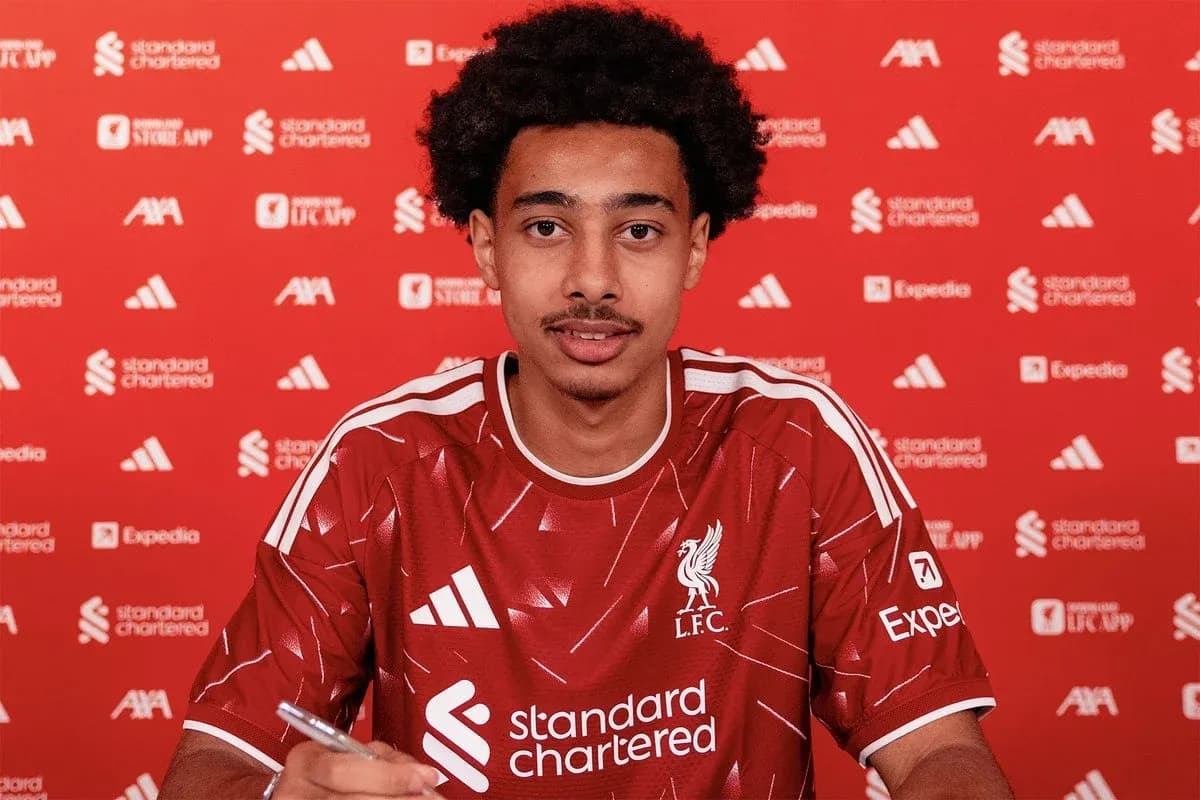
Yet two names keep surfacing in the conversation about Liverpool’s defensive future: Jacquet and Leoni.
Former Reds defender Stephen Warnock believes they might just grow into those roles, but he refuses to dress it up as simple or inevitable. Speaking to GOAL in association with Gambler Media, he cut straight to the reality of the task.
“Possibly,” he said when asked if Jacquet and Leoni could one day fill Van Dijk’s boots. “I think the hard thing is trying to replace, obviously, a player of Van Dijk's stature.”
That’s the starting point. Not hype. Not headlines. The sheer scale of the job.
Warnock has seen enough, though, to understand why Liverpool’s recruitment team are excited. Leoni has barely pulled on the shirt, but his reputation from Serie A and his performances in Italy have already travelled. Jacquet, too, has been talked up as part of a long-term plan rather than a quick fix.
“The signs were promising, both from Leoni, even after one game, but the talk around Serie A and how he performed in Italy,” Warnock said. Then comes the catch. “But there will always become a pressure once you get to a certain level.”
The pressure is not subtle. As soon as a young centre-half looks composed in a red shirt, the comparisons start. The heir to Van Dijk. The next leader of the back line. The next one who has to make defending at Anfield look effortless.
“There will be more talk, talking about Van Dijk and can they be the heir to the throne, of taking over Van Dijk?” Warnock warned. “And it's just about how they progress from now until probably around about 26, 27, when you learn so much about the game and you get better at understanding.”
That age bracket matters. Centre-halves are rarely the finished article at 22 or 23. The real education comes later – in reading danger, in positioning, in knowing when to step in and when to hold your ground.
“And that's essentially what you have to do when you're a centre-half,” Warnock added. “You've got to read the game better, you've got to get yourself in better positions, and that's part of the process.”
So can Jacquet and Leoni truly succeed Van Dijk? Warnock won’t make that leap yet.
“So it's very difficult to say whether they're going to be the successors because they're on the right trajectory,” he said. “But there's so many things that can come into place, like injuries and lack of form, the shirt being too heavy at times, where the club's actually at.”
That phrase – “the shirt being too heavy” – hangs over every big signing at Liverpool. Some grow under it. Some shrink. No scouting report can predict how a player will cope when a mistake at Anfield becomes a week-long talking point.
Context matters as well. Van Dijk didn’t walk into a club searching for itself. He arrived as one of the final pieces of a carefully built machine.
“When you think about when Virgil van Dijk came into the Liverpool team, it was almost him and Alisson that were the final two pieces of the jigsaw,” Warnock said. “And it slotted him perfectly into a great system, a great team.”
That Liverpool side had a defined identity, a settled core, a manager at the peak of his powers. Van Dijk stepped into structure and elevated it.
Jacquet and Leoni face something different.
“At the moment, Liverpool are in a transitional phase and that's difficult to play in at times,” Warnock admitted.
Transition can forge leaders or expose them. The next few seasons will show whether these two defenders simply wear the shirt, or grow into the kind of presence that makes everyone around them stand taller – the way Van Dijk once did when he first walked through the door.